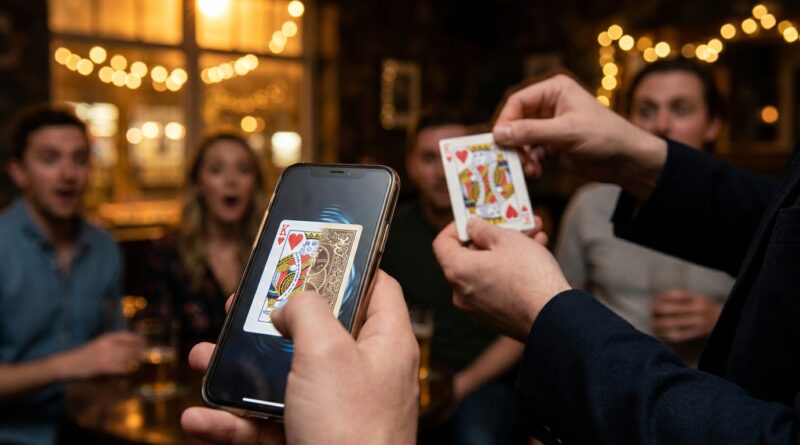
From Static Photos To Living Miracles: Build One ‘Scroll‑Triggered Visual Change’ Sleight That Only Happens On Camera
You can feel the pressure now. The moment a spectator sees a card or coin, a phone comes out, and suddenly your magic is not being watched like a live performance. It is being tested like a crime scene video. People pause. They scrub back. They zoom in. A lot of beautiful old sleight of hand simply was not built for that kind of inspection. That is why a scroll triggered magic sleight of hand matters so much. You need one visual change that feels made for the phone screen, but still happens for real. No edit. No filter. No hidden cut. The best answer is not trying to out-cheat social media with more camera tricks. It is building a single visual moment that blooms as the viewer scrolls, records, and replays. Think of it like designing a move for the way people hold a phone now. When you do that, your magic stops looking old-fashioned and starts looking impossible again.
⚡ In a Hurry? Key Takeaways
- A strong scroll triggered magic sleight of hand uses real timing, screen framing, and a justified hand movement to create a change that looks cleaner on camera than in person.
- Start with one object, one beat of motion, and one reveal. Card corners, folded bills, and high-contrast coins work best.
- If the effect only works with edits or overlays, it may get views, but it also teaches audiences not to trust what they see. Real sleight holds up better.
What a “scroll-triggered” change really means
This is not about coding anything into a phone. It is about understanding how people watch short-form video.
When someone scrolls TikTok, Instagram Reels, or YouTube Shorts, they give you a split second. If they stop, it is because something in the frame promises a payoff. Your job is to build a change that rewards that pause.
A good scroll-triggered magic sleight of hand has three traits. First, the object is easy to read at a glance. Second, the motion is small enough to look natural on a phone screen. Third, the change lands right as the viewer’s attention locks onto the object.
That last part is the secret. You are not just doing a move. You are shaping when the eye commits.
The basic structure of a camera-proof visual change
1. Show a stable picture first
The audience needs a clean “before” image. If it is a card, let them clearly see the back or face. If it is a bill, show the denomination. If it is a coin, use something with a bold edge and bright reflectivity.
Do not rush this. On camera, confusion kills impact. Clarity creates shock.
2. Add one motivated action
The best visual changes are built around a tiny action that makes sense. A thumb rub. A slight pull. A fold opening. A tap against the phone lens line. The action should look like punctuation, not procedure.
If the motion feels like “the move,” people will smell it even if they cannot explain it.
3. Let the change happen during attention transfer
This is where the modern part comes in. On a phone screen, attention often shifts when the object moves toward center frame, when your voice drops, or when your other hand leaves the shot. That is the moment to fire the change.
You are not hiding the method with speed. You are hiding it inside a change of visual priority.
4. Freeze after the change
Do not celebrate too early. Hold still. Let the camera drink it in.
This matters more than most magicians think. If you move right after the reveal, the audience reads that movement as guilt. If you stay calm, the new reality settles in.
A practical example: the “scroll change” with a playing card
Let’s build one usable idea without giving away protected methods. Use a double-backed visual logic. The audience sees a card face or back clearly, you motivate a short rub or drag with the thumb, and the visible design changes in a narrow window near the center of frame.
The move should happen in a strip, not across the whole card. That is what makes it feel native to social video. A full-card burst can look fake. A localized change looks eerily real because it resembles the kind of glitchy, partial attention people are used to seeing while scrolling.
Here is the pattern:
- Frame the card vertically, close to the camera but not filling the screen.
- Keep your fingertips visible, but quiet.
- Use soft, even light. Harsh overhead lighting exposes texture and edges.
- Trigger the visual moment just as the thumb crosses the index point viewers are already staring at.
- Pause for one full beat after the reveal.
That simple structure can be adapted to color changes, value changes, or back design shifts.
Why this works better than flashy edits
Because audiences are getting skeptical. Fast.
Creators keep piling on digital fixes, fake morphs, AI overlays, and invisible cuts. It may win a burst of attention, but it also trains people to think every impossible moment is just post-production. That hurts everyone who actually put in the hours to learn clean sleight of hand.
A real scroll triggered magic sleight of hand pushes back against that. It says, “Record this. Rewatch it. I still did it.” That is powerful.
The three design rules that make a change survive replay
Use contrast
Black on white. Red on white. Silver against dark clothing. The more clearly the object reads, the stronger the transformation hits. Tiny pips on a busy card flourish shot are death on a phone screen.
Keep the method shallow
If your move needs deep finger positions, steep angles, or lots of cover, it is probably wrong for short-form video. Camera-proof magic usually benefits from flatter handling. Less depth. Less shadow dependence.
Build in a reason for the framing
Do not hold the object weirdly just because the move needs it. Give yourself a reason. “Watch the corner.” “Look at the serial number.” “If I rub here.” Those little bits of scripting direct attention and explain the picture the audience is seeing.
Common mistakes that ruin the effect
Too much movement
Magicians often add extra twirls and hand waves because they feel exposed. On camera, those extras read as cover. Strip them out.
Bad lighting
Ring lights can be harsh. Direct sunlight can be worse. Use soft side light or a bright window with indirect light. You want detail, not glare.
Performing too close to the lens
Extreme close-up can backfire. Phone cameras distort at short distance, and autofocus may pulse at the wrong moment. Keep a little breathing room.
No off-camera testing
What feels impossible in your hands can look muddy on a screen. Test every version. Watch it at full speed, then frame by frame, then with the sound off. If it still works, you have something.
Best objects for a scroll-triggered visual
Not every prop is equally camera-friendly.
Playing cards
Still the safest choice. They are flat, high contrast, and familiar. Back color changes and corner-based transformations tend to read best.
Bills
Excellent if the denomination is obvious. Folds give you natural motivation. Just do not overcomplicate the handling.
Coins
Harder than they look. Reflections can help, but they can also betray you. Use coins only if you have good control of light and angle.
Receipts, notes, and sticky labels
These can be great because they feel casual and social-media native. A hand-written word changing on camera can hit very hard if the reveal is simple and clean.
How to rehearse for phones, not just people
This is the part most performers skip.
Set up your phone at chest height. Record in the app people actually use, because built-in compression changes detail. Try the move from normal spectator distance, not just perfect studio distance.
Then review it like a skeptic. Pause where a spectator would pause. Zoom where they would zoom. If your fingers look tense, fix that. If the dirty moment lands during autofocus wobble, do not trust it. Make it better.
Also, test vertical framing first. A move that kills in landscape can die in portrait because the eye path changes.
How to script the moment so it feels native to short-form video
Your words matter. Short-form audiences are used to quick setup and quick payoff. Long magician patter sounds fake on a phone.
Try lines like:
- “Keep your eye on this corner.”
- “This only changes if you catch the exact moment.”
- “Don’t blink. Seriously.”
These lines do two jobs. They focus attention, and they justify the still, centered framing your move needs.
Just do not oversell it. The stronger the challenge, the more people expect editing. Calm confidence beats hype.
What to aim for if you want repeatable results
You do not need twenty camera-friendly changes. You need one that is honest, reliable, and adaptable.
Pick a single prop. Pick a single reveal shape. Then work until you can do it under kitchen light, window light, and a friend’s shaky phone. When that happens, you have built something valuable. Not a stunt. A tool.
That is the real advantage here. One solid scroll triggered magic sleight of hand can become your opener, your social clip, and your answer when someone says, “Yeah, but do it for my camera.”
At a Glance: Comparison
| Feature/Aspect | Details | Verdict |
|---|---|---|
| Visual clarity | Flat, high-contrast objects with one obvious before-and-after state read best on phones. | Essential |
| Method under replay | Small, justified actions and a brief freeze after the change survive pause, scrub, and frame-by-frame viewing. | Much stronger than flashy handling |
| Trust factor | Real sleight builds credibility, while edits and overlays may get clicks but can make audiences assume everything is fake. | Real technique wins long term |
Conclusion
The phone camera is not going away, and neither is the habit of replaying magic until the mystery cracks. That is exactly why building one honest, repeatable scroll triggered magic sleight of hand is worth your time. You are not trying to out-edit the internet. You are giving people something better. A real visual change that feels at home on TikTok, Instagram, and Shorts, but still survives 4K video, freeze frames, and modern suspicion. While creators race to bolt on camera tricks and AI overlays, sleight of hand can still be the thing that makes people stop, stare, and say, “Wait. That was real.” That is how magicians fight back now. Not by faking harder, but by getting cleaner.