From Static Secrets To Moving Crowds: Build One ‘Walk‑By Wallet Switch’ Sleight That Works While You’re Already Leaving
You know the ugly moment. The trick is fine. The method is fine. Then someone rewatches the clip on their phone and there it is, that tiny pause where you square the deck, touch the wallet too carefully, or suddenly look very interested in your own hands. That is the real problem now. Not hard sleights. Not clever gimmicks. It is the beat that screams, “something happened here.” A good walk around card to wallet sleight of hand switch while walking away fixes that by hiding the dirty work inside normal life. You are talking. You are turning. You are already leaving the heat. The move happens while the audience is processing the effect, not while they are waiting for a move. That makes it feel less like a performance puzzle and more like a memory. Better still, you can graft this idea onto routines you already do. No new wallet. No special prop. Just better timing, better body language, and one useful habit.
⚡ In a Hurry? Key Takeaways
- A walk-by wallet switch works best when the secret action happens during a turn, a step, or a natural line of conversation, not during a frozen “magic moment.”
- Start the switch only after the effect is mentally over for them. Then move your feet, shift your shoulders, and let the wallet action ride inside that motion.
- The goal is not speed. It is innocence. If it looks like something you would do even without a trick, it will survive replay much better.
The big idea is simple
Most card-to-wallet routines are built like a stage cue. Stop. Reach. Open. Reveal. That structure made sense when people watched once and reacted in the moment.
Now they record. They zoom. They replay. They compare your “normal” handling to your “special” handling.
So the fix is not always a new move. Sometimes it is changing when the move lives.
A walk-by wallet switch puts the secret action in transit. You have already hit the main effect beat. Maybe the card is lost. Maybe the impossible location has been named. Maybe you have casually said, “Anyway, I’ll leave you with this.” Then you start to turn away, or guide the group two steps to one side, or drift toward the next person. During that ordinary motion, the wallet action happens.
That is moving misdirection. And right now, it is one of the healthiest upgrades a close-up worker can make.
Why walking away helps so much
People stop reading your hands as hard
When you stand still and square up, spectators think, “Here comes the important bit.” Their eyes narrow. Phones stay trained on your fingers.
When you are already moving, their brain has to process more than your hands. Your face, your voice, your path, the person beside you, the laugh that just landed. Attention gets softer. That is good for you.
The motion gives the wallet a reason to exist
A wallet touched for no reason looks suspicious. A wallet adjusted as you shift position, free a hand, or get ready to leave feels normal.
That difference matters more than magicians like to admit.
Replay looks boring, which is perfect
You want the secret moment to look dull on video. Just a person moving, talking, and absent-mindedly handling an everyday object. If the clip feels too ordinary to study, you win twice.
The “walk-by wallet switch” structure
This is not a single named sleight. It is a frame you can apply to your own handling.
Phase 1: Finish the magical thought first
Do not switch while they are still waiting for the trick to happen. Let the audience believe the important part is already done.
For example, the signed card is clearly gone. Or they have confirmed the impossible condition. Or you have asked them to hold a thought for one second. The heat should be on the effect, not the prop.
Phase 2: Give yourself a social reason to move
Start walking because people naturally walk. Turn to include another spectator. Step aside for a server. Angle your body to make room. Start to leave with a throwaway line.
If the movement exists only to cover the move, it often looks like exactly that.
Phase 3: Let the wallet action happen inside the turn
The key is that the switch should not be the event. The turn is the event. The step is the event. The sentence is the event.
The wallet action should be one beat inside a larger human action.
Phase 4: Never freeze after the move
This is where many good methods die. The switch goes fine, then the magician unconsciously pauses to check that everything is set. That pause is a flare gun.
Keep talking. Keep moving. Keep breathing like nothing happened.
What it can look like in plain English
Imagine you have just controlled or loaded the needed card for your preferred card-to-wallet routine.
You say, “Actually, keep that image in your mind for a second.” You smile at the friend on the left, take one step back, and start to pivot as if you are about to move on. During that pivot, your hand briefly goes to the wallet in the same casual way someone adjusts a pocket item while walking. The switch happens there. Not as a display. Not as a challenge. Just as part of leaving the moment.
Then you stop half a beat later, turn back with, “Before I go, check inside.”
That tiny change in staging can make an old routine feel brand new.
Three rules that make this work
1. The body must lead, not the hand
If the hand darts to the wallet before the shoulders and feet commit to movement, people sense a task. Start the body first. Let the hand arrive second.
2. Talk through the moment
Silence can spotlight mechanics. A simple line gives the audience’s brain another thing to process. Nothing fancy. Just ordinary speech.
Good examples are short. “Hang on.” “Watch this.” “Before I forget.” “Let me show you one last thing.”
3. Make the wallet handling match your non-magic handling
This is huge. Spend five minutes today taking your wallet out while chatting to a friend. Put it away. Shift it from one hand to the other. Tuck it back casually.
Then compare that to your trick handling. If your magic version looks tidier, slower, or more precious, fix that first.
Common mistakes people make
Using “walking away” as a cover for rushing
Fast does not equal invisible. In fact, panic-speed is often easier to spot on replay. Smooth is better.
Turning too far from the group
If you fully abandon the audience, it can feel evasive. You are not running from heat. You are softening it. A partial turn is usually enough.
Making the reveal too immediate
If the switch and the reveal are glued together, spectators connect them. Give it a breath. One step. One sentence. One shared glance.
Overacting the casualness
Nothing looks guiltier than a magician trying hard to look relaxed. Normal beats fake casual every time.
How to practice it without wrecking your live set
Practice the route, not just the fingers
Do not stand in front of a mirror and only rehearse the secret action. Rehearse the line, the pivot, the step, the wallet touch, and the return.
Think of it like learning to park a car. The wheel turn matters, yes. But so do speed, angle, and timing.
Use your phone like a spectator would
Set the camera at chest height from a few feet away. Then run the sequence normally. Watch it once at full speed. Then at half speed.
If you can instantly spot the “magic beat,” your audience can too.
Test it with a dead routine first
Do not start with your signature closer. Take a routine you like but do not love. Add the moving switch structure there. It is safer, and you will learn faster because the emotional stakes are lower.
Where this shines best
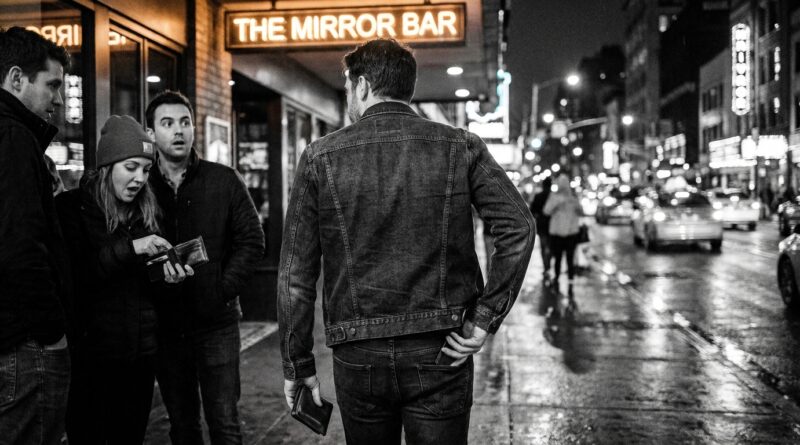
This idea is especially good in bars, weddings, mix-and-mingle jobs, trade floors, and street sets where people are half in the trick and half in real life.
That is the sweet spot. You are using the fact that the world is still moving.
It is less useful when the whole point is a formal, front-facing close-up performance where everyone is locked in and watching like hawks. You can still use pieces of it there, but it really earns its keep in walk-around conditions.
Why this matters now more than it used to
Creators and working magicians are quietly changing style. Less static posture. Less “watch my hands.” More lived-in motion. More effects that seem to happen while conversation keeps flowing.
That is not a fad. It is a response to cameras.
Every group has one. Every clip can be replayed. And nobody has patience for weird dead air around the method.
The nice part is that this change does not force you to buy a new wallet or rebuild your whole act. It just asks you to move the method into a more believable part of the moment.
How to graft it onto your current card-to-wallet routine tonight
- Find the exact beat where you currently “do something.”
- Ask whether that beat happens while everyone is still staring at your hands.
- Shift the secret action to a moment after the audience thinks the important part is over.
- Add one natural reason to step, turn, or drift.
- Keep the reveal clean and unhurried.
That is it. Same plot. Same props. Better camouflage.
At a Glance: Comparison
| Feature/Aspect | Details | Verdict |
|---|---|---|
| Static wallet switch | Done while standing still, often with a pause or a visible change in focus toward the wallet or deck. | Works live, but replay often exposes the “important moment.” |
| Walk-by wallet switch | Secret action is hidden inside a step, pivot, body turn, or conversational exit beat. | Usually feels more natural and survives phone footage better. |
| Learning curve | Less about knuckle-busting finger work, more about timing, blocking, and matching real-life body language. | Easier to add to existing routines than buying and mastering a whole new prop system. |
Conclusion
The smartest change here is not the wallet. It is the attitude. Stop treating the secret move like the center of the scene. Let it hitch a ride inside ordinary motion. Creators and workers are shifting toward moving misdirection because every audience now has a camera, a replay button, and a low tolerance for suspicious pauses. A walk-by wallet switch helps future-proof your card-to-wallet and signed-card material without sending you shopping for new gimmicks. It is one practical idea you can attach to a routine tonight, and when it clicks, your magic stops feeling like a demo. It feels like something impossible happened while life kept moving, which is exactly how the best close-up magic lives in memory.