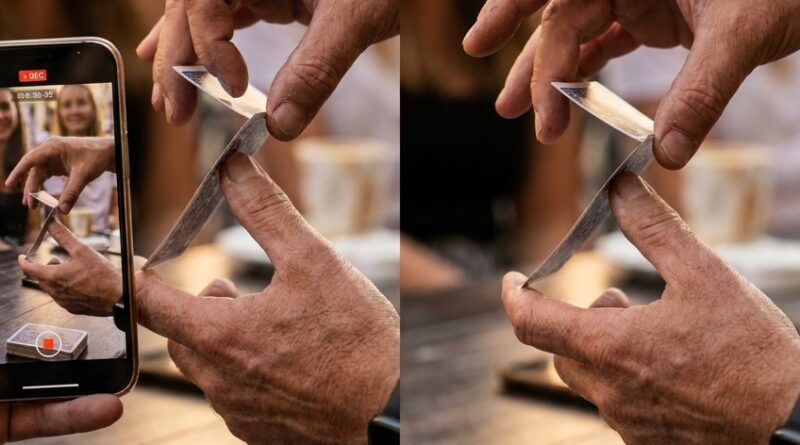
From Split Screens To Shared Reality: Build One ‘Duo‑Angle Switch’ Sleight That Looks Identical Live And On Camera
You can feel the strain in a lot of card clips right now. The live version is one trick. The phone version is another. That split is exhausting. Worse, spectators notice when the handling changes. A move that flies in a reel but looks different in the room creates the exact comment every magician hates, “nice camera trick.” The fix is not more editing, and it is not chasing the flashiest gimmick of the week. It is building one dependable card switch that works both in person and on camera, with the same body position, same rhythm, and same reason for every action. Think of it as a duo-angle switch. Not angle-proof in the fantasy sense, but angle-stable enough that a person three feet away and a phone lens two feet away both remember the same event. That is what keeps a visual moment from feeling fake, and what makes it usable in the real world.
⚡ In a Hurry? Key Takeaways
- A good card switch that works both in person and on camera starts with shared sight lines, not fancy editing.
- Use a chest-high working area, a brief off-beat, and one natural motivation like squaring or turning the packet.
- If the move needs a special lens angle or a second take, it is probably not a true duo-angle solution.
What a “duo-angle” switch actually means
Strip away the buzz. A duo-angle switch is simply a switch designed so the live audience and the camera audience experience the same effect in the same moment.
That means three things.
1. The picture is honest
The phone is not seeing a secret view that the live audience never gets. You might still frame carefully, of course. Every performer should. But the frame should match what a nearby human being could reasonably see.
2. The rhythm is the same
No extra dip of the hands for camera. No weird pause for focus. No tiny edit hidden in a gesture. If the clip survives replay, good. If it also survives real people staring at your hands, even better.
3. The reason for the action is clear
The strongest switches hide inside ordinary behavior. Squaring the packet. Turning a card face up. Showing the top card cleanly. When the move has a normal reason, both audiences accept it.
Start with the principle, not the flourish
This is where many creators get themselves into trouble. They begin with the prettiest visual and then try to force it into a live set. That usually ends with bad angles, tension, and comments pointing out a camera dependency.
A better path is to start with a principle-first design:
- One audience front line.
- One camera line that sits close to that front line.
- One secret action covered by timing, not by impossible angles.
If you have been thinking a lot about replay scrutiny, it is worth reading From Live Streams To Loop-Back Miracles: Build One ‘Replay-Proof Top Change’ Sleight That Survives Frame‑By‑Frame Scrutiny. It speaks to the same real-world problem. The goal is not to fool a mythical perfect viewer. The goal is to build handling that still looks natural when people rewind it.
The core build: one “Duo-Angle Switch” you can actually use
Let’s keep this grounded. We are not exposing a proprietary move. We are talking about structure, which is where most of the success lives anyway.
The setup
Hold the deck or packet around mid-chest, not down by the waist. This matters more than people think. Waist-level handling often looks fine to a standing crowd but terrible on a phone, because the camera sees too much top-down information. Chest-high handling gives you a shared reality. The audience and the lens both get a similar picture.
The sight line
Imagine a narrow cone projecting out from your sternum. Your dirty work should happen inside that cone, not out on the wings. If a move only works when the camera is hard left, it is not a duo-angle switch. It is a camera move.
The action
Build the switch around a justified moment of packet adjustment. A small turn. A square-up. A display that naturally resets finger positions. The secret action should happen during that ordinary adjustment, not before and not after.
Good signs you are on the right track:
- Your shoulders stay relaxed.
- Your elbows do not suddenly glue themselves to your ribs.
- The packet does not dive toward your body for cover.
- The visible card remains in view before and after the switch.
The off-beat
The best moment is often right after the audience thinks the important thing has already been shown. For example, once they register the identity of a card, they stop burning the edges for a split second. That is your working window. Tiny. But enough.
Why so many “visual” switches fail in the real world
They fail for boring reasons. Boring reasons are useful because you can fix them.
Mismatch of height
The live audience sees the fronts of the hands. The phone sees the top. Those are two different tricks. Raise the working area.
Mismatch of tempo
Creators often slow down for camera to look clean, then speed up live to hide method. Spectators can feel that difference even if they cannot explain it.
Mismatch of motivation
If you only square the cards in the filmed version, people sense that the “square” is the move. The handling has to make sense in both settings.
Over-clean displays
Trying too hard to prove fairness often creates suspicion. Show enough. Then move on. Natural beats perfect.
A simple test before you post or perform
Use this four-part check. It is fast, and it saves a lot of embarrassment.
The friend test
Have one person stand in front of you and another film from roughly that same line. If either person reports a different experience, the move is not ready.
The scrub test
Watch the clip back with the sound off. Scrub frame by frame. Ask one question. Does any single frame look like a different trick than what a human eye would have seen in motion? If yes, smooth the action or change the timing.
The freeze test
Pause the clip at random points. Do your hands look calm and ordinary, or like you are carrying groceries with your fingertips? Tension reads as guilt.
The repeat test
Can you do it ten times in a row at a strolling gig pace? If not, it is content, not working material.
How to rehearse a switch for both worlds
Most people practice the move. Fewer practice the picture. You need both.
Stage 1: Silent mechanics
Work without patter. No music. No performance face. Just get the switch smooth at the exact height and orientation you plan to use.
Stage 2: Phone on a tripod
Place the phone where a real spectator’s eyes would be, not in some flattering magician-only angle. Shoot ten takes without changing the handling. That last part is important. If you keep “fixing” the move for camera, you are teaching yourself two tricks again.
Stage 3: Add speech
Now perform while talking. Speech changes timing. It also creates natural off-beats. Many switches become easier once your mouth gives your hands cover.
Stage 4: Real people
Friends first. Then low-stakes live settings. Then paid work. Content can make a move look ready before reality does.
Best practices for filming without creating a “camera trick” feel
You do not need to make the video ugly. You just need to keep it honest.
- Keep the lens near eye level to a standing spectator.
- Use one continuous shot when possible.
- Avoid crash zooms right on the secret beat.
- Do not crop so tightly that normal hand motion looks suspicious.
- Let a little dead space live in the clip. Perfection can look fake.
This is the same broad lesson behind replay-safe handling. When the effect is clean but the behavior is normal, viewers stop feeling that the camera is part of the method.
When a gimmick is fine, and when it becomes a trap
Gimmicks are not the enemy. Dependence is the enemy.
If a gimmick lets you do the same handling live and on camera, great. Use it. If it creates one miracle for the phone and a fragile mess for real spectators, that is where burnout starts. You end up maintaining two repertoires, two muscle memories, and two levels of honesty.
A practical rule is this. If the gimmick needs strict framing, no one on your right side, and a retake if your thumb lands a little off, it belongs in a content bucket, not your strolling set.
The traits of a strong card switch that works both in person and on camera
If you want a checklist, here it is.
- Front-facing handling.
- Chest-high working area.
- Justified packet movement.
- Secret action hidden by timing, not by editing.
- No dependence on one extreme side angle.
- Repeatable under mild pressure.
- Looks the same at full speed, half speed, and in memory.
At a Glance: Comparison
| Feature/Aspect | Details | Verdict |
|---|---|---|
| Shared viewing angle | Camera sits close to the same front line a real spectator would have, with chest-high handling. | Essential for a believable duo-angle switch. |
| Cover for the switch | Uses a natural action like squaring, turning, or displaying, instead of an edit or a sudden dip. | Best balance of deception and repeatability. |
| Real-world reliability | Can be done live, filmed in one take, and repeated without special conditions. | This is what separates working material from clip-only magic. |
Conclusion
The magic community really is living in two worlds at once. Live shows pay the bills. Vertical clips build the audience. The feeds are full of hyper-visual changes and gimmick-heavy reveals that look amazing for a few seconds, but fall apart the second you try to carry them into a strolling set. That is why a grounded, principle-first duo-angle switch matters. It gives you a card switch that works both in person and on camera without forcing you to become two different performers. More than that, it turns a draining problem into a solvable one. Match the sight lines. Keep the handling honest. Build the secret into a normal action. Do that, and your live audience and your phone audience will remember the same miracle, which is exactly the point.