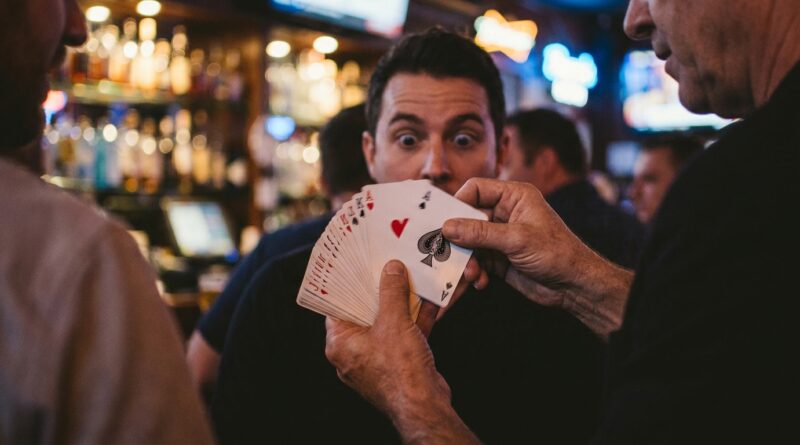
From Trending ‘Invisible Palms’ Reels To Real-World Magic: How To Build One Table‑Free Color Change You Can Do Surrounded
You are not imagining it. A lot of the hot “invisible palm” and color change reels making the rounds right now look stunning on a phone screen and awful the second you try them for real people. One angle goes bad, the wrist flashes, you need a table, or the whole thing only works because the camera is basically acting like your accomplice. That is frustrating, especially when it makes you feel like you are behind unless you keep chasing the next pretty clip. The better move is simpler. Pick one angle proof in the hands color change card trick and build it until it becomes boringly reliable. That is what actually plays in walkaround, at a coffee shop, or with friends standing on both sides of you. Real magic often looks less flashy in practice videos and far stronger in person. If you want one useful goal, aim for a change that happens chest-high, in motion, with natural cover, and no table at all.
⚡ In a Hurry? Key Takeaways
- The best real-world choice is one table-free, in-the-hands color change that uses motion and body position for cover, not camera framing.
- Start with a simple visual change from a relaxed mechanics grip, then practice at chest height while people stand left, right, and slightly behind you.
- If a move only looks good from one front-facing angle, treat it like social media candy, not a working trick.
Stop Hunting. Start Building.
The trap is easy to fall into. You see a reel. The card changes color in a blink. The hand looks empty. The comments go wild. Then you try it and realize the method needs perfect framing, a low-right camera, and a spectator who agrees not to exist on your left side.
That is not a performance piece. That is content.
If your goal is a working angle proof in the hands color change card trick, you need a different filter. Ask three questions right away.
Question 1: Can I do it standing with no table?
If the answer is no, it may still be a fine move. It is just not the move you should spend this month on if you perform walkaround or casually.
Question 2: Can two people watch from both sides?
Not every move is truly 360-safe. That is okay. But if it dies the moment someone shifts half a step, that is a problem.
Question 3: Does it survive normal speed?
Some changes only work when slowed down for the camera. Real people blink, interrupt, and move. Your move has to survive that messiness.
What “Angle Proof” Really Means
Angle proof does not mean invisible from every possible seat in the universe. It means safe enough that normal spectators in a normal semicircle will not catch the method.
That usually comes from a mix of four things.
1. Chest-high handling
Waist-level changes often expose more than you think. Bringing the deck or packet up to mid-chest lets your forearms, fingers, and body help with cover.
2. Movement-based cover
A small turning action, a hand coming over, or a moment of showing the card can hide more than a frozen “look how fair this is” pose.
3. Relaxed fingers
Death-grip hands scream that something secret is happening. A good change should still look like a card is just being displayed.
4. A reason to square or adjust
The cleanest magic often rides inside ordinary actions. If your fingers need to come together, give them a natural reason.
This is the same basic lesson behind From Viral ‘Lustig For Life’ Reels To Real-World Card Control: How To Build One Under-The-Action Dice‑Stacking Steal You Can Use In Any Game. The move becomes useful when it hides inside action instead of posing for the lens.
The Best Real-World Template
If you want one dependable framework, build your change around this idea.
A single-card display from the top of the deck
This is the sweet spot for many performers. The deck gives structure. The top card gives focus. And the action can happen while apparently squaring, showing, or turning the card.
Use a brief off-beat, not a challenge moment
Do not hold the card out like you are daring people to burn it. Show it casually, speak, then change it during a natural beat. A question helps. So does eye contact.
Finish clean enough to continue
The move should leave you in position to hand out the card, spread the deck, go into an ambitious sequence, or simply stop. If your change creates a traffic jam in your hands, it is not finished.
A Practical Build for One Table-Free Color Change
Here is the framework I would suggest for most magicians who are tired of reel-chasing.
Phase 1: Pick a conservative method
Choose a top-card or packet-based color change with these traits:
Minimal finger flash. No broad arm swing. No need to dip below the frame, because there is no frame in real life. The reveal should happen while the hands are doing something believable, like turning the deck, rubbing the face, or squaring.
Phase 2: Lock the viewing window
Stand in front of a mirror and set your safe zone. Usually this is a front arc plus moderate left and right angles. Learn exactly where the move starts to flash. That is not failure. That is mapping the tool.
Phase 3: Raise it higher than feels natural
Most people practice too low. Bring the deck up. A chest-high in-the-hands change often becomes much safer immediately.
Phase 4: Add script that creates an off-beat
Simple lines work best.
“You saw the red one, right?”
“Keep your eye on the back.”
“Most people think the change happens here.”
That tiny moment of attention shift gives the hands room to breathe.
Phase 5: Rehearse the exit
The reveal is only half the trick. What happens next?
Can you instantly show the changed card cleanly? Can you hand it out? Can the deck be casually lowered without panic? Practice those two seconds more than the change itself.
Common Mistakes That Kill the Effect
Practicing only for the mirror
Mirrors are useful, but they lie in a very specific way. They train one viewpoint. Use your phone on a shelf from left, right, and slightly low angles.
Trying to make it too visual
This sounds backward, but it matters. If you push for maximum visual punch, you often add extra motion, extra squeeze, and extra risk. A slightly softer change that nobody can catch is stronger than a stunning one that flashes.
Ignoring the non-dominant side
Most magicians know where their “good side” is. Spectators do not care. They will drift where they drift. Train the weak-side angle on purpose.
No reason for the hand to move
If your cover hand appears out of nowhere, people feel the method even if they do not see it. Every motion should belong.
How to Test a Move Before You Trust It
Here is a simple real-world test.
The three-person semicircle test
Place one person in front, one to your left, one to your right. Perform at normal speaking speed. No “let me show you this move” energy. Just do the effect.
If even one person says, “I think I saw something weird,” slow down and simplify.
The interruption test
Can you pause midway, answer a question, then still complete the change without looking guilty? Real conditions are messy. Your move should not break when life happens.
The reset test
Can you do it again a minute later? A move that needs a full private reset is less useful than it first appears.
What to Practice for 15 Minutes a Day
Minutes 1 to 5: Grip and stillness
Get into starting position without fishing around. Hold the display with relaxed hands.
Minutes 6 to 10: Action plus reveal
Do the move slowly, then at performance speed. Focus on sameness. The hands should look identical before and after the secret action.
Minutes 11 to 15: Presentation and exit
Say the lines. Make eye contact. Reveal. Continue naturally. This is where a trick becomes magic instead of finger exercise.
Choose a Worker, Not a Trophy Move
The truth is a little boring, which is why it works. The best angle proof in the hands color change card trick for you is probably not the newest one blowing up online. It is the one you can do under pressure, while standing, with people close, and with your pulse up.
That means your “perfect” change may be less flashy than the reel version. Fine. If it gets gasps in person and never flashes, you picked the right one.
At a Glance: Comparison
| Feature/Aspect | Details | Verdict |
|---|---|---|
| Camera-perfect reel change | Often highly visual but dependent on framing, one-sided angles, or editing-friendly timing | Great for clips, risky for live use |
| Chest-high in-the-hands worker | Uses natural motion, body cover, and a stable display from the top of the deck | Best choice for walkaround and casual performance |
| Tabled visual change | Can look very clean but needs setup space and often limits where and when you can perform | Useful niche tool, not your everyday answer |
Conclusion
The last 24 hours have been packed with new social clips hyping “invisible” palming and blink-change visuals, and that can make any magician feel like they should keep chasing the next move. Resist that urge. Own one strong, table-free, angle-safe color change instead. Build it so it works surrounded enough for real humans, not just a phone lens. When you do that, today’s flood of eye candy turns into something much more valuable: a working weapon for walkaround, street, and casual performances, not just another saved reel you never actually use.