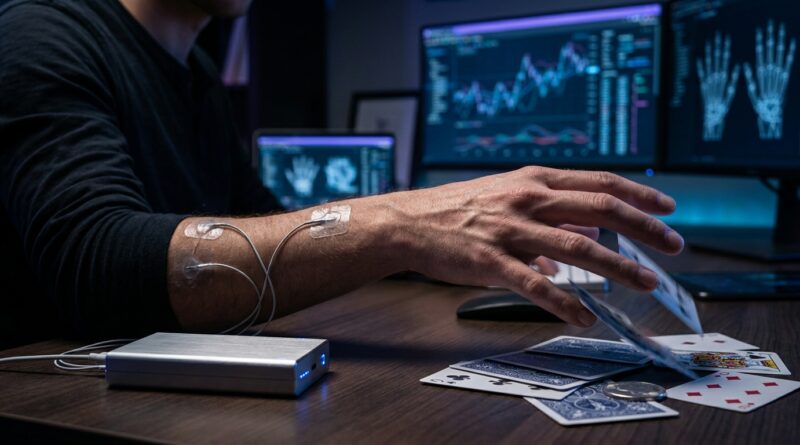
From Viral ‘AI-Controlled Hands’ Clips To Real-World Magic: How To Build One Remote-Control Sleight That Looks Technological But Is Pure Skill
You have probably seen those clips by now. A hand twitches, freezes, then suddenly moves like some unseen AI is piloting every finger. It looks half robot demo, half sci-fi possession. If you are a magician, that can be annoying. The trend is hot, spectators already recognize the look, and yet most performers do not want to buy motion rigs, hide electronics, or fake everything with editing. The good news is you do not need any of that. You can build one clean, eerie, remote-control style sequence with nothing but timing, finger isolation, and a simple object like a coin, pen, or playing card. The secret is to copy the rhythm people associate with machine control. Not smooth. Not natural. Slightly delayed, slightly glitchy, then suddenly perfect. Done well, it feels technological, but it is pure sleight of hand. That makes it affordable, practical, and a lot more impressive when seen live.
⚡ In a Hurry? Key Takeaways
- A convincing ai controlled hand magic routine sleight of hand can be built with no gimmicks by using stop-start motion, delayed finger response, and one clean object manipulation.
- Start with a single “remote command” sequence, like a hand opening in stages before a coin appears or shifts position.
- Keep the moves slow and controlled during practice to avoid finger strain and to make the robotic effect look deliberate instead of shaky.
Why this trend is such a good fit for magicians
The visual language is already doing half the work for you.
People have seen robot-hand demos, AI-control reels, prosthetic tests, and weird hand-tracking clips. So when your hand starts acting “not quite human,” they instantly get the premise. You do not need a long story. You just need a believable effect.
That is what makes this style useful. You are borrowing a modern look, not copying a lab experiment. The audience fills in the rest.
It is similar to what happens with gambling-style sleight trends. A reel gets popular, and suddenly even non-magicians think they understand the vibe. If you like that approach, you might also enjoy From Viral ‘Lustig For Life’ Reels To Real-World Card Control: How To Build One Under-The-Action Dice‑Stacking Steal You Can Use In Any Game, which taps the same idea of turning a social-media look into practical live technique.
The core idea: fake the operating system, not the hardware
Most performers make the same mistake first. They try to look robotic by moving stiffly.
That is only part of it.
The stronger illusion comes from control logic. Think of your hand like it is receiving commands from somewhere else. That means:
- tiny delay before action
- movement in short bursts
- one finger responding before the others
- brief freezes mid-action
- sudden clean precision at the end
Human movement usually flows. “AI-controlled” movement often looks segmented. That is your opening.
The routine: one remote-control sleight that looks high-tech
Here is a simple structure you can use with a coin. It works because coins are familiar, small, and easy to frame as a test object.
Effect
You place a coin at your fingertips. Your other hand acts like a controller. With each “command,” the active hand twitches, opens, closes, and repositions unnaturally. In the final beat, the coin appears to jump from display position into finger palm, then back to fingertips, as though the hand has been programmed to execute a move on command.
What the audience sees
Your hand does not behave normally. It behaves like it is being updated.
First the thumb unlocks. Then the first finger curls. Then the other fingers lag behind. The coin remains visible, then vanishes for a beat during a freeze, then returns as if the system corrected itself.
To them, it feels like machine control. To you, it is one palm, one display, and good rhythm.
What you need
- One coin, medium size is easiest
- A mirror or phone camera for practice
- A basic finger palm you can already hold without tension
How to build it step by step
Phase 1: The idle hand
Start with the coin displayed at the fingertips of your dominant hand.
Your non-dominant hand becomes the “controller.” It can mime tapping the air, swiping, or pinching as though adjusting settings. Keep this small. If the controller hand gets too theatrical, it starts to feel like acting instead of a demo.
The active hand should look relaxed but not dead. Add one tiny involuntary twitch before anything happens.
Phase 2: Finger-by-finger boot-up
Now open and close the fingers in sequence, not all at once.
Try this order:
- Thumb shifts slightly
- Index finger curls halfway
- Freeze
- Middle and ring finger follow together
- Freeze again
- Hand fully closes around the coin
This stage matters more than the vanish. It sells the whole premise.
Do not rush. The stop-start quality is what makes it feel “commanded.”
Phase 3: The hidden action
As the hand closes during one of those segmented beats, shift the coin into finger palm.
The best moment is not on a big gesture. It is during a freeze-release moment, when spectators are mentally tracking the strange hand behavior instead of expecting a traditional sleight.
This is the heart of the routine. You are hiding a normal move inside an abnormal rhythm.
Phase 4: The system glitch
Once the coin is palmed, hold a still frame for a beat too long. Then let one finger pop open, as if the hand got conflicting instructions.
This is where the illusion becomes modern instead of old-school magical. A classic vanish is clean. A tech-style vanish can look briefly unstable.
That little “error” moment makes the whole thing feel less like a flourish and more like control from outside the body.
Phase 5: The reset display
On the final command, reproduce the coin at the fingertips. Make this one sudden and exact.
Earlier phases can be jerky. The finish should be crisp. That contrast is what gets the reaction.
The audience thinks, “Something just calibrated.”
Why this works so well live
It gives spectators two stories at once.
Story one is the obvious one. Your hand is being controlled.
Story two is the secret one. They are trying to track the object.
Those two stories interfere with each other. While they process the odd motion, your sleight gets cover. While they watch for the object, the hand behavior feels eerie and meaningful. That split attention is gold.
Best objects for this style
A coin is the easiest place to start, but it is not the only option.
Coins
Best for compact, precise “command executed” moments. Great if you already work on palms and fingertip displays.
Pens
Good for office or casual performance. A pen can rotate, roll, or snap into writing position like a device being activated.
Playing cards
A single card can buckle, pivot, or slide into alignment in a way that looks unnervingly controlled. If you go this route, keep the card isolated. Too many cards make the visual messy.
Practice tips that make it look expensive
Use a metronome or silent count
Machine-like timing is rarely random. Count in your head. Try a pattern like: move, hold, move, hold-hold, snap.
Film it muted
If the routine reads clearly with no music and no patter, you are on the right track. If it only works with dramatic sound, the movement probably needs work.
Reduce effort by half
Many robotic hand effects fail because the performer overacts every finger. Small isolation reads better than strain. If your knuckles whiten, you are doing too much.
Practice the freeze points more than the sleight
This sounds backward, but the pauses sell the method. A clean finger palm hidden in bad rhythm still looks like a trick. A decent finger palm hidden in perfect rhythm looks like a system response.
Presentation ideas that avoid cringe
You do not need to pretend you built an AI glove in your garage.
Keep it lighter than that. Better scripts sound like casual experiments.
- “I have been watching too many hand-control demos. Now my left hand thinks it is software.”
- “Let me test something. One command at a time.”
- “This is what happens when your fine motor skills get a firmware update.”
That tone works because it winks at the trend without begging people to believe a fake backstory.
Common mistakes to avoid
Moving too smoothly
Smooth is elegant. It is not what you want here. Add interruption.
Making every beat weird
If everything glitches, nothing stands out. Mix awkward movement with one or two moments of perfect accuracy.
Using too much patter
The visual should carry the routine. Talk less than usual.
Choosing a move you cannot already do
Do not build this around a difficult new palm or flashy knuckle-buster. Start with a sleight you trust. The style is the new layer, not the move itself.
How this helps your wider magic, not just this trend
This is the part many magicians miss.
Even if the social trend cools off, the training stays useful. You are working:
- finger independence
- stillness under attention
- offbeat timing
- motion camouflage
- contrast between messy and clean actions
All of that carries back into coins, cards, and small object work. Your hands get smarter. Your pauses get better. Your audience control improves.
At a Glance: Comparison
| Feature/Aspect | Details | Verdict |
|---|---|---|
| Props required | Just one small object, ideally a coin, plus a basic palm or concealment you already know. | Excellent for low-cost, gimmick-free performance. |
| Difficulty | Technically moderate. The move can be simple, but the timing and finger isolation need care. | Very learnable if you already do basic sleight of hand. |
| Audience impact | Feels current, tech-coded, and unusual, especially for spectators who have seen AI hand-control clips recently. | High impact when kept short, visual, and precise. |
Conclusion
You do not need sensors, servos, or a fake science story to make this trend work for you. A solid ai controlled hand magic routine sleight of hand is really about rhythm, isolation, and choosing one simple sleight to hide inside a strange movement pattern. That is why it is such a smart piece to build right now. AI-in-the-hands visuals are exploding in tech and science circles, and your spectators have almost certainly seen some version of them in their feed lately. When you echo that look with real skill, you feel current without turning into a gadget salesman. Better still, the practice pays off beyond the bit itself. You are sharpening motor control, misdirection, and glitch-style timing that can improve your regular card and coin work too. So start small. Pick one object. Program one hand. Make it weird, clean, and just believable enough that people are not sure whether they saw tech, trickery, or both.