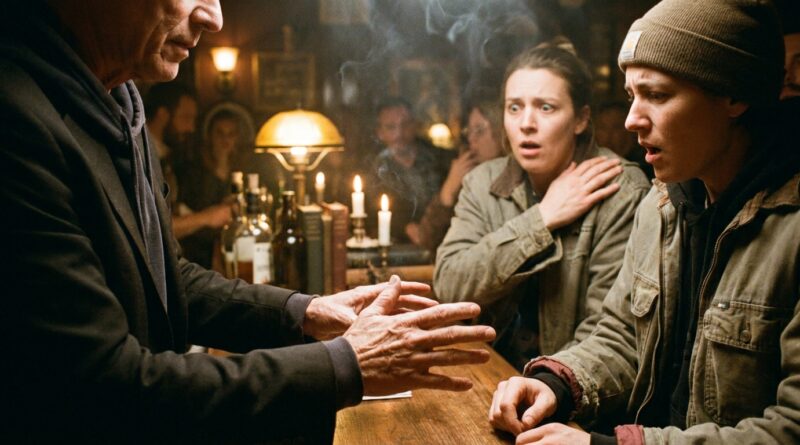
From Viral ‘Invisible Touch’ Clips To Real-World Miracles: How To Build One Hands‑Off PK Routine With Nothing But Loops And Sleight Of Hand
You have probably seen those clips. A performer keeps both hands well away from someone, and the spectator suddenly flinches, laughs, or grabs their arm because they swear they felt a touch. It looks like real power. Then you try to track down the method and hit the same wall everyone hits. The clip is cut to pieces, the method needs a fussy gadget, or the whole thing only works if you can control the camera angle and the sound. That is frustrating, especially if you want something that survives a loud bar, a living room, or a street set. The good news is you do not need a sci-fi prop box. A real world invisible touch PK routine with sleight of hand and loops can be built from simple structure, audience control, and one solid thread tool. The secret is not a single move. It is building a routine that feels clean from start to finish.
⚡ In a Hurry? Key Takeaways
- A strong no-contact PK routine works best as a mix of loops, timing, verbal framing, and simple physical misdirection, not as a one-trick stunt.
- Start with one clear sensation, one spectator, and one reliable loop hookup before adding multi-phase “touch,” “pull,” or “burn” moments.
- Keep it safe and believable. Never claim healing or supernatural certainty, and avoid anything that could cause pain, panic, or skin irritation.
Why the viral version usually falls apart in real life
Social clips reward one thing. Shock.
Real performance needs more than that. It needs resets, angles, lighting tolerance, and a method that still works when someone is half distracted and their friend is filming from the side.
That is why so many “invisible touch” demos feel amazing online and disappointing in person. They are built backward. The creator starts with a visual moment and hopes the rest will somehow hold together.
A worker should do the opposite. Start with conditions you can actually manage in the real world, then build the mystery inside those conditions.
What a real world invisible touch PK routine actually needs
If your goal is a real world invisible touch PK routine with sleight of hand and loops, focus on five things.
1. A simple premise
Do not bury the effect in spooky speeches. Keep it plain. “I want you to focus on where you think I am about to touch you.” That is enough.
2. One believable sensation
The audience does not need three impossible things at once. A single felt touch, a small tug, or a clear moment of contact is stronger than a messy pile of maybes.
3. A spectator who wants to play
This matters more than method. Pick someone responsive, relaxed, and not desperate to “win.” You are not avoiding skeptics. You are avoiding chaos.
4. A thread moment that is short and clean
Loops are strongest when they do very little, very convincingly. The longer the thread has to stay in play, the more chances you create for light, angle, or body position to expose something.
5. A sleight-based out
Good performers do not hang an entire routine on one invisible prop. They have a non-thread beat, a verbal false explanation, or a physical moment that lets the routine keep breathing if conditions change.
The best framework is not “touch from nowhere.” It is escalation.
This is the part many people miss.
If you open cold with “Did you feel that?” you put all the pressure on one tiny sensation. If they are distracted, unsure, or embarrassed to answer, the whole thing sags.
A better structure is to build in steps.
Phase 1. Establish sensitivity
Start with attention, not mystery. Have them close their eyes or focus on one spot on their hand or forearm. You are teaching them to notice small sensations.
Phase 2. Add suggestion
Without making wild claims, frame the experience. Tell them some people feel warmth, some feel pressure, some just feel a light tap. That does two useful things. It narrows their focus, and it gives honest language for what they may experience.
Phase 3. Deliver one impossible moment
This is where loops can quietly do their work. Keep it brief. The sensation should arrive fast, and your hands should already look innocent.
Phase 4. Confirm with a second spectator
Now the room leans in. If one person reacts, people think maybe. If a second person reacts under cleaner conditions, people start to believe they are seeing something outside the usual card trick lane.
Phase 5. End before the puzzle starts
Do not overprove. Once they have had the moment, move on or tag it with a different kind of effect. The worst thing you can do is stand there fishing for an encore while everyone begins backtracking your hand positions.
Where loops fit, and where they do not
Loops are great because they are light, portable, and far less fussy than electronic gimmicks. They are not magic by themselves.
Think of loops as a quiet helper. They can create a tiny motion, a subtle contact moment, or a reason for a spectator to interpret a sensation in a very specific way. That is valuable. But the emotional punch still comes from timing and framing.
They are weakest when you ask them to do too much. Big movements look unnatural. Long sequences increase risk. Bright backlighting is your enemy. So is nervous body language.
Use loops for a beat, not a whole show
The strongest workers use invisible thread like a punctuation mark. A sentence does not work because of one comma. But the comma in the right place makes the sentence feel effortless.
Body position matters more than people think
Most exposure problems do not come from the gimmick. They come from performers standing badly. Turn slightly. Manage where the group gathers. Avoid harsh point-source light. Keep your hand motions natural and motivated.
How sleight of hand makes the routine feel impossible
This is where the “ungimmicked framework” idea becomes useful. Even if loops are part of the method, sleight of hand is what makes the effect feel unattached to any prop.
Natural approach and retreat
If your hands drift in and out for no reason, people remember that. If every approach has a purpose and every retreat happens before the effect, the moment feels cleaner.
False moments of fairness
Simple convincers matter. Show both hands empty in a relaxed way. Step back at the right time. Let another spectator confirm distance. None of this has to be dramatic. In fact, the less dramatic it is, the better.
Time misdirection
One of the oldest tools in magic still does the heavy lifting here. If the secret action happens before they think the moment begins, the effect lands much harder. The audience remembers the impossible beat, not the setup.
Dual reality, used gently
You do not need to turn this into a mentalism ethics debate. Just understand that the person feeling the sensation and the people watching may not need the exact same experience. One feels it. The others see distance and reaction. That mix can be very strong when handled carefully.
A practical routine blueprint you can actually use
Here is a simple performance shape. Not exposure. Just the working design.
Opener
Start with a light line that lowers resistance. “This is weird, but it works better if you do not try too hard.” That gets a smile and relaxes the spectator.
Positioning
Place one spectator slightly forward and one observer to the side. You want a witness, but not a crowd wrapped around you in a circle.
Focus cue
Have the main spectator hold out their hand or focus on their forearm. Tell them to notice the smallest change.
First beat
Use a minimal secret action, helped by your loop setup and covered by ordinary movement. Ask immediately, “Did you feel something, even a tiny bit?” If they say yes, do not oversell it. Just nod.
Second beat
Increase the impossibility by stepping back farther or letting the witness verify the distance. Then repeat under stricter-looking conditions.
Kicker
Shift from touch to movement, or from movement to touch. That contrast is what sells the routine as a real sequence instead of one lucky coincidence.
Exit
End with a line that leaves mystery in the room. “That is the odd part. You felt it before I went anywhere near you.” Then move on.
Common mistakes that wreck the effect
Most failed PK touch routines do not fail because the method is bad. They fail because the handling is noisy.
Doing it for the wrong person
If someone is drunk, distracted, or performing for their friends, save the effect for later.
Talking too much
The longer you explain, the more suspicious and self-conscious they become. Keep your script spare.
Using bad light
Loops and harsh light are not friends. If you can see floating dust clearly, rethink the spot.
Chasing bigger and bigger reactions
A subtle, honest “Whoa, I felt that” is gold. Do not push for screaming unless the moment genuinely earns it.
Forgetting the reset
Street, table-hopping, and casual performances need speed. If your setup takes forever, you will stop using the routine. The best trick is the one you will actually perform.
Safety and ethics matter here
Because this plot deals with sensation, it is worth saying out loud.
Do not cause pain. Do not use heat, chemicals, or anything that could irritate skin just to fake a “burn” moment. Do not do this on someone who is anxious about being touched, even indirectly. And if your style is theatrical psychic entertainment, keep it in that lane. Mystery is fun. Medical or spiritual claims are not.
Why this plot is worth learning right now
The reason these clips spread so fast is simple. We are used to seeing tricks. We are not used to seeing people feel the impossible.
That gives PK-style touches a different texture than a visual flourish or a card reveal. It feels personal. Intimate. Almost intrusive, in a good performance sense. That is why audiences talk about it afterward.
And unlike many trend-driven effects, this one can survive outside a phone screen if you build it sensibly. That is the key difference.
At a Glance: Comparison
| Feature/Aspect | Details | Verdict |
|---|---|---|
| Loops in real performance | Portable, fast, and deceptive for brief moments, but sensitive to light, angles, and overuse. | Excellent if used as a short secret helper, not the whole routine. |
| Pure sleight of hand structure | Adds timing, fairness, and naturalness. Also gives you outs if conditions are poor. | Essential. This is what makes the effect feel impossible instead of gadget-driven. |
| Viral clip style vs live routine | Clips often rely on edits or controlled framing. Live work needs reset, audience management, and repeatable handling. | Build for the room first. If it works live, it will usually look great on camera too. |
Conclusion
The chase for that “real powers” moment is not going away, and honestly, that makes sense. When a spectator feels something impossible instead of just seeing it, the memory sticks. The smart move is not copying flashy social clips beat for beat. It is building a practical routine that works in the wild. A real world invisible touch PK routine with sleight of hand and loops gives you exactly that. You get the modern, viral-feeling mystery without tying yourself to fragile electronics, perfect camera angles, or one-use gimmicks. Keep the method simple, the handling calm, and the structure tight. Do that, and you will have a piece that can hit just as hard in a living room, on the sidewalk, or between tables.