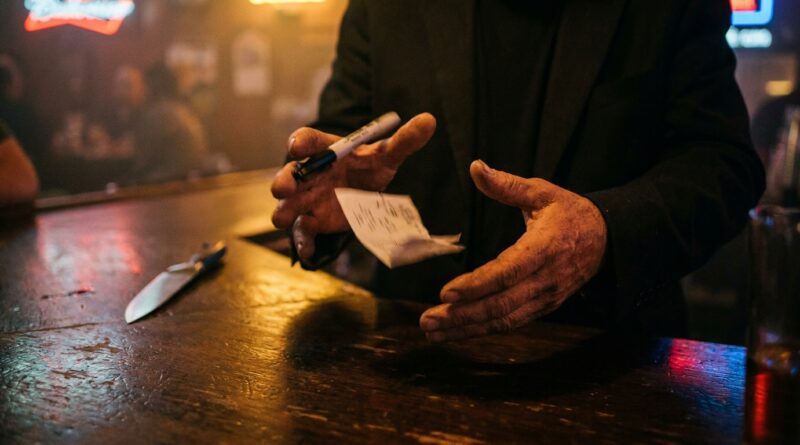
From Viral Knife Clips To Real-World Danger: How To Build One ‘No-Risk’ Object Switch That Feels As Edgy As Blade Magic
You have probably felt this tug already. A knife clip flies past on your feed, the comments are full of fire emojis, and some part of you thinks, “I need that kind of moment in my set.” Then the sane part kicks in. Real blades are not forgiving. One bad catch, one sweaty finger, one rushed take, and you are not posting a cool reel. You are calling urgent care. The good news is you do not need actual steel to get that same sharp, dangerous-looking beat. If your goal is a safe knife magic sleight of hand switch, the smartest route is to build a single-object switch around a harmless prop that reads like contraband on camera. Think brushed metal utility marker, compact folding comb, or capped barber-style tool. Handled right, it gives you the same pulse spike, but with far less risk and much better repeatability for live work.
⚡ In a Hurry? Key Takeaways
- Build your routine around one harmless object switch, not a real blade flourish. It looks edgy but is much safer.
- Use a metal marker, folding comb, or capped grooming tool with a fast open-to-closed visual change and a simple finger palm ditch.
- The safest method is the one you can repeat under pressure, from multiple angles, without adrenaline making the move sloppy.
The Better Goal: Dangerous Vibe, Safe Method
A lot of viral “knife magic” is not really magic. It is a mix of flourish handling, risky object play, selective framing, and edits. That is fine for stunt content. It is not fine if you want something you can do ten times in a night, in bad lighting, with people leaning in from the side.
So change the target. Stop trying to copy the exact object. Copy the feeling.
The feeling is sudden. Metallic. A little forbidden. The audience thinks they saw something sharp appear, vanish, or turn into something else. That is the part worth stealing.
The One ‘No-Risk’ Object Switch to Build
Use a “false blade” object with everyday innocence
The sweet spot is an object that can flash like steel but cannot cut you. My favorite category is a brushed aluminum permanent marker or metal-bodied scribe with the cap on. On camera, especially under hard light, it reads like a compact blade handle. In person, it still has weight and credibility.
You can also use:
- A folding comb with rounded ends
- A capped barber pencil or beard tool
- A metal penlight
- A dummy trainer prop made of rubber or soft plastic
The best choice is the one that gives you a strong silhouette and a bright flash when it turns.
The effect
You show one object openly. It is seen at the fingertips. With a quick flip and re-grip, it seems to become a more dangerous-looking item for a split second, then instantly resolves back into something harmless in the spectator’s hand.
That last part matters. The routine ends clean and safe.
How the Switch Works
Build it around shape, not mechanics
You do not need a knuckle-busting move. You need one display shape, one hidden shape, and one moment of motivated cover.
Here is the basic structure:
- Start with the harmless object in a loose display grip between thumb and first two fingers.
- Turn the wrist inward as your other hand comes in to “steady” or point at the object.
- Use that beat to rotate the object into finger palm while a second object, or the same object in a different orientation, comes into view.
- Flash the new silhouette for less than a second.
- Immediately cap, fold, or hand out the harmless version.
If that sounds simple, good. Simple is what survives performance.
Two ways to do it safely
Option 1: Single-object orientation switch. Use one tool that looks harmless one way and edgy another way. A metal marker with a dark cap can read like a closed utility knife if you flash the profile and keep the reveal brief.
Option 2: Two-object soft switch. Carry a soft rubber trainer or folding comb in finger palm. Display the metal marker. On the turn, switch in the trainer for the flash moment. Then instantly close the hand and return to the marker or hand out the comb as a joke release.
Option 1 is easier. Option 2 is stronger on video.
Why This Looks So Good on Camera
Phone cameras love contrast and motion. A bright, narrow object catching light for half a second reads as “blade” long before the brain checks details. That is the secret. You are not fooling the lens with danger. You are fooling attention with timing and silhouette.
That is also why this should stay brief. Hold the image too long and people start inspecting. Flash it and move on, and the audience fills in the rest.
If you enjoy this kind of perception-based visual magic, there is a smart companion piece here: From Cruise Ship Parlors To Your Close‑Up Set: How To Build Shadow‑Play Sleights That Feel Like Real Voodoo. It plays with the same idea of letting the audience’s eyes do half the work.
What to Practice First
1. The pause before the turn
Most people rush the switch. Do the opposite. Show the object. Let the image settle. Then turn. That tiny beat makes the change feel impossible.
2. The re-grip after the flash
This is the part that sells the whole thing. If your hand looks tense after the change, spectators smell method. Your recovery grip should look casual, almost bored.
3. Side-angle checks
Set your phone at chest height, then 45 degrees left and right. If the hidden object peeks out, fix that before you ever post or perform it. A good safe knife magic sleight of hand switch should survive normal human viewing, not just one perfect lens line.
Props That Work Better Than Realistic Fake Knives
Here is the trap. The more your prop looks exactly like a real knife, the more you invite bad decisions, venue concerns, and spectator panic. You do not need that.
Better choices are props that suggest danger without fully committing to it:
- Metal marker with industrial styling
- Compact folding comb with a snap-open action
- Silver penlight with black accents
- Rounded trainer prop in matte black
These let you keep the tension while staying on the right side of common sense.
Presentation Ideas That Make the Switch Stronger
The “don’t blink” challenge
Tell the audience, “This is the kind of thing your brain gets wrong if you blink.” Then do the switch. Framing it as a perception test lowers heat on the prop itself.
The “bad decision” fake-out
Reach into your pocket like you are about to show something reckless. Then resolve it into a marker or comb. This gets the shock without the liability.
The edit-proof creator version
Start with both hands empty in frame. Pick up the object openly. Perform the switch in one continuous take. End by placing the harmless object on the table. That makes the clip feel honest, which is rare enough now to stand out.
Safety Rules Worth Saying Out Loud
Even with safer props, it is smart to set a few hard rules:
- Do not practice with live blades, even “just to compare.”
- Do not rehearse when tired, rushed, or distracted.
- Do not perform any edgy-looking object magic in schools, airports, government buildings, or venues with strict security without checking first.
- Do not hand a spectator anything that could be mistaken for a weapon unless the context is crystal clear.
That may sound boring. Boring is good when the alternative is stitches.
At a Glance: Comparison
| Feature/Aspect | Details | Verdict |
|---|---|---|
| Visual impact | A brushed metal marker or folding comb can flash with the same quick “blade” energy on camera when lit well and shown briefly. | Very strong, especially for reels and close-up video |
| Safety | Harmless props remove cutting risk and reduce the chance of injury during repeated practice and live performance. | Far better than real blade handling |
| Real-world usability | The switch can be performed in one take, from decent angles, and for actual audiences without turning the routine into a stunt. | Best choice for creators and working magicians |
Conclusion
You do not need to gamble with your hands to get that jolt people react to online. A smart, safe knife magic sleight of hand switch gives you the same edgy beat, but in a form you can actually trust. That matters right now because the line between magic and stunt content keeps getting blurrier, and younger magicians copy what they see long before they understand the injury risk behind it. A concrete, angle-proof alternative keeps hands intact, pushes technique forward, and gives creators something they can film, share, and perform for real people tonight. That is a much better flex than chasing half-exposed knife flourishes and hoping luck fills in the gaps.