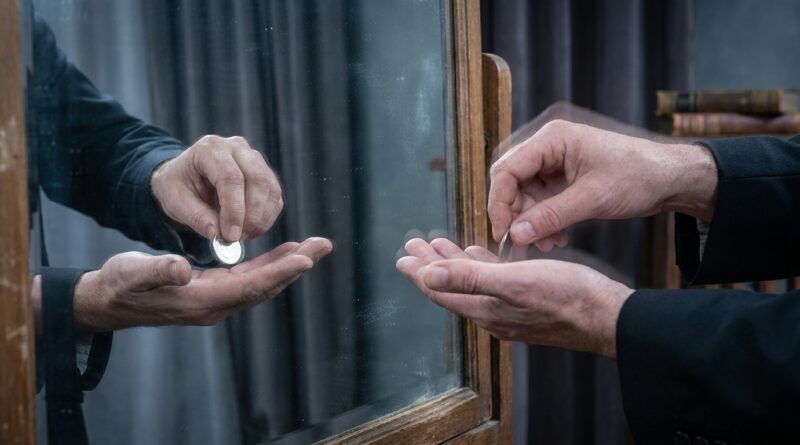
From Static Tutorials To Live Feedback: Build One ‘Mirror-Perfect’ Coin Vanish That Looks Real Even In Slow Motion
You know the feeling. The vanish fools people live, maybe even gets a nice reaction on camera, then someone watches it again in slow motion and suddenly the spell falls apart. The hand that was supposed to look empty closes a little too early. The dirty hand moves with extra caution. The timing between the fake take and the real action does not quite match. None of that means your vanish is bad. It means modern cameras are brutally honest. If you want a slow motion proof coin vanish sleight of hand, you do not need ten new moves. You need one vanish whose open displays, finger tension, rhythm, and side angles all agree with each other. That is the whole game. Build one action that looks the same in the mirror, on your phone, and from a chair off to your left, and suddenly your old vanish starts looking like real magic instead of a move trying not to get caught.
⚡ In a Hurry? Key Takeaways
- To make a vanish look real in slow motion, the fake action must match the real action in speed, finger shape, and follow-through.
- Practice with a mirror and your phone from the front and side, then fix the exact frame where the illusion stops looking natural.
- You do not need a new gimmick. A cleaner transfer, calmer hand, and better angle discipline usually improve the vanish more than a new sleight does.
Why most coin vanishes fail under replay
The problem is usually not the secret move itself. It is the difference between what both hands are saying.
One hand says, “I just took a coin.” The other hand says, “Please do not look at me.” That mismatch is what viewers notice, even if they cannot name it.
Slow motion makes three things obvious fast. First, tension in the fingers. Second, a change in rhythm right at the dirty moment. Third, a hand path that only makes sense if there is a method to hide.
That is why so many short clips get called out for angle issues or furtive motion. The vanish might work from one front-facing camera line, but the illusion has no structure outside that tiny window.
What “mirror-perfect” really means
Mirror-perfect does not mean pretty. It means consistent.
If you really placed a coin into the other hand, your shoulders would stay relaxed. Your receiving hand would not snap shut like a trap. Your giving hand would not instantly freeze in a claw shape. And your eyes would not rush to check whether the hidden coin is still hidden.
A mirror-perfect vanish copies those normal behaviors so well that the fake transfer and the real transfer look like twins.
The test that matters
Do this simple check. Perform a genuine transfer ten times. Then perform your false transfer ten times. Put both on video. If a stranger could sort the clips into “real” and “fake” piles, your vanish is not ready yet.
That sounds harsh. It is actually good news. It gives you a clear target.
Start with one vanish you already know
Do not chase five new techniques this week. Pick one vanish you already use. A retention vanish, a false transfer, a finger palm take, whatever fits your style. Then strip it down to one beat.
Your job is not to make it flashier. Your job is to make it boring in the best possible way. Normal. Unhurried. Identical every time.
This same idea shows up in close-up finger work too. If you liked the thinking behind tiny visual actions that survive camera scrutiny, From Viral Finger Bends To Real-World Miracles: Build One ‘Micro-Sleight’ That Looks Like Camera Tricks In Close-Up makes a similar point. A tiny move becomes powerful when it looks ordinary up close, not when it looks clever.
The 5-part build for a slow motion proof coin vanish sleight of hand
1. Match the real transfer first
Before you polish the vanish, record a real transfer. Actually place the coin from one hand into the other.
Watch for these details:
- How far the receiving fingers open
- When the thumb closes
- How long the giving hand stays near the receiving hand
- What the wrist does after the transfer
- Where your eyes go
That real transfer is your model. Your false one should copy it closely.
2. Fix the receiving hand
This is where many vanishes die.
The receiving hand often closes too soon, too tightly, or with too much drama. If a real coin lands there, the hand usually closes around weight. If no coin lands there, magicians often mime that weight with a stiff squeeze that looks fake.
Try this. In your false transfer, let the receiving hand stay softer for a fraction longer. Close it as if protecting something delicate, not as if crushing evidence.
That one change cleans up a lot.
3. Fix the dirty hand even more
The hidden coin hand should not suddenly become a museum piece.
After the vanish, many performers hold the dirty hand in a shape they would never use in normal life. The fingers stop moving. The wrist locks. The elbow drifts away from the body for no reason.
Instead, give that hand a job. Adjust the sleeve. Gesture naturally. Reach for a wand, table edge, or spectator focus point. Not as misdirection theater. Just as normal body use.
If the dirty hand has no reason to exist after the transfer, people will study it.
4. Remove the “sneak frame”
There is usually one exact instant where the method peeks through. Maybe the thumb pulls in too sharply. Maybe the fingers curl before cover is earned. Maybe the hand rotates a few degrees too much to block the view.
Find that frame on video. Then isolate just that half-second and rebuild it.
This is where live feedback beats static tutorials. Tutorials often show what the move is. They rarely show exactly where your version starts looking suspicious. Your camera does.
5. Add honest follow-through
After a real transfer, the giving hand continues moving in a small, natural way. After a fake transfer, many magicians stop the giving hand right after the secret action. That stop screams, “Something happened here.”
Use follow-through. Let the hand continue its path by an inch or two. Let the motion finish naturally.
Think of a golfer finishing a swing. A move that ends too abruptly feels forced.
Use a mirror, then stop trusting the mirror alone
Mirrors are great for broad shape. They are bad for truth.
A mirror shows a familiar front view. It does not show what happens from your weak side, from a lower seated angle, or from the phone camera that flattens depth.
So use this order:
- Mirror for hand shape and posture
- Front-facing phone video for timing
- Side-angle phone video for exposure
- Slow-motion playback for the exact leak point
If your vanish only works in the mirror, it is not finished.
A simple practice drill that actually works
The “real, fake, real, fake” drill
Alternate genuine transfers and false transfers without changing tempo.
Do ten rounds like this:
- Real transfer
- False transfer
- Real transfer
- False transfer
Then review the video with the sound off.
You are looking for pattern breaks. Does one version make your shoulders lift? Does one make your receiving hand close faster? Does one make your gaze dart?
Those differences are gold. They tell you what to fix next.
The “burn test”
Ask a friend to stare at the hands they think matter most. Do not script where they should look. If they keep drifting to the dirty hand, something in your body language is calling attention there.
That is useful information, not failure.
Angle-proofing without becoming robotic
Some performers react to angle fear by making the vanish tiny and tight. That can backfire. The more careful you look, the less magical you look.
Angle-proofing is not about shrinking the move until nobody can see it. It is about choosing hand positions that remain believable from more than one viewpoint.
Three smart angle fixes
- Keep the hands slightly lower than chest height so side viewers are not staring straight into finger positions.
- Turn your body a few degrees, not your hands a full quarter turn. Big hand turns look suspicious.
- Use overlap and depth naturally. Let one hand briefly eclipse the other during the transfer, as real objects often do.
The key word is briefly. Cover should look like a consequence of movement, not a shield thrown up in panic.
Pacing is often the hidden culprit
Many vanishes are not exposed by bad technique. They are exposed by bad rhythm.
The move speeds up at the secret moment, then slows down after. That tells the viewer exactly where to look.
Try using a spoken line or a silent count. “Show, take, close, relax.” Keep each beat even. Not stiff. Even.
If your vanish gets frantic right where the method happens, slow down. Calm reads as confidence. Confidence reads as fairness.
What social media gets wrong about coin work
Short clips reward impact fast. That can push people toward narrow-angle vanishes, extra-snappy actions, and edits disguised as handling. Then someone posts a replay or a side angle and the comments fill with the usual complaints.
You do not need to play that game.
A vanish that survives close-up replay may look less flashy at first glance, but it builds trust. Once people believe your hands, everything after that gets stronger.
When to change the sleight and when to keep it
Sometimes your current vanish is worth fixing. Sometimes it is the wrong tool.
Keep it if:
- The main issue is timing, tension, or follow-through
- The angle problem is mild and manageable with body position
- Your hand size and coin size fit the move comfortably
Switch it if:
- You need impossible side-angle coverage the move cannot honestly provide
- Your fingers are fighting the coin every time
- The vanish only looks good when rushed
That last one matters a lot. If speed is the only thing protecting the method, the method is not protecting you.
At a Glance: Comparison
| Feature/Aspect | Details | Verdict |
|---|---|---|
| Mirror practice | Good for posture, hand shape, and broad choreography, but weak for side angles and camera truth. | Useful first step, not the final judge. |
| Phone slow-motion review | Shows tension, timing leaks, and the exact frame where the false action stops matching the real one. | Best tool for making a vanish replay-proof. |
| New gimmick or new sleight | Can help in some cases, but often hides the real issue, which is mismatched rhythm, odd hand behavior, or weak angle planning. | Only worth it after fixing the basics. |
Conclusion
The good news is that most coin workers do not need to throw out the vanish they already have. They need to make it honest-looking from more than one angle and at more than one speed. That is the real upgrade. In the last day, coin workers across Reddit and other communities have been sharing short routines and production-vanish sequences that only work from a very narrow window, and plenty of comments are calling out angle issues, rushed pacing, and furtive motion that falls apart on replay. If you take one existing move and make it mirror-perfect, with matched actions, softer tension, and cleaner follow-through, you level up the magic you already love instead of chasing the next trendy flourish. And in a world of HD lenses, close-up clips, and viewers who replay everything, that kind of slow motion proof coin vanish sleight of hand is worth a lot more than a new secret move.