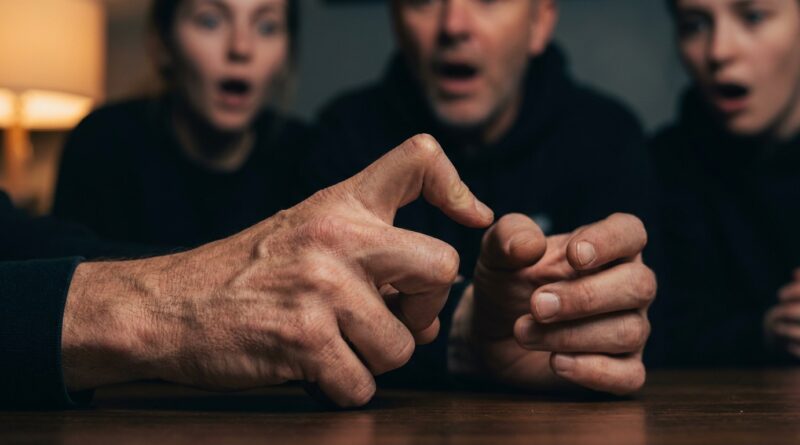
From Viral Finger Bends To Real-World Miracles: Build One ‘Micro-Sleight’ That Looks Like Camera Tricks In Close-Up
It is a strange feeling when a five-second finger clip gets more attention than a polished card routine you spent years learning. A lot of magicians are feeling that sting right now. The feed is full of tiny bends, fingertip warps, and little vanish moments that look more like camera edits than old-school sleight of hand. If your work is built for a table, a stage, or even a formal close-up set, vertical video can make it feel big, slow, and suddenly dated. The good news is you do not need to throw out your style or chase gimmicky nonsense. You need one strong micro-sleight. Just one. Build it well, make it clean from more than one angle, and it can become a social clip, a live offbeat moment, and a bridge into your deeper material. That is the sweet spot. The new finger bend sleight of hand trick trend is really a lesson in scale, framing, and clarity.
⚡ In a Hurry? Key Takeaways
- A strong new finger bend sleight of hand trick should read instantly on camera and still make sense live from close range.
- Start with one visible action, one hidden method, and one clean ending. Then test it front-on, over the shoulder, and in slow motion.
- If the move needs perfect lighting, a single camera angle, or aggressive editing, it is a clip, not a miracle. Aim for both.
Why these tiny finger illusions are winning
People scroll fast. Your trick gets maybe a second to make them stop. That changes everything.
Classic card magic often asks for context. A selection. A shuffle. A reveal. On social platforms, especially vertical ones, that can feel like setup without payoff. A finger-level visual is the opposite. It starts with the payoff.
That is why the new finger bend sleight of hand trick format is spreading. It is immediate. You see a finger where it should not bend, a fingertip that seems to melt, or a joint that vanishes for a beat. The brain does not file it under “card trick.” It files it under “what on earth was that?”
That reaction is gold.
The real goal is not a clip, it is a micro-sleight
Here is the trap. Many viral clips are only built for one lens and one take. That is fine if you only care about views. It is not fine if you are a magician who wants usable material.
A micro-sleight is different. It is a small physical deception with three jobs:
- It looks impossible from the main viewing angle.
- It survives basic angle changes.
- It can lead into or out of a real routine.
Think of it like building a tiny utility move instead of chasing a one-hit social gimmick.
What makes a finger bend look like a camera trick
The best ones usually share a few traits:
- A clear before picture. The hand looks normal.
- A sudden visual change. The bend or distortion happens fast.
- A short hold. Long enough to register, not long enough to invite a forensic study.
- A believable release. The hand returns to normal without fuss.
That pattern matters more than the exact move. If your audience cannot tell what changed, no sleight can save it.
Build one miracle around one moment
If you want a practical framework, keep it brutally simple.
Step 1: Pick a single effect sentence
Write the effect in one plain sentence. For example:
“My index finger bends in the middle where there is no joint.”
Or:
“For one second, my fingertip seems to slide off line and then snap back.”
If the sentence is fuzzy, the trick will be fuzzy too.
Step 2: Design the frame, not just the method
Most magicians work on method first. For micro-visuals, framing is just as important.
Ask these questions:
- Is the hand filling enough of the frame?
- Can the viewer see all important edges?
- Is there visual clutter behind the fingers?
- Does the other hand help sell the reality, or does it make things suspicious?
A plain background helps. Soft side lighting helps. Busy shirts do not help.
Step 3: Hide one thing only
The strongest micro-sleights usually conceal one small truth, not five. Maybe it is finger tension. Maybe it is thumb position. Maybe it is a brief alignment. But if the move needs a stack of compensations, it gets fragile fast.
This is where a lot of creators go wrong. They try to make the impossible moment longer and cleaner by adding more handling. Usually that makes it worse.
Short. Sharp. Done.
Step 4: Build in a clean exit
The ending is what makes the move feel real. If your fingers awkwardly reset, people smell method even if they do not know what it is.
A good clean exit might be:
- Relaxing the hand naturally at your side.
- Turning palm up after the moment.
- Picking up a nearby object as a time misdirection beat.
The trick should not end with “and now please stop looking.”
How to make it angle-safe instead of angle-perfect
You do not need 360-degree safety. You need realistic safety.
For this kind of effect, test three views:
Front camera view
This is your social baseline. If it does not kill here, move on.
Over-the-shoulder view
This one matters more than many magicians think. If the move survives from just behind you, it starts to become a real-world worker. It also makes your content feel more honest when you can post a second angle.
Spectator close-up view
Have a friend stand where a real person would stand in casual performance. Not where you wish they would stand. Where they actually drift to.
If all three views work well enough, you have something valuable.
This is the same thinking that makes tech-style effects stronger too. If you liked the idea of making real life look like a software bug, the same design logic shows up in From Viral ‘Keyboard Glitch’ Clips To Real-World Miracles: Build One Everyday Tech Sleight That Looks Like A Software Bug In Real Life. Different prop. Same core lesson. Build the effect so it survives scrutiny, not just the first upload.
A practical rehearsal plan that does not waste your week
Knacky moves can eat your time if you let them. Use a simple practice loop.
Day 1: Find the shape
Do not perform. Do not script. Just find the exact finger positions that create the best picture.
Day 2: Add entry and exit
Work only on getting in and out cleanly. The secret is rarely the hard part. The transitions are.
Day 3: Record ten ugly takes
Not polished takes. Diagnostic ones. Watch them back with the sound off.
You are checking for:
- Flash points
- Tension in the wrong fingers
- Bad timing
- Unnatural pauses
Day 4: Test in conversation
Show it while talking about something else. This is useful because real performance never happens in a vacuum. The move has to live inside normal human motion.
Day 5: Shoot the final version from two angles
Now you are not just practicing a trick. You are building an asset.
How to turn one micro-sleight into a full performance beat
This is where serious magicians can separate themselves from trend-chasers.
Do not post the bend and stop there. Use it as a door.
Option 1: Use it as an opener
A finger anomaly is a great way to pull attention before a coin, ring, or card phase. It says, “watch closely,” without saying it.
Option 2: Use it as a false offbeat
After a stronger effect, throw in the bend as a casual throwaway. Those often hit hardest because spectators think the trick is over.
Option 3: Use it as a character moment
If your style is playful, strange, or deadpan, a tiny body-based impossibility can say more about your persona than another ambitious card sequence ever could on a phone screen.
Common mistakes that make these clips look fake in the bad way
There is a difference between “looks too impossible” and “looks edited.” You want the first one.
Over-clean framing
If the hand is posed like a product demo, viewers get suspicious. Natural posture sells.
Too much speed ramping or jump cutting
Even a good practical move dies if the edit screams for attention.
Holding the moment too long
Freeze-frame culture makes this tempting. Resist it. Show. Let it land. Move on.
No reason for the hand motion
If your fingers drift into the setup for no clear reason, the audience may not know the method, but they will feel the move coming.
What “future-proof” really means here
It does not mean the trick will stay trendy forever. Nothing does.
It means the method is solid enough that when platforms change, the effect still works. A real micro-sleight can live in a short clip today, a live set tomorrow, and a tutorial teaser next month. That is worth much more than a one-angle novelty.
Try to build material that survives:
- slow motion
- pause-and-zoom viewers
- slight camera shifts
- casual live repetition requests
If it survives those, you have not sold out your technique. You have updated your packaging.
At a Glance: Comparison
| Feature/Aspect | Details | Verdict |
|---|---|---|
| Visual clarity | One finger, one impossible change, easy to read on a phone screen in under two seconds. | Essential. If it is not instantly clear, it will not travel. |
| Angle safety | Should work front-on and from a basic over-the-shoulder view, even if not fully surrounded. | Very important. This is what turns a clip into a worker. |
| Replay resistance | Clean entry, short hold, natural exit, and no edit-dependent moments. | The best long-term value. Strong on social, useful in person. |
Conclusion
The big lesson is surprisingly simple. You do not need to chase every viral move. You need one small miracle that is clear, practical, and honest enough to live outside the camera frame. That helps the Magician Book community right now because the hottest organic magic content is not giant illusions or shiny tech props. It is tiny, visual, finger-level moments people share instantly. If you can turn a single knacky move into a repeatable, angle-safe, over-the-shoulder effect, you are not giving up serious sleight of hand. You are adapting it. Build once, test it hard, shoot it cleanly from multiple angles, and you end up with something rare. A piece of magic that works for the algorithm, for live spectators, and for your own standards too.