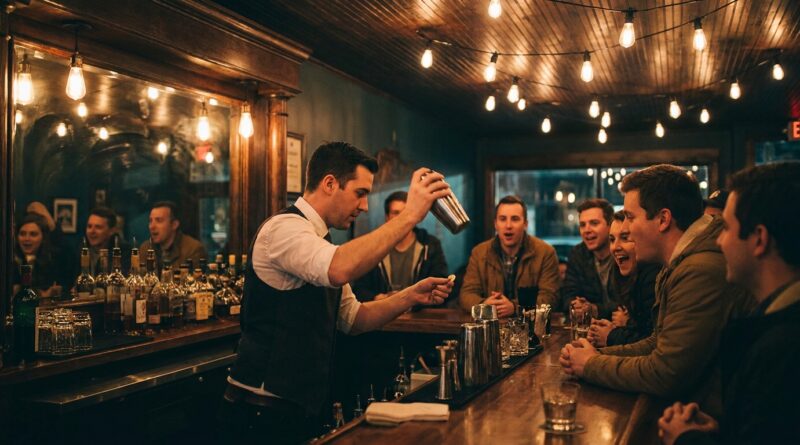
From Bar Flair Hype To Real-World Miracles: Build One ‘Cocktail Sleight’ Routine That Turns Drink Skills Into Deceptive Magic
You can feel the problem the second you walk into a busy bar. Bottles are flying, shakers are spinning, everyone is half-watching the bartender, and suddenly your carefully built card opener feels small. That is frustrating, especially when you know your sleight of hand is stronger than the flashy stuff getting all the attention. The good news is that you do not need to compete with bar flair. You need to hide inside it. If people already expect quick, clever hand movements around drinks, you can use that expectation as cover and turn “nice flair” into “wait… that is impossible.” The trick is to stop thinking in terms of separate effects and start building one tight bar flair sleight of hand magic routine that looks casual, plays big in noise, and resets fast. Done right, it feels like part bartender, part magician, and part social ambush. That is where the real reactions live.
⚡ In a Hurry? Key Takeaways
- Build one short routine around a drink object, a vanish or switch, and an impossible reveal instead of doing random flair moves.
- Use the audience’s assumption that fast drink handling is “just bartending” as your main misdirection.
- Keep it safe, dry, and resettable. Real-world bar magic must survive noise, spills, and drunk spectators.
Why bar settings are perfect for deception
Bars are chaotic, but that chaos helps you. People do not watch hands in a bar the same way they watch hands in a formal close-up show. They assume movement around glasses, napkins, bottles, straws, and coasters is normal. That is gold for a magician.
Most performers make one of two mistakes. They either do pure flair with no magical payoff, or they force standard close-up tricks into a loud, standing environment where they lose impact. A smarter move is to blend the two. Give them the look of service and the shock of impossibility.
That is what this framework is for. Not a dozen tricks. One routine. One identity. One thing you can use tonight.
The “Cocktail Sleight” framework
A strong bar flair sleight of hand magic routine needs three beats.
Beat 1: Establish skill
Show one quick, believable action that looks like drink handling, not a magic trick. This could be a napkin snap, a coaster flourish, a straw spin, a clean glass roll across the fingers, or a bottle-to-hand transfer that looks practiced but not showy.
The goal is simple. You want them to label you correctly, but incompletely. They should think, “Oh, this person is good with bar stuff.” Not, “Here comes the trick.”
Beat 2: Slip in the secret moment
Once they accept your movements as normal, you place the method inside a second action that looks just as innocent. This is where the false transfer, load, ditch, switch, or steal lives.
Because the first beat trained them to see drink choreography, the second beat flies past with less resistance.
Beat 3: Deliver an impossible change
Do not end on “that was neat.” End on a clean visual or a direct impossible outcome. A coin appears under a lime wedge. A signed cap ends up sealed in your pocket. A borrowed ring shows up inside a nested stack of bar napkins. A sugar packet changes into a folded prediction.
The reveal should feel bigger than the prop.
The best real-world routine: coaster, coin, glass, reveal
If you want one field-tested structure that works in noisy rooms, start here. It uses common bar objects, plays for a small group, and resets almost instantly.
What you need
A coaster. A coin. A glass. A duplicate coaster or hidden load if your method needs it. You can adapt the exact handling to your style, but keep the outward structure the same.
The effect from the audience view
You casually pick up a coaster and flip it once like a bartender killing time. You borrow or produce a coin and place it under the coaster. You tap the coaster with the base of a glass. The coin vanishes. A second later, the glass is lifted and the coin is found underneath, or inside a folded napkin that has been in view, or in the spectator’s own hand under the coaster they thought they were guarding.
This works because every object belongs in the environment. Nothing feels imported from a magic case.
Phase 1: The soft opener
Start with a one-second flourish. Spin the coaster on one finger, flip it from hand to hand, or slide it under the glass cleanly. Nothing fancy. You are not auditioning for a Vegas bar school. You are just setting the tone.
Then say something simple like, “Everyone thinks the fast part is the trick. It usually is not.” That line frames the whole routine.
Phase 2: The false moment
Introduce the coin. Let them hear it. Sound matters in bars. A coin that clinks on glass or wood gets attention fast. Pretend to place it under the coaster, or genuinely place it there before a later steal, depending on your method.
This is the key point. Your secret move should happen during an action that makes sense in the bar world. Repositioning the coaster. Squaring the napkin. Picking up the glass. Turning slightly to make room on a crowded table. Those are natural covers.
Phase 3: The magical beat
Tap the coaster with the glass. Pause. Lift. The coin is gone.
Do not rush the silence here. In a loud venue, silence from your group is the sound of impact.
Phase 4: The kicker
Now go one step further. Reveal the coin somewhere that feels protected. Under their drink. Inside a folded cocktail napkin. Beneath a lime dish. In their closed fist if you work with a shuttle pass or a simple load.
That last beat turns a vanish into a miracle. Vanishes are nice. Relocations get screamed about later.
Why this routine hits harder than cards in a bar
Cards are great, but in some bar environments they look familiar before they look amazing. A coaster and a glass do not have that problem. They belong there already.
That matters because laypeople decide very quickly whether to care. When you use bar objects, you remove the feeling that you brought your own puzzle. Instead, it feels like impossible control over the room itself.
It also helps with bookings. Guests remember the performer who did impossible things with the stuff already on the table. That sounds custom. It sounds social. It sounds expensive.
How to structure the routine for real gigs
Keep it under 90 seconds
In bars and mixers, short wins. You are fighting music, drink orders, side conversations, and people coming and going. One compact sequence beats a five-minute plot every time.
Build around visibility
Choose actions that read from a half-step back. Tiny finger work dies in these spaces. Bigger object movement works better. Glass up. Coaster down. Coin sound. Reveal under something.
Use one line of script, not ten
The more you talk, the more the room steals your words. Give them one clean idea. Try, “People think the flashy move is the secret. Watch the boring part.” That line gets attention and helps your misdirection.
Reset as you leave
Your routine should be ready again before you reach the next group. If it needs a full pocket re-sort, it is not bar-ready.
What to avoid
Do not use wet props unless you have tested them
Condensation ruins confidence. Slick surfaces change timing. If the method falls apart when a glass sweats, it is not ready.
Do not overdo the flair
The flair is camouflage, not the headline. If you juggle too much, people stop tracking the magic and start judging your dexterity.
Do not borrow fragile or expensive items too early
Rings and phones can be strong, but bars are not gentle places. Start with objects that can survive a bump and still look clean.
Three easy props that work well in this style
Coasters
Cheap, normal, and easy to switch or load around. They also frame small objects well.
Napkins
Perfect for vanishes, folds, tears, and hidden loads. They scream “bar” without needing explanation.
Bottle caps or corks
These are great because they feel specific to the setting. A signed cap transposition can crush in casual venues.
How to practice without looking fake
This part matters more than many magicians think. If your bar handling looks like “a magician pretending to be a bartender,” people feel it right away.
Practice the non-magic actions first. Pick up a glass naturally. Slide a coaster naturally. Fold a napkin naturally. Transfer an object naturally. Make the room-facing parts boring in the best possible way.
Then add the method. The secret should ride inside familiar movement, not sit on top of it.
If possible, rehearse in noise. Put music on. Stand up. Practice on a high counter instead of your close-up mat. Real conditions change timing.
How this helps you get stronger reactions and more work
There is a business side to this too. Event planners and venue owners want performers who fit the room. A polished cocktail-themed routine looks made for corporate mixers, hotel bars, breweries, wedding receptions, and private parties.
It also helps you stand out. Plenty of magicians can do good card work. Fewer can walk into a drinks-heavy social setting and make the environment itself feel magical.
That difference is memorable. And memorable gets rebooked.
At a Glance: Comparison
| Feature/Aspect | Details | Verdict |
|---|---|---|
| Visual attention | Bar objects already command focus, so the routine feels natural before it feels magical. | Strong advantage over standard card openers in loud venues. |
| Practicality | Uses common items like coasters, coins, glasses, and napkins. Quick reset if built well. | Excellent for walk-around and mixer work. |
| Risk factor | Noise, spills, and spectator movement can hurt weak handling or fragile methods. | Safe and powerful if you keep the method simple and dry. |
Conclusion
The smart play is not to fight bar flair. It is to use it. Build one short, sharp cocktail sleight routine where a normal drink-handling action hides the method and a clean impossible reveal lands the punch. That helps the Magician Book community right now because live, in-person social magic is booming again, especially in bars, breweries, and pop-up cocktail nights. Audiences are already primed to watch fast hands around drinks, but very few magicians are turning that expectation into real deception instead of empty eye candy. If you can drop in with one field-tested routine that fits the room, resets fast, and gets talked about after the drinks are gone, you will earn stronger reactions, more repeat work, and a real point of difference from every other card guy in the building.