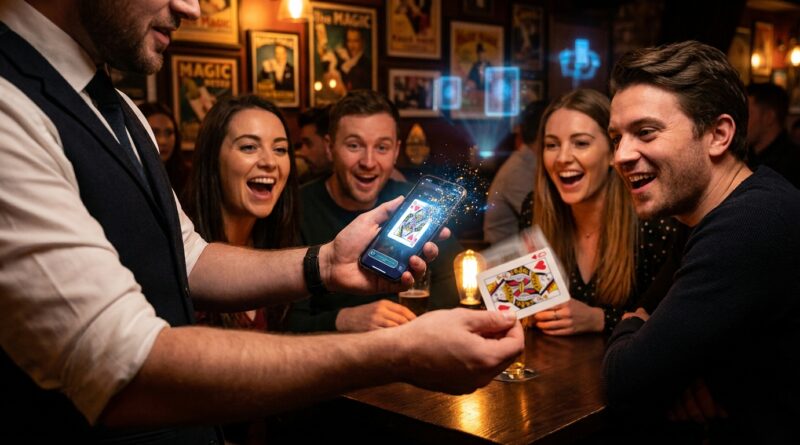
From Viral ‘Tech Magic’ Clips To Real-World Miracles: How To Build One Hybrid AR + Sleight-Of-Hand Routine That Feels Like Glitching Reality Live
Your audience has seen too much. They have watched objects duplicate, cards melt through screens, and borrowed items “glitch” in ways that only work because a camera was pointed the right way and the edit happened at the right frame. Then they look at you, standing three feet away in the real world, and expect the same impossible feeling with no cuts, no filters, and no mercy. That is frustrating, especially when you know a phone-based trick can start to feel like a tech demo instead of a miracle. The fix is not to fight technology. It is to hide your real method behind it. A strong ar sleight of hand magic routine uses augmented reality as a decoy, not the secret. The phone gives the audience a reason to look, a reason to believe, and a false trail to follow. Your hands do the real work. That is how you make something feel modern, impossible, and safe under heat.
⚡ In a Hurry? Key Takeaways
- A convincing ar sleight of hand magic routine works best when the AR moment is the story hook and the secret method is classic, audience-tested hand magic.
- Start with one simple plot, one borrowed object, and one “phone confirms reality is glitching” beat. Keep the app side light and the sleight side strong.
- If spectators can inspect the phone after the effect and still have no method, you are on the right track. The phone should be a decoy, not a crutch.
The core idea: let the phone take the blame
The smartest hybrid routines do something very sneaky. They train the audience to think the magic lives inside the device, while the actual secret happens outside it.
That matters because modern spectators are not fooled by “look what this app can do.” They are bored by it. If they think software did everything, they may still smile, but they will not feel astonished. They will file it under special effects.
What you want is different. You want them to think, “Maybe the phone started this, but that ending should not be possible.”
That is the sweet spot for an ar sleight of hand magic routine.
A practical blueprint for one routine that plays live
Effect in plain English
You borrow a coin and have a spectator mark it. You open an AR app or camera-style experience that appears to “scan” the coin on the table. On screen, a digital crack or glowing outline appears around the coin as if reality is misreading it. You ask the spectator to tap the screen. You lift the phone for a second. The real coin is now gone from the table and appears somewhere impossible, such as under the spectator’s watch, in your card box, or inside a folded paper that has been in view.
The audience remembers the AR as the trigger. The method is a vanish and load.
Why this plot works
It checks several boxes at once.
- It feels current because the phone seems to detect a “glitch.”
- It survives in the real world because the impossible moment is physical.
- It beats the “just an app” explanation because the final location is touchable.
- It allows post-show inspection because the phone itself does not carry the secret.
Build the routine in three layers
Layer 1: The tech wrapper
Keep this simple. Very simple.
You do not need a custom app with ten screens and a loading animation that screams “method.” You just need a believable visual cue. That could be a prebuilt AR filter, a WebAR experience, or even a camera overlay that tracks a surface and displays a crack, glow, or duplicate outline around the object.
The visual should do only one job. It should suggest that the object has become unstable.
Do not make the object visibly vanish on the screen. That is the mistake. If the phone makes the whole miracle happen, people will credit the phone. Instead, the AR should act like a warning light on a dashboard. It says something strange is happening. Then the real world delivers the punch.
Layer 2: The sleight-of-hand engine
This is where the routine earns its keep.
Your vanish needs to be strong enough to stand alone. A retention vanish, shuttle pass, simple lapping setup, or a well-timed one-coin switch into finger palm can all work, depending on venue and angles. The exact move matters less than the timing and the route into the final load.
Think like a stage mechanic. The phone creates cover, not invisibility. The moment you raise or tilt the device, ask for a tap, or invite the spectator to hold the screen steady, you create natural off-beats. Those are your working moments.
If your sleight cannot survive without the phone, it is not ready.
Layer 3: The impossible destination
This is what turns “cute tech thing” into “I need to talk about this later.”
Good destinations include:
- Under the spectator’s watch or bracelet
- Inside a folded prediction in full view
- In a zipped coin purse on the table
- Inside your card box
- Under a glass or coaster that seemed irrelevant
The destination should be physical, immediate, and easy to understand. Avoid locations that require too much explanation.
A sample script that feels natural
“Phones are getting weird now. They can map surfaces, recognize objects, and place fake things in real space. The problem is, sometimes they get overconfident. Let’s test that.”
Borrow the coin. Have it marked.
“Hold on. The camera sees edges and texture. Put the coin right there.”
Open the AR view. Let the graphic lock onto the area around the coin.
“That outline means it thinks the object is stable. If it starts to distort, that means either the software is wrong or reality is.”
Have them tap the screen when the effect graphic appears.
Lift the phone slightly. Execute the vanish under the action beat you have rehearsed.
Look at the table first, not at your hands. This is important. Your eyes teach the audience where the event happened.
Then say, “That should not have worked. Check under your watch.”
Now the trick moves from screen space into lived reality.
Why the phone must be inspectable
The best part of this structure is what happens after the applause.
They ask to see the phone.
You let them.
This is a huge psychological win. It tells the room that the device was not carrying the full method. Even if they suspect an app was involved, they still have to explain the signed object in the impossible place.
That tension is gold.
It is similar to what makes practical object effects hit so hard in person. If you enjoyed the thinking behind everyday impossible moments, you will probably like From Viral ‘Knife Switch’ Clips To Real-World Miracles: How To Build One Everyday Object Penetration That Looks Like CGI Live, because it tackles the same core problem from another angle. How do you make something look like internet sorcery while still surviving real eyes in real space?
Common mistakes that ruin the illusion
Making the AR too flashy
If the graphic is too polished, it starts to feel like a trailer instead of a live event. A subtle distortion is stronger than a neon explosion.
Using a weak final load
If the ending place feels arbitrary, the audience will backtrack and blame the phone. The stronger the final location, the less they care about the screen effect.
Performing for the phone instead of the people
This is a big one. Do not stare at your display the whole time. Talk to the spectator. React to them. The phone is a prop. The human moment is the show.
Trying to hide every movement
Real-world magic often dies from overprotection. Natural action beats suspicious freezing. Move with purpose. Let the handling breathe.
How to rehearse this so it works under pressure
Step 1: Rehearse the sleight with no phone at all
If the vanish and load are not clean by themselves, stop there and fix that first.
Step 2: Add the phone as choreography
Do not think of it as a gadget. Think of it as stage blocking. When do you lift it, tilt it, hand it out, or ask for a tap? Map those moments carefully.
Step 3: Record yourself from ugly angles
Front angle rehearsal is not enough. Try low angles, side angles, and the terrible spectator view from just off your dominant hand.
Step 4: Test on people who know what apps can do
You want honest reactions from social-media-literate spectators. If they say, “Cool filter,” your routine needs a stronger physical payoff.
Best environments for this routine
This format shines in:
- Close-up walkaround
- Trade shows
- Casual parlor settings
- Social content that is also intended to fool live viewers
It is less ideal in very bright outdoor light if your screen visuals become hard to read, or in loud nightclub conditions where the setup patter gets lost. You can still adapt it, but you need stronger visual clarity.
One smart rule: the trick should still make sense if the battery dies
This rule keeps you honest.
If the phone failed right before performance, would the remaining effect still be a strong vanish and impossible location? If yes, you have built a real routine. If no, you have built a software dependency.
That is not where you want to be.
How this changes the way audiences think
Done right, this kind of routine resets a modern spectator’s assumptions. They come in thinking phones explain everything. They leave with a signed coin under their watch and no clean explanation.
That is a powerful place to land.
It also changes the way magicians can think about technology. Not as a replacement for practice. Not as a shortcut. Just as a wrapper, a fake trail, a story device that makes old-school technique feel brand new.
At a Glance: Comparison
| Feature/Aspect | Details | Verdict |
|---|---|---|
| AR visual role | Used as a trigger, scanner, or “reality glitch” cue rather than the full secret | Best approach for strong live reactions |
| Secret method | Classic vanish and load, timed under natural phone choreography | More reliable than app-only methods |
| Post-show scrutiny | Phone can be handed out because it is not carrying the whole effect | Strong confidence booster and audience convincer |
Conclusion
The real win here is not just one good trick. It is a better way to think. The line between magic and technology is blurring fast, and spectators are starting to assume every visual miracle is “just an app.” A solid ar sleight of hand magic routine answers that problem beautifully. It gives you a modern frame, a believable reason to involve a phone, and a false explanation that the audience can chase, while the true effect lands in the real world through practiced technique. That means the routine can survive bad angles, social-media-savvy crowds, and even a full phone inspection after the fact. More importantly, it reminds the community that new tech does not have to replace skill. Used well, it can make classic sleight of hand feel shockingly current again. That is not a compromise. That is progress.