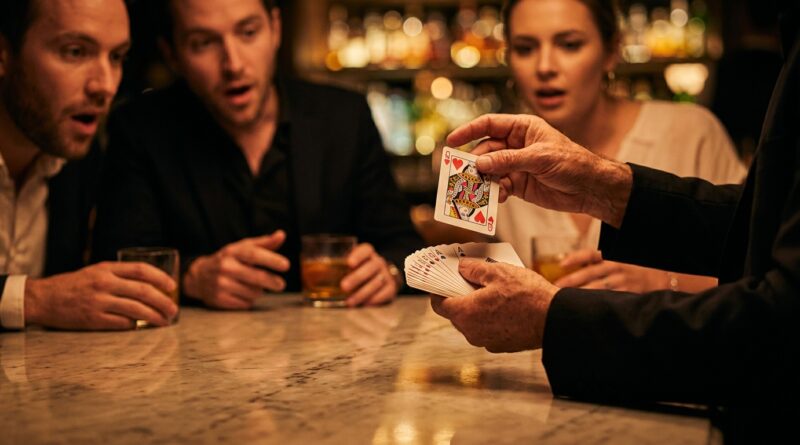
From Vegas Lounge Buzz To Your Living Room: Build One ‘Cocktail Hour’ Sleight‑Of‑Hand Set That Feels Like A Private Show
You can feel the gap the moment a group forms around you. One person has a drink, one is half listening, one already says, “Show us something.” That is where a lot of magicians get stuck. They have good tricks, even great sleights, but not a real cocktail hour sleight of hand routine. So the set feels random, the ending lands soft, and the reset kills momentum. That is frustrating because the current lounge and Vegas buzz is not really about giant stage pieces. It is about short, personal bursts that feel custom built for a tiny crowd. The fix is not learning ten more moves. It is building one tight ten minute sequence with a clear opener, a middle that raises the stakes, and a closer that leaves clean. If you can do that, you stop looking like someone showing tricks and start feeling like a private show that just happened to appear at the party.
⚡ In a Hurry? Key Takeaways
- Your best cocktail hour sleight of hand routine should be one 8 to 10 minute set with an opener, builder, and closer, not a bag of unrelated tricks.
- Use effects that play in the hands, reset in seconds, and can be shortened or stretched depending on the group’s energy.
- If you work repeat rooms, avoid burning your closer too early and carry one alternate phase so nearby guests do not see the exact same set twice.
Why cocktail sets fail even when the magic is good
Most failures are not technical. They are structural.
A magician opens with a flashy move. Then another trick. Then maybe a card revelation. Each piece works on its own, but the group never feels pulled through a story. There is no rising tension. No sense that something bigger is coming. In a cocktail setting, that matters more than people think.
You are not on stage. You are stealing attention from the room. Music is playing. Servers are moving. People are joining late and leaving early. A good set has to survive all of that.
That is why the modern approach is simple. Build one mini show. Make it modular. Make it personal. Make sure every piece earns the next one.
The core shape of a strong 10 minute set
Think in three beats.
1. Opener: fast, visual, easy to understand
Your first effect should answer one question fast. “Why should we watch you?”
This is not the place for a long procedure or a puzzle. Use something that happens in seconds and is visible from a loose semicircle. Coins, small objects, ring moments, or a direct transposition can work well.
The best opener also does one more job. It establishes your style. Charming, impossible, playful, dangerous, classy. Pick one and let the first 30 seconds say it.
2. Middle: interaction and escalation
Now you slow down just a little and bring people in.
This section should use spectators’ hands, names, choices, or personal objects. Why? Because cocktail magic gets powerful when it feels like it happened to them, not just in front of them.
This is also where you can do your strongest sleight of hand if the framing is clean. The audience is invested now. They will track the effect better.
3. Closer: impossible souvenir feeling
Your closer should feel bigger than the props used.
That might be a signed object ending somewhere impossible, a prediction that ties back to earlier choices, or a borrowed item effect that leaves a sharp emotional image. The closer is not just your strongest trick. It is the moment most likely to be retold five minutes later at the bar.
A plug-in set you can actually use
Here is a practical template for a cocktail hour sleight of hand routine. You can swap methods, but keep the job of each phase the same.
Phase 1: The visual hook, 30 to 60 seconds
Use one quick, visual effect with ordinary-looking objects. A coin appearance, a ring-and-coin moment, a color change, or a vanish and return. The point is speed and clarity.
Script idea: “Let me show you something small enough for a cocktail party and rude enough to interrupt one.”
That line gets a smile and gives you permission to gather the group.
Phase 2: The first in-the-hands miracle, 2 minutes
Put the magic in a spectator’s hand as early as possible. A coin through hand, a simple transposition, or a signed card to pocket can all work if the handling is direct.
The goal is trust. Once someone feels the moment happen in their own hand, the whole group leans in.
Phase 3: Texture change, 2 to 3 minutes
Change the kind of magic. If you opened with visual object work, move into a choice or memory effect. If you started with cards, move away from cards. Variety makes a short set feel fuller.
This is a smart place for a compact coin piece. If you want something modern and social-media sharp that still holds up live, a resource like From Viral Quick Cuts To Live Heat: How To Build One Invisible ‘Coin Fusion’ Switch You Can Use Surrounded is useful because it deals with a real issue many magicians ignore, which is making a visual moment survive real people on real sides of you.
Phase 4: Group beat, 1 to 2 minutes
Now widen the frame. Ask two or three people to track choices, hold items, or verify conditions. This makes the set feel bigger without needing bigger props.
You also protect yourself here. In loud rooms, getting multiple people involved keeps the group from becoming one intense spectator and five bystanders.
Phase 5: Closer, 2 minutes
End with the cleanest impossible memory you have.
Good cocktail closers often share three traits. They are easy to describe later. They use something personal or signed. They reset quickly after the applause moment.
If your closer needs a full pocket rebuild, it is probably not your cocktail closer.
What props work best in the real world
The best cocktail set props are not always the most exciting props to buy.
Use props that pass three tests
They read instantly. People should know what they are looking at in one second.
They reset fast. You should be ready before you reach the next group.
They justify being carried. Coins, cards, sharpies, rings, bills, and a small wallet feel natural. A weird plastic thing rarely does.
That does not mean gimmicks are bad. It means they need a job. If a gimmick saves time, strengthens the image, and survives close attention, great. If it only looks good in your mirror, leave it home.
How to survive repeat performances at the same event
This is where a lot of otherwise solid workers get exposed.
At weddings, receptions, corporate mixers, and hotel lounges, groups overlap. Someone from table one wanders to table three. A guest sees your ending twice. If your set is too rigid, the second viewing hurts you.
Use a fixed spine with flexible skin
Keep the structure the same, but carry alternate methods or presentations for one phase.
- Same opener, different object.
- Same middle effect, different reveal.
- Same closer slot, backup ending for repeat viewers.
This way, your rhythm stays professional while the experience feels fresh.
Do not burn your strongest closer on every group if the room is small
If fifty people are circulating in one connected space, save the signature closer for the clusters that are most engaged or most valuable for referrals. Everyone should get a strong set, but not every set has to be identical.
Reset matters more than magicians want to admit
A cocktail hour sleight of hand routine lives or dies on reset.
If you need to duck into a corner, sort cards, unhook thread, or rebuild three pockets, you are not ready for walk-around. The event will not wait for your artistry.
A good reset rule
Reset while thanking the group and stepping away. If the set cannot be reset by the time you arrive at the next cluster, simplify it.
That sounds harsh. It is also freeing. Once you stop designing for the perfect conditions, your material gets stronger fast.
How to script the set so it feels personal, not cheesy
You do not need a giant story. You need connective tissue.
One line can link phases. For example, your theme might be attention, luck, memory, influence, or impossible travel. That gives the set shape without turning it into theater camp.
Simple scripting beats to use
Invite. “Can I borrow your attention for 90 seconds?”
Frame. “This starts small and gets worse.”
Personalize. Use names. Ask one clean question. Borrow one real object when possible.
Call back. Mention an earlier choice before the closer lands.
Those tiny touches make unrelated effects feel connected.
What beginners, serious students, and pros should do differently
Beginners
Do not build a five-prop monster. Start with three effects only. One visual opener, one in-the-hands piece, one strong closer. Perform that for real humans until the transitions stop feeling awkward.
Serious students
This is your biggest trap. You probably have better moves than better structure. Pick your pet sleights and force them to serve a set. If two tricks do the same job, cut one. Technical variety is not the same as audience variety.
Working pros
Audit your set by logistics, not ego. Which pocket jams. Which line gets stepped on by loud rooms. Which ending kills reset. Tighten there first. The audience never sees the move you removed. They do feel the drag you failed to remove.
A sample 10 minute running order
Here is one example you can adapt.
- 0:00 to 0:45. Quick visual coin or ring opener.
- 0:45 to 2:30. Spectator-hand transposition.
- 2:30 to 5:00. Compact card or coin routine with one escalating impossibility.
- 5:00 to 7:00. Group participation beat with two spectators.
- 7:00 to 9:30. Strong closer with signed or borrowed object.
- 9:30 to 10:00. Thank them, reset while leaving, and seed the next group.
Notice what is missing. There is no filler. No “let me try one more thing” energy. It starts fast, gets personal, and ends before attention drops.
At a Glance: Comparison
| Feature/Aspect | Details | Verdict |
|---|---|---|
| Set structure | Best results come from a fixed opener, middle, and closer with one flexible phase for repeat viewers. | Essential for a professional-feeling routine. |
| Prop choice | Use small, familiar props that read fast, feel natural, and reset in seconds. | Practical beats flashy in cocktail settings. |
| Repeat performance survival | Carry alternate presentations or endings so overlapping groups do not see a copy-paste set. | Important if you work weddings, mixers, or lounges. |
Conclusion
The real lesson from the current Vegas and lounge buzz is not that you need louder tricks. It is that you need a tighter show. A strong cocktail hour sleight of hand routine turns scattered moves into a real experience people remember, talk about, and book again. That helps the pro who needs cleaner walk-around, the serious student who wants to make isolated sleights feel useful, and the beginner who has never seen what “working material” actually looks like outside a tutorial. Build one mini set that opens fast, gets personal, resets clean, and closes hard. Once that clicks, the whole room starts to feel different. Not like a party you are trying to interrupt, but like a private show waiting to happen.