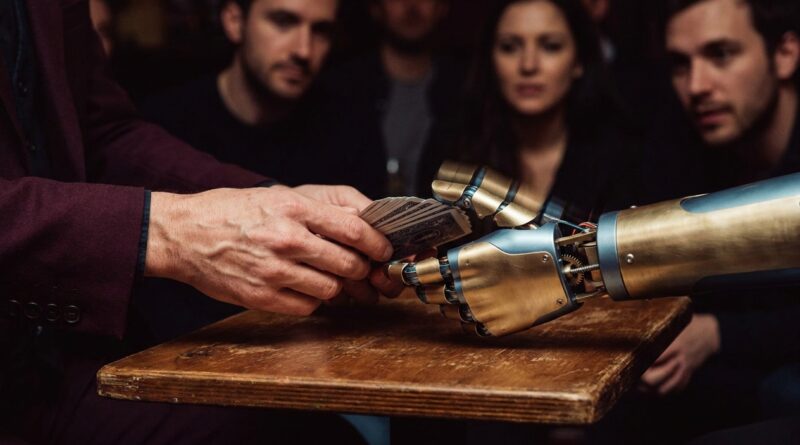
From Robotic Hands To Real-World Miracles: How To Steal One Breakthrough Grip Hack From Cutting-Edge Robotics For Your Sleight Of Hand
You know that awful moment. The move is right, the timing is right, your script is fine, but the card still flashes because your fingers feel just a little too loud. Not sloppy. Not totally out of control. Just loose enough that someone staring from two feet away catches the tremor. That is maddening, because it makes you think you need more reps, when the real problem is often smaller than that. It is finger control under pressure. Tiny adjustments. Tiny squeezes. Tiny releases. Robotics researchers have been chasing that exact problem with new human-like hands that can grip, shift, and stabilize objects without shaking or drifting. The good news is you can steal one very useful idea from them. Stop thinking only about the sleight. Start thinking about the reset your fingers need before and during performance, so your touch gets calmer, cleaner, and much more reliable.
⚡ In a Hurry? Key Takeaways
- The best sleight of hand finger control technique is often not more force, but better micro-adjustment with less tension.
- Use a 60-second pre-show warmup and a 3-second in-show grip reset to steady your cards before passes, double lifts, steals, and switches.
- If your fingers start shaking, do not fight harder. Back off pressure slightly, reset contact points, and let control return naturally.
The robotics trick magicians should steal
Modern robotic hands are getting better at delicate work for one simple reason. They do not rely on a constant death grip. They use feedback.
In plain English, that means the hand is always making tiny corrections. A little more pressure here. A little less there. Keep the object stable, but do not crush it. Hold it firmly, but stay flexible.
That is exactly where many magicians get stuck. Under heat, the hand stiffens. The thumb presses too hard. The first finger locks. The pinky either disappears from the job or tries to do everything at once. Then the deck starts to feel dead in your hand.
The fix is to copy the robotics mindset. Your goal is not maximum grip. Your goal is stable, adjustable grip.
Why your current practice may be missing the real problem
Hours of drilling can help. Of course it can. But repetition alone does not always build fine control. Sometimes it just builds a better version of the same tension habit.
If a pass feels smooth alone and shaky with a spectator near you, the issue is probably not knowledge. It is stress changing your finger pressure.
That is why this sleight of hand finger control technique matters. It trains the thing that breaks first in live performance, which is micro-control, not basic mechanics.
What “micro-control” really means
Think of it as the space between gripping and releasing. Not open. Not clamped. A middle zone where the object feels alive in the hand and easy to steer.
That middle zone is where clean double lifts happen. It is where steals stop looking sticky. It is where packets align instead of scraping.
The 60-second pre-show warmup
This is the simple part. You do not need a gadget. You just need a deck and one minute.
1. The soft hold, 15 seconds
Hold the deck in dealing grip at about 60 percent of your normal pressure. Not so loose that it falls. Not so tight that the edges dig into your skin.
Now lightly tap the top card with your other hand. Your job is to let the deck stay stable without squeezing harder.
This teaches your hand to resist panic-gripping.
2. Thumb glide, 15 seconds
Run your thumb along the outer edge, then the inner edge, then the side edge. Very small movements. Keep the other fingers relaxed.
You are teaching the thumb to move independently instead of dragging the whole hand into tension.
3. Finger pulse, 15 seconds
Squeeze the deck very gently with thumb and middle finger for one second. Release for one second. Repeat. Then do the same with thumb and ring finger.
This wakes up support fingers that usually get ignored until a move goes wrong.
4. Silent turnover, 15 seconds
Do three or four very slow double-lift get-readies or turnovers with one goal only. No sound. If the cards click, scrape, or buckle, lower the force and try again.
Silence is a great test for hidden tension.
The 3-second in-show grip reset
This is the part you use when your hand starts to feel stiff in the middle of performance.
Here is the sequence.
- Loosen your thumb pressure just a hair.
- Let the base of the thumb and the pad of the middle finger take the weight.
- Re-seat the index finger so it guides instead of clamps.
That is it. Three beats. Tiny enough that nobody notices.
You can hide it while making eye contact, asking a question, or turning slightly to address another spectator. The effect is immediate. The hand stops fighting itself.
How to use it on real sleights
Double lifts
Most bad double lifts are not caused by ignorance. They are caused by uneven pressure. One side of the packet gets pinned while the other side floats.
Try the reset first. Then think “carry” instead of “pinch.” You are carrying two cards together, not trapping them.
Passes
The pass often falls apart when the left thumb and right fingers both try to dominate. That creates jerky motion.
Use the warmup before performance, then right before the pass, soften the thumb for half a second. That little drop in pressure often makes the packets travel more cleanly.
Top changes and switches
These moves love calm fingers. If the hand is too hot, the exchanged card catches or sticks.
The robotics lesson applies perfectly here. Stability is not stiffness. Keep one firm support point, then let the moving fingers stay light.
Palming and side steals
If your palm always looks tense, the card is probably being held by force instead of structure. A better contact map solves that.
Use the least pressure needed to keep the card from slipping. Then let the hand return to a normal shape. If you want to build that kind of flexibility further, From Smoothest Palms To One-Hand Mastery: Build One Ambidextrous Sleight That Doubles Your Power Overnight fits nicely with this idea because it pushes you to stop depending on one single comfortable grip.
One test that tells you if this is working
Take your hardest everyday move. Maybe a double, maybe a pass, maybe a steal. Perform it three times alone the way you normally do it.
Then perform the warmup. Do the same move three more times, but with one extra rule. Use only the minimum pressure needed for control.
If the second set feels quieter, smoother, or less jerky, you have found the real issue.
Not lack of practice. Too much tension.
Common mistakes when trying to improve finger control
Trying to make the fingers “stronger”
Strength helps a bit, but close-up magic usually rewards precision more than raw force. The fingers need coordination first.
Practicing too fast
Speed hides friction. Slow work exposes it. If the deck shifts or clicks during slow motion, your hands are telling the truth.
Ignoring the non-dominant hand
Many sleights fail because the support hand is doing a messy job. If one hand learns calm pressure and the other stays clumsy, the whole move still looks nervous. That is another reason the ambidextrous approach in From Smoothest Palms To One-Hand Mastery: Build One Ambidextrous Sleight That Doubles Your Power Overnight is worth a look.
Confusing tension with confidence
Some performers grip harder because it feels safer. It is not. It usually makes movement more visible and less adaptable.
How this changes your live performance
The best part of this idea is that it does not ask you to rebuild your entire technique. It gives you a better operating mode.
You walk into a set with fingers that are awake, not overworked. You notice when pressure creeps up. You reset before the move gets ugly. And because your grip is calmer, your eyes and voice can stay calm too.
That matters. Spectators read body tension even when they do not know what they are seeing.
At a Glance: Comparison
| Feature/Aspect | Details | Verdict |
|---|---|---|
| Old approach | More reps, more force, more concentration on the move itself | Useful, but often misses the tension problem |
| Robotics-inspired grip method | Feedback-based pressure, soft support points, constant tiny adjustments | Best for steadier, less shaky handling |
| In-show reset value | 3-second pressure reset hidden inside natural patter and eye contact | High payoff, easy to start using tonight |
Conclusion
If your sleights are technically correct but still feel a little shaky, do not assume the answer is another hundred reps done the same way. Robotics labs just pushed out a new generation of human-like hands built to execute tiny, exact movements without shaking or drifting, and that is exactly what close-up magicians are starving for right now. The smart move is to borrow the principle, not the machine. Use a short warmup to wake up fine control. Use a tiny grip reset when tension spikes. That simple change can mean less strain, more control, cleaner steals and switches, and a very practical way to turn science headlines into real stealth in the fingers.