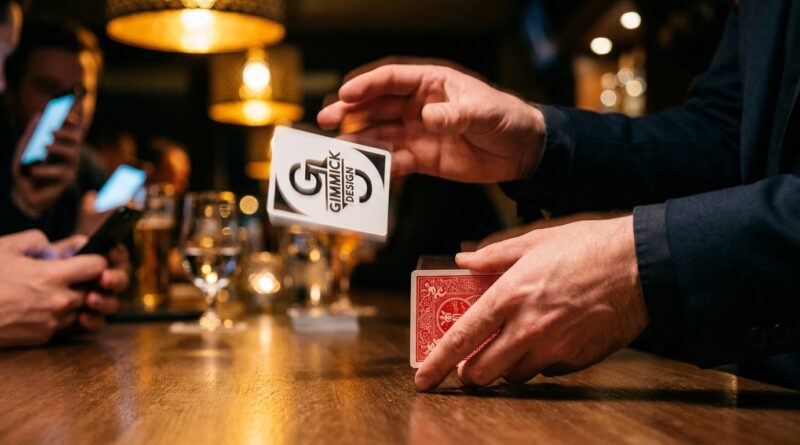
From Viral ‘Utility Decks’ To Real-World Miracles: How To Build One Sleight-Only Visual Switch That Makes Any Gaff Look Honest
You buy a viral utility deck. The trailer looks impossible. The change is clean, the camera loves it, and for thirty seconds you feel like you found a shortcut to miracles. Then real life shows up. Somebody wants to shuffle. Somebody asks to see the cards. Somebody hands you a borrowed deck and your shiny little science project is suddenly dead weight. That is the part social media never shows.
The fix is not another gimmick. It is one dependable sleight of hand card switch for gimmicked decks that lets you show the effect, ditch the evidence, and keep going with ordinary cards. If you only build one cleanup move this week, make it a top-change style packet switch done under a natural moment of attention shift. It is practical, low on angles, and strong enough to turn a suspicious prop into something that feels fair, casual, and honest.
⚡ In a Hurry? Key Takeaways
- Use a simple top packet switch to trade out the gimmicked cards the moment attention lands on the effect, not on your hands.
- Start with a two-to-five-card packet, a relaxed grip, and a reason to look at the spectator before you switch.
- This works best because it is repeatable, needs no new prop, and leaves you cleaner for inspection than most viral deck tricks.
The real problem with viral magic decks
Utility decks are not bad. Some are brilliant. The problem is that many of them solve the wrong problem. They solve for video, not for people standing two feet away with questions.
A camera wants one perfect moment. A real audience wants a full experience. They want to touch things. They want to interrupt. They want to burn your hands. And they absolutely want to hand you their own deck just when your setup depends on a stack, a roughing fluid pair, or a secret extra card.
That is why a good switch matters more than another clever purchase. A switch gives you a bridge between the flashy method and the honest ending.
The one sleight to build first
Think “packet top change,” not knuckle-busting flourish
The move here is a small-packet switch done from the top of the deck, or from a deck held in dealing grip, under a natural offbeat. You openly display or use your gimmicked packet. Then, at the moment spectators react, you trade it for an ordinary matching packet.
You do not need a move with twelve finger positions and a name that sounds like a martial art. You need a switch that looks like nothing happened.
The bones of it are simple:
- You have the gimmicked packet on top, or apparently on top.
- You have a clean packet waiting on top of or flush with the deck.
- You create an attention shift. Eye contact, a question, a gesture, a reaction beat.
- You lift off one packet and leave the other behind in the same action.
If that sounds almost too plain, good. Plain is exactly what survives in the real world.
Why this switch works so well
Most spectators do not track packets. They track meaning. If they just saw a card change color, jump position, or transform visually, their brain is busy catching up. That is your window.
This is the same logic behind strong cleanup in many modern routines. The effect lands first. The method leaves second.
If you have been reading Magician Book for a while, you have probably noticed the same idea in routines that feel hands-off and impossible. It is one reason pieces like From AI Card Scanners To Real-World Deception: How To Build One ‘Instant ID’ Routine That Feels Completely Unprepared hit so hard. The audience remembers the fairness. They do not remember the secret traffic control that made fairness possible.
How to set it up without making your pocket a junk drawer
Use a matching ordinary packet
If your gimmicked trick uses a double-backer, flap card, short packet, rough-smooth pair, or custom print, build a plain packet that matches what the audience thinks they saw at the end.
That usually means:
- Same back color
- Same face card values, if faces are shown
- Same card count, or close enough to survive a casual spread
Keep that clean packet on top of the deck, on bottom if your handling prefers it, or in an easy pocket position. The smaller and simpler the swap, the better.
Do not switch into trouble
A lot of magicians make the switch, then immediately do something that screams, “Look at my hands.” They square too carefully. They freeze. They over-prove.
Instead, switch into action. Hand the cards out. Put the deck down. Move into the next phase. Ask a question. Motion covers method better than tension ever will.
A basic handling you can practice this week
Step 1: Show the moment
Perform the visual change with your gimmicked packet. Let it breathe for a beat. Do not rush to clean up before the audience even reacts.
Step 2: Bring the packet to the deck
Place or hover the gimmicked packet above the deck as if you are simply putting it back. Your hands should look like they are finishing, not starting, the trick.
Step 3: Look up
This matters more than finger speed. Ask, “Did you see it change?” or “What card was that a second ago?” The eyes come to you. Their memory goes to the effect.
Step 4: Make the switch in one relaxed action
As the upper hand apparently takes the packet away, it really takes the clean packet. The gimmicked packet stays behind on top of the deck, hidden by natural squaring. Done well, this feels like one innocent pick-up action.
Step 5: Separate the evidence from the audience
Table the deck. Pocket it. Ribbon spread it later if the gimmick is buried safely. The clean packet can now be shown more freely, counted, or handed out depending on your routine.
What makes it non-angle-sensitive
This is not angle-proof. Nothing is. But it is forgiving because the dirty moment happens close to the deck, close to the body line, and during a reasoned action people expect to see.
Compare that with many social-media changes that need chest-high framing, one side blocked, and a spectator who politely forgets to stand on your right. Those can be fun. They just are not your best friend at a noisy restaurant or on the street.
Keep the deck waist to mid-chest high. Do not flare your elbows. Turn slightly toward the hand doing less work. That is usually enough.
Common mistakes that ruin the switch
Switching before the magic registers
If you clean up too early, the audience follows the movement because there is no reaction to hide in yet.
Staring at your hands
People look where you look. If your eyes scream danger, their eyes will too.
Using too many cards
Start with small packets. Two to five cards is ideal. Thick packets fight back and make unnatural squaring more likely.
No reason for the packet to touch the deck
You need a script reason. “Let me place these here.” “Watch this again.” “We will use the rest of the deck now.” Motivation smooths the path.
Best places to use this sleight
Walk-around
Perfect here. You need quick reset, limited pocket space, and endings that survive grabby hands.
Table work
Even better if you can rest the deck on the table after the switch. Once the audience sees cards sitting still, suspicion drops fast.
Busking
Good, with one note. Your movements must be a little larger and your audience management stronger. Build the eye contact cue into your patter.
When not to use it
If the effect depends on a spectator counting the exact packet before and after, this may not be your first choice unless your clean packet is perfectly matched.
Also skip it if your gimmick is bulky enough to print through the deck or if your routine gives people a reason to stare at the packet during the return. In those cases, use a pocket ditch or deck switch instead.
Practice plan that actually sticks
Day 1 to 2: Silent mechanics
Stand in front of a mirror and make the packets trade places with no script. Your goal is not speed. Your goal is sameness. The action must look identical whether you switch or not.
Day 3 to 4: Add eye contact
Say one simple line each time you switch. “Did you see that?” Look up before the move, not after.
Day 5 to 7: Use it inside a trick
Wrap the move around one real effect. Do not practice the switch alone forever. Practice the whole sequence so the cleanup feels like part of the routine’s breathing, not a bolt-on patch.
At a Glance: Comparison
| Feature/Aspect | Details | Verdict |
|---|---|---|
| Visual impact | Keeps the punch of a gimmicked moment, then quietly moves you back to ordinary cards. | Best of both worlds |
| Difficulty | Moderate. Easy mechanics, harder timing. Most of the work is in relaxation and eye contact. | Very learnable this week |
| Real-world practicality | Strong for walk-around, table hopping, and borrowed-deck situations where inspection matters. | Far better than relying only on utility decks |
Conclusion
The feeds are full of miracle decks and packet tricks that look incredible for half a minute and awkward for the next five. That is the trap. Real workers need material that resets, survives attention, and ends clean. A single, reliable sleight of hand card switch for gimmicked decks does more for your magic than another shiny purchase because it lets you keep the visual hit and lose the suspicious baggage. Start small. Use one packet. Build the offbeat. By the end of the week, you can have a move that plays in walk-around, table work, and busking without extra gear or fragile gimmicks. That is the kind of secret worth guarding, because once you own the cleanup, a lot of trendy props suddenly start looking honest.