From Classroom Gimmicks To Real-World Workers: Build One ‘Back‑To‑School’ Sleight System That Survives Any Hallway
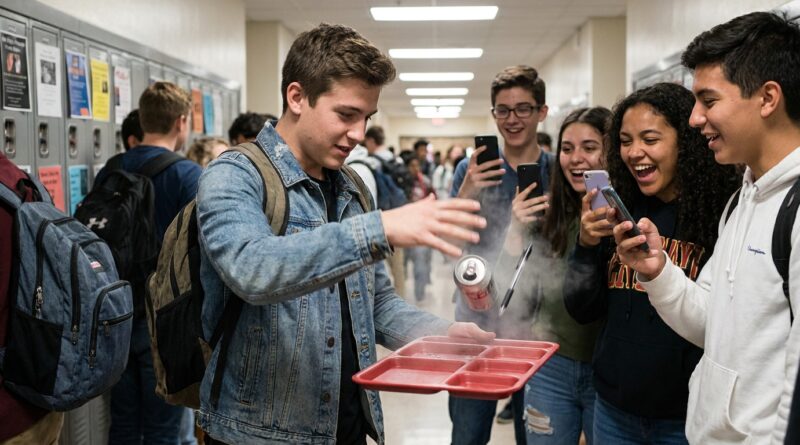
You can feel the problem the second you step into a school hallway. It is loud. People are moving. Phones are already up. And the cute little “back to school” trick that played nicely at your desk suddenly looks tiny, slow, or worse, fragile. That is the frustration working magicians keep running into this season. Brands are dressing everything up with pencils, notebooks, and lunchbox jokes, but pros still need material that lands in a cafeteria, survives bad angles, and resets before the next wave of students barrels in. The fix is not chasing ten new tricks. It is building one back to school sleight of hand routine around visible objects, fast phases, and handling that stays solid when people crowd your sides. Think less “clever card flourish for magicians” and more “practical hallway worker.” If your set can hit in a corridor, it can hit almost anywhere. That is the standard worth building for.
⚡ In a Hurry? Key Takeaways
- Build one modular back to school sleight of hand routine using a marker, notebook paper, and a deck, so every phase feels themed but still practical.
- Start with a big visual moment, keep each phase under a minute, and use effects that reset while you talk.
- Avoid angle-heavy knuckle busters in hallways. Use bold handling, simple scripting, and objects that look normal on camera.
Why the usual school-themed set falls apart
A lot of seasonal material is designed for the ad, not the gig.
It looks fun in a clean demo. Then real life shows up. Students stand too close. A teacher is watching from the side. Someone records from chest level. The room is noisy enough that your clever line never gets heard. Suddenly the trick that depended on silence, perfect focus, or one safe angle is dead on arrival.
That is why a school-season worker needs a system, not a stack of random tricks.
Your system should do three jobs. First, it should feel timely. Second, it should read clearly from a few feet away. Third, it should keep working when attention comes in bursts instead of one neat seated block.
The best format: one prop family, three phases, one reset
For this season, the safest build is simple. Use everyday school-adjacent objects and make them do bigger things than people expect.
The prop family
Pick from this short list:
- Sharpie or dry erase marker
- Folded notebook paper or index card
- Regular deck of cards
- Rubber band
- Soda can or water bottle, if the venue allows it
Why these? Because they belong in the environment. They do not feel like “show props.” That matters a lot when teenagers are filming. Ordinary objects get stronger reactions because they feel fair.
The three-phase structure
Here is a reliable layout for a back to school sleight of hand routine:
- Attention grabber. Something visual in the first ten seconds.
- Participation phase. A student makes a choice, signs something, or holds an object.
- Impossible payoff. A reveal that feels bigger than the method.
That structure works because it matches the way hallway crowds behave. You earn attention fast, then give one person a role, then pay it off before the group drifts.
A practical routine that actually survives the hallway
Phase 1: Marker through bill, note, or folded paper
Start with a visible penetration using a marker and a borrowed note, cafeteria receipt, or folded piece of notebook paper.
This is a strong opener because people understand it instantly. No explanation needed. They see object A pass through object B. Good. You have them.
Keep the lines short. Something like, “School teaches you to keep your notes together. Mine never listen.” Then go right into the effect.
The key is not the joke. The key is speed and clarity.
Phase 2: Signed card or named value appears in folded notebook paper
Now bring in the deck. Have someone name a card or select and sign one, depending on your comfort level and crowd control.
Then use a folded piece of notebook paper as your reveal object. It can be in view from the start, clipped under a rubber band or tucked into the card box.
This phase feels very “school” without screaming theme. That is the sweet spot.
If you rely on card handling here, make sure it is the kind you can do while half your audience is not standing where you want. If your control depends on a perfect pinky count under pressure, strip it down. A simple force, control, or jog can beat a fancy move in this setting.
If you want to tighten that side of your handling, From Flashy Cuts To Finger-Tip Control: Build One ‘Invisible Break’ System That Survives Any Angle And Any Camera is worth a look. The big lesson is practical: tiny technical details matter more than flashy cuts when people are burning your hands from two feet away.
Phase 3: Final kicker with a can, bottle, or impossible location
The last phase needs to scale up.
If the venue allows drinks, a can or bottle gives you that “everyday magic” finish people share online. A signed card under the tab, inside a bagged lunch, or attached to a rubber-banded marker pack gives the routine a real-world ending that feels made for school spaces.
If drinks are not allowed, use a notebook reveal. The selected card appears inside a closed notebook, under a page of written homework lines, or in a zip pencil pouch that has been visible from the start.
The point is not the object. The point is contrast. Small handling. Big outcome.
What makes this topical without feeling cheesy
People are responding right now to quick, relatable magic. Kitchen counters. Corridors. Lunch tables. A can vanishing for no reason other than it looked impossible. That style works because it feels close to life.
So do not overdecorate the routine.
You do not need apples, rulers, and “pop quiz” lines every ten seconds. One or two school references are enough. The setting is already doing half the work for you.
Try these softer theme touches:
- Use actual notebook paper, not blank magician paper.
- Use a teacher pen, student marker, or library card as a reveal object.
- Frame choices as “pick a subject,” “write your answer,” or “pass the test.”
That keeps the act current without turning it into a party-store skit.
How to build for noise, motion, and phones
Use effects that read with the sound off
This is the easiest filter in the world. Ask yourself: if someone watches a six-second clip of this with no audio, do they still get the moment?
If yes, good. Keep it.
If the trick only works because of your story, save it for a quieter room.
Make your dirty work happen on off-beats
In school gigs, attention comes in waves. A reveal gets a burst. Then people talk. That talk is useful. It gives you cover to reset, ditch, or steal.
Do not fight those off-beats. Use them.
Keep your chest square and props high
Low table work dies in hallways. Work standing. Hold props from mid-chest to shoulder height. Turn less than you think. Teenagers drift. If you keep rotating to follow one person, you expose more than you fix.
Assume someone is filming your weak side
That sounds stressful, but it is actually freeing. It forces cleaner choices.
Favor bold switches, motivated transfers, strong timing, and natural pauses over twitchy finger work. Good route. Less panic.
How to reset in under fifteen seconds
A working routine is not just about method. It is about surviving the next group.
Your reset should be almost automatic:
- Marker back in pocket, cap orientation consistent
- Folded reveal paper preloaded or replaced
- Deck returned to a known stack or starting condition
- Final load item back in same pocket every time
If you need a mirror, a table, and silence to reset, it is not a hallway routine. It is a workshop routine.
What to cut, even if you love it
This part stings, but it saves gigs.
Cut any phase that has one of these problems:
- It needs a perfect viewing angle
- It takes longer than a minute to become clear
- It depends on a spectator following careful instructions
- It creates clutter in your hands or pockets
- It cannot be explained in one simple sentence
School work is not the place to prove how much sleight knowledge you have. It is the place to prove how impossible you can look under pressure.
Sample script spine you can actually use
You do not need a full script. Just a spine.
Open: “Everyone’s back in school mode, so let’s test whether normal stuff behaves normally.”
Phase 1: Marker through paper. “It does not.”
Phase 2: Signed card and notebook paper reveal. “Write your name so I cannot switch it. If I could survive algebra, I can survive this.”
Phase 3: Final impossible location in can, pouch, or notebook. “That is what I mean by extra credit.”
Short lines. Clear beats. Nothing precious.
Where this routine helps your business, not just your set
A good seasonal routine is not only performance material. It is marketing material.
Teachers, youth leaders, and campus organizers want acts that feel relevant to the moment. If you can describe your set as built for assemblies, orientations, lunch periods, and welcome-week walkarounds, you become easier to book.
You also become easier to share. Clips of ordinary objects doing impossible things travel well because they feel native to the space. That matters right now. The appetite for everyday magic moments is real, especially when they happen in familiar places like hallways, lunchrooms, and counters.
At a Glance: Comparison
| Feature/Aspect | Details | Verdict |
|---|---|---|
| Theme strength | Uses everyday school objects like marker, notebook paper, and deck without feeling overdesigned | Best balance of topical and practical |
| Hallway durability | Fast opener, visible middle, bigger final load or reveal, all built for standing crowds and loose angles | Strong choice for noisy school environments |
| Reset and repeat value | Pocket-based reset, simple prop management, and modular phases that can expand or shrink by venue | Excellent for walkaround and assembly overflow |
Conclusion
The smartest move this season is not chasing every cute school-themed trick that pops up. It is building one dependable back to school sleight of hand routine that can live in the real world. Right now there is a clear spike in everyday magic around school corridors, lunchrooms, and kitchen counters, with quick can vanishes and casual sleight clips getting shared because they feel immediate and real. If you shape your set around that energy, you do more than stay current. You give yourself a stronger pitch for teachers and youth organizers, a better camera-friendly routine for social clips, and a fresh set that feels built for the new academic season instead of dragged over from last year. Keep it visible. Keep it fast. Keep it ordinary-looking. That is the kind of school magic people remember after the bell rings.