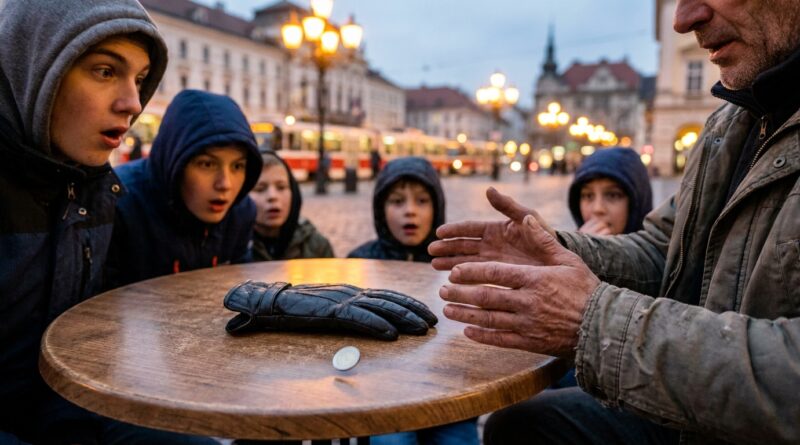
From Borrowed Gloves To Ghost Fingers: Build One ‘Invisible Grip’ Sleight That Lets Objects Move Before Your Hands Do
You have probably felt this in the last few months. You show a clean coin slide or a card pivot, and people still shrug and say, “Fast hands.” That is frustrating, because you know the handling was good. The problem is not speed anymore. It is timing. The clips getting passed around now fool people for a different reason. The object seems to move first. Then the hand follows a fraction later, almost like the fingers are reacting instead of causing it. That tiny delay wrecks the normal explanation in the spectator’s head. The good news is you do not need a pricey gimmick or a camera trick to get that look. You need one solid invisible grip sleight of hand structure, then you apply it to whatever is already in front of you. Cards, coins, keys, rings, even a borrowed receipt can all live inside the same simple idea.
⚡ In a Hurry? Key Takeaways
- The invisible grip sleight of hand works by separating the secret force from the visible hand motion, so the object seems to move before your fingers do.
- Start with a flat object like a card corner or receipt edge, and practice a tiny pre-load pressure before adding the delayed hand follow-through.
- It is practical, cheap, and works live or on video, but only if you keep the motion small and choose objects with enough edge, texture, or balance point.
What “Invisible Grip” Actually Means
This is not about making your hands invisible. It is about making the cause invisible.
In a standard move, your fingers touch an object, then it moves. Spectators read that as cause and effect. Even if they miss the method, they still feel they understand the story.
With an invisible grip sleight of hand, you flip that story. The secret contact, pressure, or set happens a beat earlier than the audience realizes. Then, when the object slides, pivots, twitches, or hops, your visible fingers appear late. They look like they are arriving after the fact.
That is why this style hits so hard on social clips and in live close-up. The eye says, “I saw the hand.” The brain says, “But the hand was not there in time.” That mismatch is the whole trick.
The Core Structure: Set, Pause, Trigger, Follow
If you want one routined framework you can use across props, build around four beats.
1. Set
You establish hidden control. This might be edge pressure on a card, skin contact on a coin, friction on a ring, or a slight curl under a receipt.
2. Pause
This is the overlooked part. You do not move the object the instant the secret contact is in place. You wait. Just a fraction.
3. Trigger
The object moves from stored tension, release, tilt, drag, or pivot. The action should be tiny but sharp.
4. Follow
Your visible hand arrives after the move begins. Not long after. Just enough to make the audience feel the object got a head start.
That delay is the entire engine. Without it, this is just normal handling with extra steps.
How to Build the Sleight With No Gimmicks
Think of this like learning to fake a phone lag in a demo. The trick is not raw speed. It is convincing timing.
Step One: Pick the Right Training Object
Do not start with a coin if your hands are dry and your control is inconsistent. Start with something forgiving.
Best beginner objects:
- A playing card on a close-up pad or wood table
- A folded receipt
- A ticket stub
- A key on a smooth surface
These give you an edge or pivot point you can feel.
Step Two: Learn “Borrowed Gloves” Pressure
This is the easiest way to explain the feel. Imagine your fingertips are wearing very thin borrowed gloves. You can still grip, but only lightly. That mindset stops beginners from squeezing too hard.
You want enough contact to preload movement, not enough to look like you are obviously pushing.
For a card, that may mean a soft drag at one corner. For a key, it may mean a slight side pressure at the bow. For a receipt, it may mean a tiny bowing of the paper before release.
Step Three: Add the Ghost Fingers Delay
Now practice the visible lie. Your fingers should appear passive for a split second while the object begins moving. Then the fingers animate as if they are catching up.
This is where the “ghost fingers” look comes from. The audience feels like an unseen hand got there first.
Film this in slow motion. If your visible finger motion starts before the object moves, you are back in normal sleight territory.
A Simple Practice Drill
Use a single playing card on a table.
- Place the card squarely in view.
- Touch the outer right corner lightly with the pad of your index finger.
- Apply the smallest sideways pressure you can manage.
- Pause for half a beat.
- Let the card twitch or pivot a few millimeters.
- Only then let the hand visibly react and continue the motion.
If done right, the audience remembers the card moving first, even if the actual gap was tiny.
That is the whole game. Tiny lead. Big memory distortion.
Glove Version vs Bare-Hand Version
You can perform this with literal gloves, but you do not need them. Gloves simply change the texture and look.
When Gloves Help
Gloves can make your hands look less “grabby.” They also help sell an odd, clinical, or theatrical visual style. If your character already uses them, fine.
When Bare Hands Win
Bare hands usually feel more honest. Audiences trust skin more than costume. That matters when you are trying to convince them your hands were visible the whole time.
Bare hands also adapt better to borrowed items. If someone tosses you a receipt or key, you do not want a wardrobe choice getting in the way.
If you like open handling, you might also enjoy From Empty Sleeves To Streetlight Miracles: Build One ‘Bare-Arms Corner Steal’ Sleight That Lets You Load Any Object In Full 360 View. It pairs nicely with this kind of visual timing because both ideas make spectators doubt what “open” really means.
Best Objects for This Structure
Not every prop behaves well with a beat-delay approach. You want objects that can store a little pressure, ride a balance point, or shift direction cleanly.
Cards
Excellent choice. Cards pivot, skate, buckle, and twitch with almost no force. Great for social clips and table work.
Coins
Harder, but very strong. The move must be tiny. A full slide often looks like a push. A micro-jump or pivot reads better.
Keys
Very good. Keys have odd shapes and natural pivot points, which makes small impossible movements feel organic.
Rings
Strong if the surface is right. A ring can roll or tilt in ways that look eerie.
Tickets and Receipts
Underrated. Paper has built-in spring. That makes delayed motion surprisingly convincing, especially when the item is borrowed.
How to Routine It So It Feels Like Magic, Not a Puzzle
One invisible movement is cool. Two in a row is often stronger. Three can become suspicious.
Use this sequence:
Phase 1: Small Twitch
Show the object at rest. Cause a tiny motion. Do not celebrate it. Let them process.
Phase 2: Repeat Under Cleaner Conditions
Change the angle, open the hand more, or use the other hand. The second hit should answer the audience’s first explanation.
Phase 3: Hand-Off or Borrowed Item
Now do the same beat-delay structure with a different object. This is where the method starts to disappear because the audience thinks the miracle traveled, not the technique.
This is also why the move is so useful for workers. One core mechanic can carry several moments in one set.
Live Performance vs Video Performance
The nice part about this invisible grip sleight of hand is that it does not have to live only on Instagram.
For Live Work
Keep the action small and close. Chest-high displays are weaker than table or palm-level displays because people lose the fine timing cues. Also, do not rush your reaction. The audience needs that beat to register.
For Video
Use side light so the object’s movement reads clearly. Lock the frame. If the camera is drifting, people blame the camera instead of the magic.
And please resist editing tricks. If the goal is to teach people that visible hands still cannot be trusted, fake cuts ruin the whole point.
Common Mistakes That Kill the Effect
Moving Too Far
A big slide looks like a shove. A small twitch looks like a mystery.
Skipping the Pause
If you preload and trigger instantly, spectators connect the dots.
Overacting the Hand
Your follow-through should be believable. If your fingers jerk like a cartoon, people know where to look.
Using the Wrong Surface
Glossy glass, sticky bar tops, and uneven wood can turn a good idea into mush. Test first.
Choosing the Wrong Camera Angle
Some versions are stronger slightly off-center than dead-on. Find the angle where the object’s movement reads first and the secret setup reads last.
How to Practice Without Looking Suspicious in Real Shows
Do not practice the full trick every time. Practice the beats separately.
- Practice setting pressure with no movement.
- Practice releasing movement with no visible hand follow.
- Practice adding the delayed hand response.
- Then combine all three.
This keeps the work clean. It also stops you from baking bad rhythm into the move.
A good benchmark is this. If a spectator replays the moment in their head and says, “Your hand moved after it,” you are there.
At a Glance: Comparison
| Feature/Aspect | Details | Verdict |
|---|---|---|
| Learning curve | Easy to understand, harder to time well. The move lives or dies on a tiny pause and delayed follow-through. | Beginner-friendly concept, intermediate-level polish |
| Best props | Cards, keys, tickets, receipts, and some ring setups work best because they allow small sharp movement without obvious pushing. | Most practical with flat or edge-based objects |
| Real-world value | Works live and on camera, uses no gimmicks, and gives modern “object moved first” visuals that audiences talk about. | High value for working close-up magicians |
Conclusion
The reason this idea matters right now is simple. The strongest close-up moments are getting shorter, cleaner, and more visual. People are used to hearing “your hands were too fast.” The invisible grip sleight of hand gives them a new problem. They can see your hands and still not trust them. That is a big step forward. If you build the move around set, pause, trigger, and follow, you get a practical structure that works with gloves or bare hands, live or on video, and with everyday objects from cards to keys to borrowed receipts. You do not need to buy a gimmick. You need timing, restraint, and a good eye for surfaces and angles. Get that right, and you are no longer just moving an object. You are teaching the audience that cause and effect itself is up for grabs.