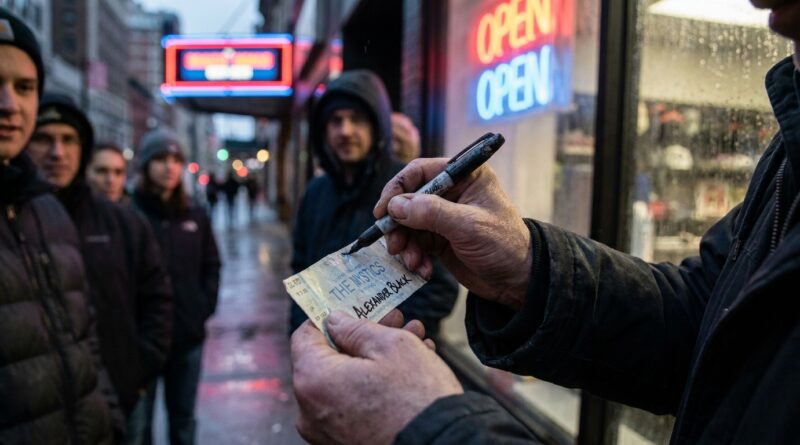
From Borrowed Pens To Street Signatures: Build One ‘Public Autograph Switch’ Sleight That Hides Any Signature Change In Plain Sight
You can feel the mood change the second a marker comes out. People stop relaxing and start hunting. They have seen too many signed-card clips online. They know a switch is coming, even if they cannot name it. That is frustrating, because a signature is supposed to make the magic feel more personal, not more suspicious. If your audience is already burning your hands before the cap is back on the Sharpie, the old ways start to feel tired fast.
The fix is not a bigger move. It is a quieter one. A good signature switch sleight of hand should look like normal life. Borrow a pen. Cap a pen. Hand back a receipt. Fold a ticket. Point at a name. That is the lane. What you want is one public autograph switch, built around actions people see every day, so the secret hides inside familiar behavior instead of inside “magician behavior.” Done right, it works standing up, without a table, with people on your sides, and with a phone camera close enough to make you sweat. That is a tool worth building.
⚡ In a Hurry? Key Takeaways
- A strong signature switch sleight of hand should hide inside ordinary pen and paper actions, not flashy card handling.
- Build one repeatable “autograph switch” around capping, folding, and handing back the item, then use it across tickets, receipts, merch, and cards.
- If it looks natural in real time and boring on replay, you are on the right track. Angle safety and rhythm matter more than speed.
Why signature magic suddenly feels harder
The problem is not that spectators got smarter overnight. It is that they got trained. Social clips, exposure accounts, and freeze-frame replays have taught people to watch the signing moment like a hawk. The pen is now a red flag.
That changes the job. You are no longer just hiding a switch. You are hiding the idea that a switch could even happen. That is why a signature switch sleight of hand has to move away from “pick a card, sign a card” energy and into something that feels public, casual, and a little messy in the best possible way.
Think street signatures. Signed receipts. A name on a flyer. A doodle on a coffee sleeve. These objects do not scream method. They feel lived in.
What a “public autograph switch” really is
At heart, this is one simple concept. A signed item is apparently never out of play, but the audience’s memory of the exact handling gets softened by normal actions around the writing moment.
The switch does not happen in a dramatic beat. It happens while everyone believes nothing important is happening.
The core idea
Build the switch around three innocent actions:
- Borrowing or returning the pen
- Turning the signed side toward or away from the spectator
- Folding, stacking, or handing back the signed object
Those actions are your camouflage. If your move needs a weird grip, a stiff wrist, or a pause that feels “careful,” it is not ready yet.
What you are trying to hide
You are not only hiding object A becoming object B. You are hiding a change in assumption. The audience thinks, “That is still my signed thing.” Your job is to protect that thought without making a fuss around it.
The design rules for a modern signature switch sleight of hand
Before you even practice mechanics, set rules. Good rules save bad tricks.
Rule 1. It must not look like a card trick
If the handling feels like a double lift moved onto paper, people will smell it. Use soft, everyday movements. Less display. Less squaring. Less proving.
Rule 2. It must work standing up
Tables are great until you do walk-around, busking, or restaurant sets. Build the action in the hands. A chest-high working area is best because it reads clearly to both live spectators and phone cameras.
Rule 3. It must survive replay
Slow motion kills fast, twitchy switches. It struggles more with actions that look dull. Boring is your friend. If the move looks like someone simply capped a pen and handed something back, replay has less to grab onto.
Rule 4. It must be object-agnostic
The more objects this works with, the more valuable it becomes. Cards are fine, but receipts, tickets, business cards, coasters, and merch tags are better because they feel less “gimmick-rich” to the public.
Building the switch in plain sight
Here is the structure you want. Not exposure. Structure. The shape of the thing matters more than any one secret grip.
Phase 1. Get a real signature moment
Do not rush the writing. Let them own it. Ask them to make the signature big. React to the ink drying. Mention their handwriting if it fits your style. You want the memory to be, “I really signed that,” not, “He made me scribble and snatched it back.”
Phase 2. Create a reason to adjust the object
This is where many magicians get caught. They switch because they want to. That is backwards. The audience must understand why the object is being turned, folded, stacked, or briefly aligned with something else.
Good reasons include:
- “Let the ink dry.”
- “Hold it from this corner.”
- “I want everyone to see your name.”
- “Keep the signed side protected.”
The reason is the road the method drives on.
Phase 3. Hide the change during a public action
The sweet spot is an action that spectators think they already understand. Capping a Sharpie. Passing the pen back. Folding a receipt once. Sliding a ticket halfway out, then back in. These are simple actions with built-in visual cover.
Notice the theme. Public, not sneaky. Open, not cramped. The audience sees something happen, but not the thing.
Phase 4. Delay the proof
Do not instantly show the result. That often points a giant arrow backward. Let one beat pass. Ask a question. Shift eye contact. Then reveal. The delay makes the method feel farther away.
Why this fools better than many old signed-card moments
People expect a card trick to have “moves.” They do not expect a receipt trick to have a move hidden inside giving back a pen. That expectation gap is where your miracle lives.
This is similar in spirit to the thinking behind From Static Photos To Living Miracles: Build One ‘Swipe‑Palm Change’ That Turns Any Still Image Into Real‑Time Sleight Of Hand. The big lesson there is that modern magic gets stronger when the secret rides inside actions people already accept from daily life. That same idea fits perfectly here.
Best objects to use first
Do not start with the hardest prop. Start with the object that gives you the most natural handling.
Receipts
Excellent for casual settings. People expect them to be folded, handed over, checked, and pocketed. That gives you natural beats.
Tickets
Great for a “your name moved” or “your autograph became someone else’s” plot. Thin paper helps, and the object already carries a public, event-like feel.
Merch tags or postcards
Perfect for buskers or creators after a show. A signed keepsake changing in your hands feels more emotional than a playing card.
Business cards
Useful, but be careful. They can drift back toward “magician prop” territory if overhandled. Keep it light.
Practice notes that actually matter
You do not need fifty reps done fast. You need ten clean reps done normally.
Work at speaking speed
Say the script while practicing. If the move only works in silence, it is weak. Real performance includes words, eye contact, and interruptions.
Film from spectator height
Not from above. Not from your point of view. Put the phone where a real person’s eyes would be. Then watch without sound. If one moment looks fussy, smooth it out.
Practice the pen more than the paper
This surprises people. But the pen is often what sells the rhythm. The way you uncap it, cap it, offer it, and take it back can make the whole sequence feel honest or guilty.
Learn where not to look
Your eyes can confess before your hands do. If you stare at the secret moment, your audience will too. Look where a normal person would look.
Common mistakes that give the game away
Over-proving the signature
If you keep flashing the autograph before and after every beat, you are telling them it matters in a suspicious way. Show enough for memory. Then move on.
Making the switch the center of the scene
The change should live inside another action. If the whole room goes quiet while you “do something,” expect heat.
Using card-magician timing on non-card objects
Receipts and tickets need looser body language. Treating them like a deck can make an organic idea feel technical.
Ignoring reset
If you work tables or street sets, reset matters. Build a version you can return to neutral quickly. A miracle that takes two minutes to rebuild is not a worker.
Where this opens new plot lines
This is the exciting part. A public autograph switch is not just a patch for signed-card problems. It creates whole new routines.
- A spectator’s name changes into a prediction.
- A signature jumps from receipt to souvenir.
- A doodle becomes a word, a date, or a location.
- A signed object matches a street sign, poster, or printed photo.
That last idea is especially strong for social media because it pushes magic out of the usual card frame. It also gives you a clip that is harder for exposure channels to reduce to “he switched the card when you looked away.”
At a Glance: Comparison
| Feature/Aspect | Details | Verdict |
|---|---|---|
| Naturalness | Built around borrowing, capping, folding, and handing back everyday objects. | Much stronger than a move that looks like card handling on paper. |
| Performance conditions | Works standing, without a table, and can be adapted for walk-around, street, or restaurant sets. | A practical worker if your angles and rhythm are solid. |
| Replay resistance | Relies on ordinary actions rather than speed, making slow-motion analysis less useful. | One of the better paths for modern, camera-aware close-up magic. |
Conclusion
Right now, obvious signed-card moments are getting picked apart frame by frame, and that is quietly draining life from routines that used to kill. A well-built signature switch sleight of hand gives you a fresh lane. It feels real. It hides in everyday behavior. It opens plots far beyond cards, with tickets, receipts, merch, and public objects people do not arrive ready to suspect. More important, it helps bring back that rare reaction every close-up worker wants, the look that says, “Wait, I saw my own name change.” If you build one autograph switch that is calm, angle-safe, and dull on replay, you are not just protecting a method. You are rebuilding mystery in a space that badly needs it.