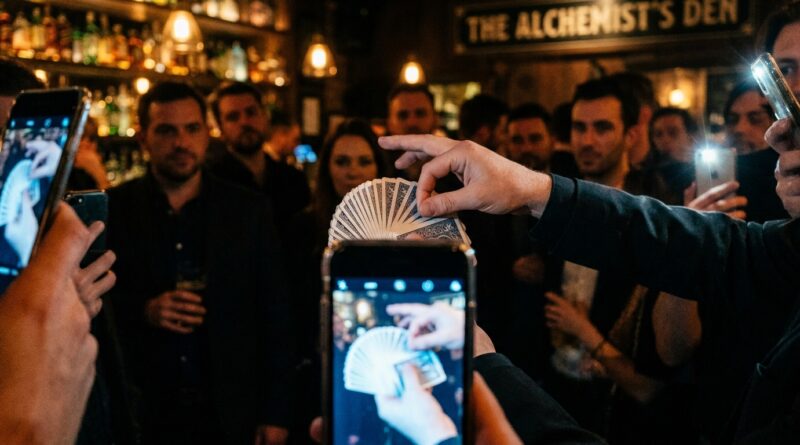
From Empty Hands To Borrowed Screens: Build One ‘Spectator Phone Mirage’ Sleight That Turns Any Camera Check Into Real‑Time Magic
You know the feeling. You hit a move clean for real people, get that little gasp, and then someone smiles and says, “Nice. Do it again. I’m filming.” Suddenly the room changes. What played as impossible a second ago now feels like a stress test in 4K. That is where a lot of solid close-up magic falls apart. Not because the trick is bad, but because it was built for eyeballs in motion, not a phone that can pause, replay, and crop your fingers. The fix is not to run from cameras. It is to build one spectator phone proof sleight of hand structure that keeps working even when the phone comes out. Think of it as a mirage. The camera seems to catch everything, but the method stays hidden because the real work happened before the moment people think matters. Once you get that idea, you can start upgrading tricks you already do.
⚡ In a Hurry? Key Takeaways
- A good spectator phone proof sleight of hand hides the dirty work before the “magic moment,” not during it.
- Use a simple three-part structure: pre-load the picture, freeze the frame, then let the reveal happen on their screen.
- Do not chase angle-proof perfection. Build timing-proof handling that survives replay without looking like a camera stunt.
The real problem is not the phone
The phone just exposes weak timing.
Most sleights depend on a human thing. People blink. People track faces. People react to speech. A phone does none of that. It stares. Then it rewinds.
So when a move flashes on camera, the issue usually is not finger speed. It is that the method and the effect are happening too close together. The audience is looking at the right place at the right time, which is the one thing you do not want.
What a “spectator phone mirage” actually is
A spectator phone mirage is a handling design where the camera appears to witness the whole event, but the crucial secret action has already happened before the viewer believes the effect began.
That sounds fancy. It is not.
It means you stop doing the dirty move at the visual peak. Instead, you do it earlier, under a casual action, and then build a clean-looking sequence that gives the phone a believable story to record.
The three-beat structure
Beat 1: Set the picture. Create a clear before-image in the spectator’s mind and on the camera. This might be a card shown fairly, a coin displayed openly, or an object isolated.
Beat 2: Secretly lock the outcome. During a natural adjustment, off-beat gesture, or hand-to-hand transfer, you complete the real move before anyone expects magic.
Beat 3: Let the reveal breathe. Now you perform a clean, slow, almost boring display. The camera records fairness, not method. The magic seems to happen here, but the work is already over.
Why this survives replay better than flashy handling
Replay punishes sudden finger events. Replay is much kinder to structure.
If someone watches back a color change, a retention vanish, or a switch that depends on one fast cover action, they are hunting a single frame. If they watch back a sequence where the method was buried ten seconds earlier inside an innocent action, they usually get nothing useful.
That is the heart of spectator phone proof sleight of hand. You are not trying to beat the camera. You are trying to make the camera record the wrong chapter.
How to build one from a sleight you already use
Pick one move you trust live. Now ask three questions.
1. What is the frame everyone cares about?
This is the moment the spectator points to if asked, “When did it happen?” Maybe it is when the card goes into the deck. Maybe it is when your hand opens. Maybe it is when the coin taps the table.
That frame is dangerous if the move happens there.
2. Can the method happen one beat earlier?
Usually yes.
A top change can become an off-beat transfer before the challenge starts. A false deposit can become a genuine-looking display after the vanish is already set. A double lift can happen as part of squaring, long before the revelation line.
3. What clean action can replace the original “magic moment”?
Once the work is done, you need a convincing picture for the phone. Slow hand opening. Clear wrist turn. Open palm pause. Card isolated on table. Spectator holding the object. These images read well on video and give people confidence that they saw everything.
A plug-and-play example with a card
Let’s say you do a visual top change style transposition and it kills in person, but flashes on video.
Old version
You show Card A in your hand. Card B is elsewhere. During the “watch closely” moment, you make the switch. In person, your eyes and patter help. On camera, the hands tell the truth.
Mirage version
Show Card A. Relax. Ask them to start filming if they want. As attention shifts to the phone and framing, complete the secret switch during a justified hand-to-hand adjustment or while apparently making room in the shot. Now slow down. Hold the card still. Let them lock the image. Then turn it over or hand it out.
The phone records a steady, fair display after the switch. On replay, the supposed “moment” is too clean to explain anything.
The borrowed-screen advantage
There is another reason this works. A spectator filming creates social proof.
When their own phone captures the impossible, the clip feels more honest than if you shot it yourself. That matters. People are suspicious of edits, camera cuts, and creator-controlled angles. A borrowed-screen miracle feels raw.
So instead of treating the phone as a threat, you turn it into a witness.
What to avoid
A few habits make tricks crumble on camera fast.
Do not rush the clean phase
If the method is already done, enjoy that. Hold still. Let the phone see fairness.
Do not add “watch this” moments on the dirty beat
The second you verbally underline the exact instant of method, people know where to review.
Do not build around one lucky angle
A spectator will drift. Another person may record from the side. Your structure needs to survive slight movement, not just one perfect viewpoint.
Do not turn it into a camera trick
If the effect only works from the lens and looks weaker in person, you traded one problem for another. The best version hits both audiences at once.
A simple practice drill
Set your own phone on a chair and record three versions of the same move.
Version one, do it the way you always do.
Version two, move the secret action one beat earlier.
Version three, move it earlier and add a two-second clean pause before the reveal.
Now watch all three back without sound.
The silent replay test is brutal, and that is good. It shows you whether the picture alone is protecting you.
Where this idea fits with other camera-aware material
If you have been thinking about adapting table work for lenses, this sits nicely beside routines built for shared viewing. A good example is From Live Streams To Living Rooms: Build One ‘Table-Camera Monte’ Sleight That Turns Any Three-Card Routine Into An Interactive Close-Up Event. That piece is useful because it treats the camera as part of the audience picture, not just a thing to fear. The same mindset helps here. You are not changing magic into content. You are making real-world magic hold up when content happens around it.
Best uses for this structure
This mirage build works especially well for:
- transpositions
- vanishes with a delayed reveal
- card turnovers and identity changes
- small object switches
- effects where a spectator can hold the final condition
It is less useful for hyper-visual snap changes where the whole selling point is the exact instant of change. Those can still work, but they need much tighter handling.
At a Glance: Comparison
| Feature/Aspect | Details | Verdict |
|---|---|---|
| Live impact | The method happens early, but the reveal still lands in real time for the room. | Strong if your pacing stays relaxed. |
| Replay resistance | The phone records the clean phase while the secret action is buried in a casual earlier beat. | Much better than “do it on the magic word” handling. |
| Learning curve | You often keep the same sleight, but redesign the timing, framing, and reveal. | Practical. Easier than learning a brand-new prop trick. |
Conclusion
If your set feels shaky the second a spectator lifts a phone, you do not need to throw out your material. You need a smarter sequence. Right now, the magic talk is full of live gigs, open mics, and fresh “worker” tricks that end up on social media within hours. What is missing is a simple way to redesign one core move so it survives both real-world heat and replayed footage without turning into a fake camera-only stunt. That is what this spectator phone proof sleight of hand approach gives you. A plug-and-play mirage structure. Do the work earlier. Show the clean picture longer. Let their own screen become the witness. That way, your existing material feels current, stronger, and a lot harder to pick apart, without making you buy another shiny trick that disappears by next week.