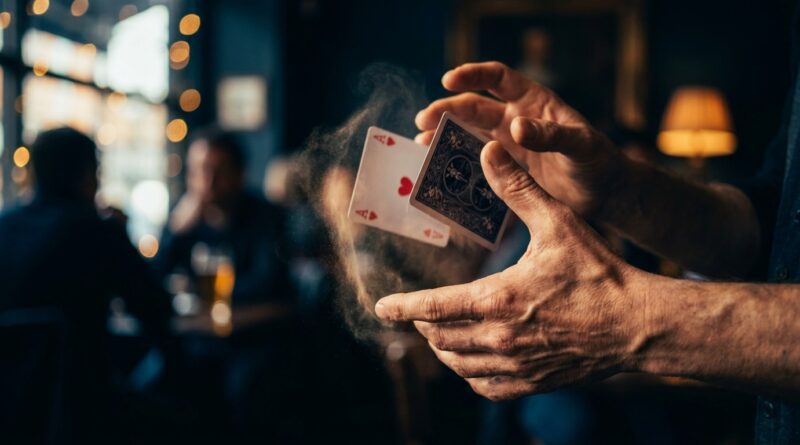
From Viral Clips To Working Repertoire: Build One ‘Hand‑Wave Transposition’ Sleight That Turns Any TikTok Trend Into A Real‑World Miracle
Your frustration is real. You see a hand wave, a card changes places, and the comments explode with “no way.” Then you try to learn it, and it turns out to be either a camera trick, a toy move, or one of those angle-sensitive ideas that dies the second a real person stands a little to your left. That is the trap a lot of magicians are in right now. They are chasing clips instead of building methods. If you want one practical answer, start with a hand wave card transposition sleight of hand built around a top change-style switch covered by a motivated wave, eye contact, and a clean beat before and after. Not because it is trendy, but because it holds up. It can look modern on camera, still plays for live people, and gives you a repeatable engine instead of a disposable stunt.
⚡ In a Hurry? Key Takeaways
- The best all-purpose answer is a wave-covered transposition built on a strong switch, not a camera-only visual.
- Practice the empty-beat rhythm. Show card, wave, relax, then reveal. That timing sells the miracle.
- If your move cannot survive one spectator on each side and a second performance, it is not repertoire yet.
Stop Chasing Every Viral Move
Short-form magic is pushing everyone toward tighter visuals. That part is fine. The problem starts when the method is weaker than the video.
A lot of viral transpositions are built for one lens, one take, one perfect crop. Real audiences are rude in the best possible way. They stand too close. They lean. They ask to see it again. They talk during your setup. A move that looks “insane” online can collapse in ten seconds at a bar, table, party, or casual jam.
So the better question is not, “What is the newest visual switch?” It is, “What one mechanic can carry a dozen presentations?”
For most card workers, that answer is a hand-wave transposition structure built around a practical switch, usually top-change inspired, then dressed in modern timing.
What This Sleight Actually Needs To Do
If you want a real working hand wave card transposition sleight of hand, it needs four things.
1. It must look direct
The audience should feel like they saw one card here and another card there, then a wave, then they changed places. Not six secret actions and a lot of suspicious squaring.
2. It must survive side angles
Not perfect 360. That is fantasy. But it should handle a small semicircle of real people without panic.
3. It must reset fast
TikTok rewards novelty. Live performance rewards repetition. You need something you can do again with confidence.
4. It must allow a pause
This matters more than people think. The strongest visual changes are not always the fastest. They are often the clearest. A good transposition lets you hold the moment before the reveal.
The Best Core Idea: A Wave-Covered Switch
The smartest way to build this is to use the hand wave as a reason, not as camouflage alone.
That sounds subtle, but it changes everything.
Bad handling says, “I wave because I need cover.” Good handling says, “I wave because that is the magical moment.” Once the audience accepts the wave as the effect trigger, your switch has a home. It stops looking like a weird flourish and starts feeling like part of the story.
The classic engine here is a top change or a top change relative. Not because it is old, but because it solves the exact problem modern magicians have. It gives you a real-time object switch in the hands. It can be framed for camera without being fake for live people. And with proper timing, it is far more deceptive than many flashy packet switches.
Why This Works Better Than Most Viral Alternatives
Many online transpositions depend on one of three weak spots.
Overly narrow framing
If the method only works when the camera crops out your lower fingers, your body has not learned a miracle. It has learned a shot list.
Display-first methods
Some tricks look amazing in a freeze-frame breakdown and awful at full speed in person. The card is shown in a strained way. The fingers curl oddly. The audience may not know why it feels wrong, but they feel it.
One-and-done handling
The move kills once, then you cannot cleanly repeat it. That is fine for content. It is weak for repertoire.
A wave-covered switch avoids these traps. It gives you natural posture, a clean before image, a magical beat, and a reveal that can be framed for one person or twenty.
How To Build The Sequence So It Feels Modern
The move alone is not the trick. The sequence is the trick.
Phase 1. Clear identification
Show the first card plainly. No fidgeting. No extra get-ready energy. The audience should be able to name what they saw.
Phase 2. Lock attention with a question
Say something simple like, “You remember the queen, yes?” That pulls eyes up for a beat and gives your hands room to relax. Eye contact is not misdirection in the sneaky sense. It is social gravity.
Phase 3. The wave as punctuation
Your free hand passes over or taps near the card. Smooth. Not theatrical. Think of it like pressing a button, not casting a spell.
Phase 4. The switch in the offbeat
The real secret is often done between moments, not on the moment people think matters. The hand wave creates a rhythm change. Use that rhythm. Do not rush to reveal.
Phase 5. Tiny pause, then reveal
This is where many people miss. They switch and instantly snap the card over. That screams method. Instead, switch, breathe, then show. That beat gives the audience time to believe nothing happened.
Angle Management Without Looking Scared
You do not beat angle problems by moving less. You beat them by standing smarter.
Turn your body slightly, not dramatically. Keep your working hand in a lane between your sternum and the spectator’s eye line. Avoid carrying the card low near the waist, where side flashes get ugly fast.
Also, wave with purpose. A lazy drift is suspicious. A clean, direct pass looks motivated and blocks for a natural instant.
If you already work object transpositions beyond cards, the thinking is similar to what I talked about in From Table Noise To TV-Ready Moments: Build One ‘Desk Object Transpo’ Sleight That Steals Any Zoom Or Fringe Stage. The prop may change, but the backbone is the same. Strong framing, believable rhythm, and a reveal that lands after the secret is over.
What To Practice, In Order
Most people practice the wrong part first. They grind the finger action for hours, then wonder why it still looks dodgy.
Start with the visible beats
Practice showing the card cleanly. Practice the wave. Practice the reveal. Those are the parts the audience actually remembers.
Then practice the timing
Count it out if you need to.
Show. Look up. Wave. Relax. Reveal.
That little relax beat is gold.
Then add the secret action
Once the rhythm feels normal, insert the switch. If the whole sequence changes character when the move goes in, the move is still owning you.
Finally, test with bad spectators
Friends who burn your hands are useful. So are mirrors and side-angle phone recordings. Front view is not enough.
Common Mistakes That Ruin The Illusion
Moving too fast
Fast hands do not always look magical. They often look guilty.
Over-proving the card
If you display the card like you are trying to win a court case, people feel the tension. Show it once. Clearly. Then move on.
Using a giant magic wave
Small actions look honest. Big flourishy swipes look like cover.
Revealing with no emotional shape
A transposition should have a beat of suspense. Let them register what they thought was true before you break it.
How To Turn One Sleight Into Several Effects
This is where the real value kicks in. Once your hand-wave switch is solid, you can build a whole mini-set without learning five unrelated gimmicks.
Single-card transposition
The cleanest version. One card in hand, another isolated, places change.
Signed card pseudo-transpo
You can frame the switch around a signed selection returning to an impossible location, then wave and reveal the apparent change. Even if the structure is technically a switch plus replacement, the audience reads it as transposition.
Color change into transposition
First the card changes. Then the original appears somewhere impossible. Now your one mechanic becomes a two-phase routine.
Social-media cutdown
For video, you simply crop the script, not the honesty. Keep the same method, shorten the setup, and preserve the live-safe handling. That way your clip advertises your real magic instead of some fake version of it.
When A Top Change-Style Method Is The Wrong Choice
Let’s be fair. This is not the answer for every situation.
If the crowd is fully behind you, if the lighting is brutal, or if you cannot control where people stand, use a different structure. Also, if your nerves make your hands clamp up, a simpler transposition with tabled conditions may play stronger.
The goal is not to force one move everywhere. The goal is to own one move deeply enough that you know when it fits, when it does not, and how to shape a routine around it.
How To Know It Is Ready For Repertoire
Ask yourself five blunt questions.
- Can I do it for one person on my left and one on my right?
- Can I perform it twice in one set without panic?
- Can I reveal slowly, not just instantly?
- Can I get into it from natural handling?
- Does it still look good when I am tired?
If the answer is no to three of those, keep practicing. If the answer is yes to most of them, you are no longer learning a trend. You are building a worker.
At a Glance: Comparison
| Feature/Aspect | Details | Verdict |
|---|---|---|
| Visual impact | A wave-covered switch can look as sharp as a viral clip when the display and pause are clean. | Excellent if timing is strong |
| Live practicality | Handles real spectators better than camera-only methods, though it still needs sensible body angles. | Much better for real work |
| Long-term value | One core mechanic can grow into transpositions, changes, returns, and short-form content without rebuilding your style every week. | Best choice for repertoire building |
Conclusion
The point is not to beat TikTok at its own game. The point is to stop letting TikTok choose your magic for you. Social platforms are rewarding tight, hand-centric visuals right now, and plenty of magicians are trying to bolt older sleights onto that format with mixed results. A solid hand wave card transposition sleight of hand gives you a better path. You get one modern-looking mechanic that is bold enough for the feed, but safe enough for real spectators, rough angles, and repeat performances. That means less time chasing the move of the week, and more time deepening one world-class piece of handling you can build real routines around. And that is how a flashy clip becomes a working miracle.