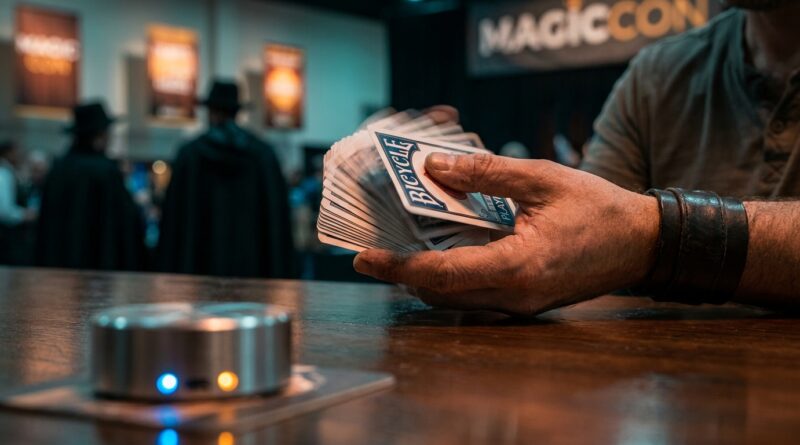
From Smart Props To Smart Hands: Build One Invisible ‘Tech-Assisted’ Sleight Before Magic Live Sells Out The Future
You can feel the pressure right now. Every scroll shows another smart deck, another app-connected pad, another “next level” electronic miracle timed perfectly for Magic Live season. And if you are a working magician, that hype can sting a little. Not because the gadgets are bad, but because they make your own hands feel old. Like your technique somehow missed an update. The good news is it did not. The trick is to stop asking, “What prop should I buy?” and start asking, “What effect is this prop pretending to automate?” That question changes everything. Most of the hottest releases are selling one of three feelings: impossible knowledge, hands-off control, or a clean visual change. You can build one invisible, tech-assisted sleight of hand magic sequence around those same feelings, using timing, structure, and audience management instead of batteries. That means you get something rare. A method that feels modern now, and still works when the charging cable is gone.
⚡ In a Hurry? Key Takeaways
- Build one “smart-looking” sequence by copying the effect of new gadgets, not the gadget itself.
- Start with a simple three-part routine: hidden control, delayed reveal, clean ending.
- Technique ages better than electronics, costs less, and keeps working at gigs where tech can fail.
Why smart props are making good magicians feel behind
This is the quiet problem nobody wants to say out loud. Smart props are getting better at selling certainty. They promise clean reads, instant reveals, and impossible control. If you work mostly with cards, coins, billets, or borrowed objects, that can make your regular material feel less exciting than it really is.
But most of these products are not inventing new feelings. They are packaging old magical ideas in a new shell. That matters. Because if you can identify the feeling being sold, you can often build it into your hands.
Think like a stage designer for a second. The audience does not care whether the moonlight comes from a $5,000 rig or a flashlight placed perfectly. They care that it looks like moonlight. Magic works the same way.
What “tech-assisted” should mean, even with no tech in your hands
For this article, tech assisted sleight of hand magic does not mean hiding electronics in your pocket. It means using the logic of modern magic products to improve your technique.
The three ideas worth stealing from smart props
1. Delayed information. Smart props often reveal information later, not right away. That delay creates mystery.
2. Invisible procedure. The best electronic tricks feel fair because the important work happens before the audience knows it matters.
3. Clean final picture. Modern buyers love effects that end with nothing suspicious in sight. Your sleight should aim for that same image.
If you build one bare-handed sequence around those three ideas, your magic instantly feels more current.
The invisible sequence to build now
Here is a practical model. It is not a knuckle-busting move. It is a small routine structure that makes ordinary sleights look expensive.
Phase 1. Secret control before the heat starts
Have a card selected and returned. Control it with whatever method you already trust. A double undercut. A side steal. A spread cull if that is your thing. The point is not to impress another magician here. The point is to be invisible before the audience knows the game has begun.
This is where many smart props win. Their dirty work happens early. So should yours.
Phase 2. Give the audience a false sense of freedom
Now add an open action that feels like the technology is doing the work. For example, place the deck on the table. Ask the spectator to cut, square, and hold it. Or have them deal a few cards face down into a pile. You already have control, so this middle phase is theater. Good theater.
To them, the trick is happening in their hands. That is the same emotional beat an electronic prop often sells.
Phase 3. Use a delayed reveal, not an instant one
Do not name the card the second they finish. Let there be a beat. Ask one more question. Make one more impossible claim. Then reveal.
That delay suggests process. It feels less like a guess and more like an invisible system reached an answer. You are creating the mood of advanced tech with timing alone.
Phase 4. End cleaner than the method began
After the reveal, make sure your hands and deck look more innocent than they did at the start. Put the deck down. Open your fingers. Step back half a pace. That physical cleanliness matters.
A lot of magicians practice moves and forget pictures. Buyers of smart props are often buying pictures. You should too.
A concrete example you can rehearse this week
Try this with any regular deck.
A spectator chooses a card and returns it. You control it to the top. You then explain that modern systems do not find information by “searching,” they find it by tracking tiny decisions. Have them cut the deck into two packets and complete the cut. Then have them deal six cards into a row, one at a time, stopping whenever they like between actions to “change their mind.”
None of that changes your control. That is the point.
You then gather the dealt cards, pause, and say, “You think you mixed a card. You actually left a trail.” Turn over the top card of the deck, or reveal it from a pocketed prediction if that fits your style. Same old control. Much newer frame.
That is tech assisted sleight of hand magic in a useful sense. The method is classic. The experience feels current.
How to mine new releases for technique instead of spending money
When a flashy product drops this week, do this before even thinking about pre-ordering:
Ask, “What is the audience memory?”
Not the method. Not the ad copy. The memory. Do they remember that the magician never touched the object? That the reveal happened after a pause? That the prediction was sitting in view the whole time?
That memory is your blueprint.
Strip away the electronics
If the trick still makes sense as a human performance, there is usually a sleight-based version hiding inside it. Maybe weaker on paper. Often stronger in person.
Look for one transferable lesson
Do not try to copy the whole thing. Copy one strength. Maybe it is the pacing. Maybe it is the framing language. Maybe it is the fairness of a spectator handling the props.
That one lesson can improve five existing routines, which is a much better return than one expensive purchase.
The sleights that best mimic “smart” magic
You do not need a hundred moves. You need a few dependable tools that support clean, modern effects.
Controls
Any reliable card control is useful because “smart” effects often depend on hidden certainty. Start with one you can do while making eye contact.
Switches
A simple switch can mimic impossible data changes, predictions, or transformed outcomes. Billet workers have known this forever.
Palming and ditching
If you can secretly remove or introduce an item, you can create the same impossible-object moments many gimmicks are built around.
False transfers and retention
For coin and small object workers, this is your version of invisible processing. The audience thinks the object is in one place while the real action has already moved on.
What to practice if your hands feel “stuck in 2019”
Do not answer hype with panic buying. Answer it with a six-day drill.
Day 1. Pick one routine you already perform
Choose something you know well enough that you can think about presentation instead of survival.
Day 2. Identify the “smart” feeling you want
Mind reading. Remote control. Self-working fairness. Visual impossibility. Pick one.
Day 3. Move the secret action earlier
This is the easiest way to make a routine feel more advanced. If the work is done before the audience notices the danger, the whole effect feels cleaner.
Day 4. Add one delay beat
Count to two before the reveal. Ask one extra question. Look away. Let the result arrive instead of pouncing on it.
Day 5. Clean the ending picture
Film yourself. Freeze the final frame. Does it look impossible, or just completed?
Day 6. Test on a real human
Not a mirror. Not a magician friend. A normal person. If they describe the effect in a way that sounds more impossible than your method deserves, you are on the right track.
When it is still worth buying the prop
Not every electronic release is a trap. Some are excellent. Some save real time. Some open doors that pure sleight of hand cannot.
Buy the prop if it does one of these things:
- It solves a staging problem you cannot solve by handling alone.
- It lets you perform under conditions where sleight of hand would be unfair to yourself.
- It fits a paid show and will earn back its cost.
Do not buy it just because the ad made your regular work feel outdated for five minutes.
The long game working magicians forget during convention season
Convention energy is fun. Pre-release chatter is fun. Seeing clever machines built by clever people is fun. But your future show is usually built by repetition, not excitement.
One durable handling, polished until it feels invisible, can outlast ten “must-have” purchases. It also travels better, resets faster, and does not care about software updates.
That is not anti-tech. It is just honest math.
At a Glance: Comparison
| Feature/Aspect | Details | Verdict |
|---|---|---|
| Modern feel | Delayed reveals, spectator handling, and cleaner end pictures make classic methods feel current. | Use this first before buying more gear. |
| Cost vs durability | A sleight-based sequence costs practice time, but it will not break, need charging, or age out with a product cycle. | Best long-term value for working performers. |
| Real-world performance safety | Simple controls, delays, and clean reveals are safer under pressure than complicated tech you barely know. | Safer for gigs, especially in noisy or unpredictable settings. |
Conclusion
The conversation right now is full of pre-orders, upgrades, and convention FOMO. That can quietly push good magicians into spending money when what they really need is a better frame for the skills they already have. If you start mining new releases for structure instead of shopping cues, you get something much more useful. You build one well-rehearsed sequence that feels as sleek and futuristic as the latest smart prop, but lives entirely in your hands. That helps today, because it cuts through the noise and gives you a practical edge before Magic Live sells out the future for another week. And it helps ten years from now, because solid technique does not go obsolete. It just gets smoother.