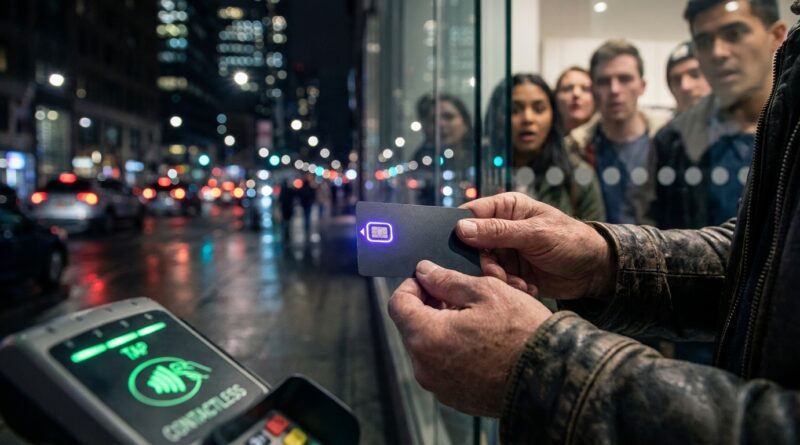
From Viral ‘Pay By Magic’ Wands To Real-World Sleight: How To Build One Contactless Credit Card Miracle That Looks Like Pure Fantasy
You have probably seen the clips. A performer waves a homemade wand over a payment terminal, it beeps, and the crowd loses its mind. Then you try to picture doing that at a real gig, with real people burning your hands from two feet away, and the whole thing starts to feel a lot less magical. That frustration is fair. Most viral “pay by magic” videos are edited for the phone screen, not for the brutal honesty of live walk-around work. The good news is you do not need a secret electronics lab or a risky gimmick to create a strong contactless credit card magic trick. You need a real card, a real terminal, a clean sequence, and a routine built around timing instead of camera cuts. If you treat the wand as theater and the payment as the punchline, you can turn a trend into something practical, believable, and strong enough for paid performance.
⚡ In a Hurry? Key Takeaways
- Use a real contactless card hidden in plain sight, and let the wand act as misdirection and story, not as the actual method.
- Build the routine around body position, spectator focus, and a backup line in case the first tap does not register.
- Test terminals, spending limits, and your local payment rules before performing, because reliability matters more than novelty.
Why the viral version falls apart in real life
The social media version is built for one thing. A shocking visual in under ten seconds.
Live performance is different. People lean in. They ask to see the wand. They stand at bad angles. They want to know whose card is being used and whether the machine actually charged anything. That means your method has to survive curiosity, not just get a like.
The biggest mistake is treating the wand as the trick. It is not. The wand is the prop that gives people a reason to look where you want them to look. The trick is a well-timed contactless payment made under conditions that feel impossible.
The practical method mindset
For a real-world contactless credit card magic trick, think in three layers.
Layer 1: The real object
You need a genuine contactless payment card or device that works reliably with the terminal you are using. Do not build your routine on a flaky signal, a dying battery, or a gimmick you have only tested twice at home.
Layer 2: The theatrical object
The wand is the star visually. It gives the audience a story. “Technology is so weird now that even this can pay.” Or, “I taught my wand one trick.” That framing matters because it tells spectators what to remember later.
Layer 3: The hidden action
This is where the work happens. The card has to come into range naturally and invisibly. That can mean classic close-up positioning, simple steals and transfers, or using another object as casual cover. The exact handling depends on your style, but the rule stays the same. Nothing should look like you are trying to make a payment.
A worker-friendly routine structure
Here is a clean structure that fits walk-around and does not ask the audience to believe in camera magic.
Phase 1: Set the premise
Bring out the wand as a joke first, not as a challenge. That lowers tension.
Try something like, “Every magician eventually buys one thing they regret. Mine was a contactless wand.” That gets a laugh and frames the prop as playful rather than suspicious.
Phase 2: Show the terminal is real
If you are at a venue with a genuine card reader, even better. If not, use a legitimate terminal for a small controlled payment in an appropriate setting. The more ordinary it feels, the stronger the effect becomes.
Let spectators see the amount. Keep it small. Be transparent about what is happening. You want amazement, not worry.
Phase 3: Introduce a false explanation
Wave the wand once from too far away. Nothing happens. Smile. This is important. It sells the idea that there are conditions and that the outcome is not automatic.
Then say, “It only works if you say the magic banking word. Approved.” Silly lines help. They relax people and cover your timing.
Phase 4: The secret moment
As attention stays on the terminal and the wand tip, bring the real contactless card into the read zone through your chosen handling. Keep the wand moving. Do not freeze. Motion is your friend here because people read steady movement as honest action.
When the beep lands, do not celebrate too early. Let the machine confirm it. Then slowly look at the wand as if you are mildly surprised it worked. Underplay beats overplay almost every time.
Phase 5: Clean ending
This is where many reel versions fail. They get the visual, then crash into awkward heat.
Put the wand away first. That seems backward, but it helps. The audience thinks the secret lives there. Once it is pocketed casually, you can shift to the card, receipt, or follow-up line without inviting an immediate grab.
How to hide the method without looking sneaky
The best live methods are rarely the most clever. They are the most natural.
Use normal payment behavior
People already know what a tap looks like. Use that. The hidden card should travel through space in a way that feels like part of ordinary movement, not a magician’s move. If your body action would look odd in a coffee shop, rethink it.
Keep the audience’s eyes on the beep zone
A payment terminal is naturally magnetic. Once the amount is on screen, people stare at it. Your job is to make sure the wand tip becomes the second focal point. If they are bouncing between those two things, your secret work has room to breathe.
Stand at a slight angle, not square-on
Walk-around workers know this already, but it matters more here. A slight body turn helps hide depth and gives your hands a safer lane. Do not make a fortress out of your body. Just claim a little theater space.
Failure handling matters more than the secret
This is the part hobbyists skip and professionals obsess over.
Contactless systems are fast, but not perfect. Readers vary. Cases and wallets interfere. Some terminals are fussier than others. If your routine has no plan for a missed read, it is not ready.
Your first backup
If the tap does not register, do not look guilty. Look annoyed at the “technology.” That keeps the premise alive.
Say, “See? Even magic has to update its software.” Reset. Try once more with a slightly cleaner path.
Your second backup
If it still fails, pivot to a joke ending and complete the payment openly with the card. Then use the wand for a different effect or button line. The audience should feel they saw a fun moment, not a broken trick.
Your hard rule
Never force repeated attempts beyond two. The third try turns wonder into analysis.
Safety, ethics, and common sense
This should be obvious, but it is worth saying clearly. Use your own card or fully authorized payment methods. Keep charges tiny. Know the venue rules. Get permission if you are using a terminal that belongs to a business.
Also, remember that some spectators are nervous about card security. You do not want your miracle to feel like a lesson in fraud. Present it as playful theater, not “look how easily I can hack payments.” That is an important line.
What makes this stronger than the TikTok version
Real people can retell this trick in one sentence. “He paid with a magic wand.” That is gold.
But the version that lands hardest in person has a few extras the viral clips often miss.
It has a premise
You are not just proving a gadget exists. You are turning everyday payment tech into a moment of impossible comedy.
It has texture
The false start, the joke, the pause before the beep, the calm reaction after. Those beats make the trick feel human.
It survives scrutiny
If someone watches from the side, or asks a question in the middle, or the machine hesitates for half a second, your routine can still breathe.
Best conditions for performance
Not every room is equally good for this.
Great places
Trade shows, hospitality suites, casual corporate mingling, bar magic, wedding receptions with roaming time, and retail-adjacent environments where card readers feel normal.
Less ideal places
Loud nightclubs with no elbow room, formal close-up tables with spectators on every side, and any venue where payment devices are out of your control and under strict staff supervision.
Simple script you can adapt
“People think magicians hate technology. Not true. We just ruin it for everyone else.”
“This is my contactless wand. It only works on very small amounts and with very low expectations.”
Wave once. Miss on purpose.
“No, sorry. That was Wi-Fi mode.”
Wave again during the hidden action.
Beep.
Pause.
“I really need to stop teaching props bad habits.”
That sort of script works because it sounds casual. It is not trying too hard to sell the impossible. The machine does that for you.
At a Glance: Comparison
| Feature/Aspect | Details | Verdict |
|---|---|---|
| Method style | Real contactless card plus sleight, with the wand used as theater and misdirection. | Best option for live reliability. |
| Audience management | Requires angle awareness, clear focus points, and a relaxed script. | Very workable for experienced walk-around performers. |
| Failure handling | Needs a reset line, a second attempt plan, and a graceful open-payment out. | Essential. This is what separates workers from reel-copying hobbyists. |
Conclusion
The smart way to build a contactless credit card magic trick is not to chase the flashiest gadget. It is to take a visual people already know from social feeds, strip away the edits, and rebuild it so it works in the messy real world. Tap-to-pay is everywhere now, and spectators already read it as slightly futuristic. That gives you a huge head start. If you pair a real card and a real terminal with solid timing, clean body position, and a calm backup plan, you get something much better than a viral clip. You get a practical miracle you can carry into actual gigs. And that is the part that matters. Not just fooling people once on camera, but creating a piece strong enough to earn gasps, laughs, and repeat bookings from people standing right in front of you.