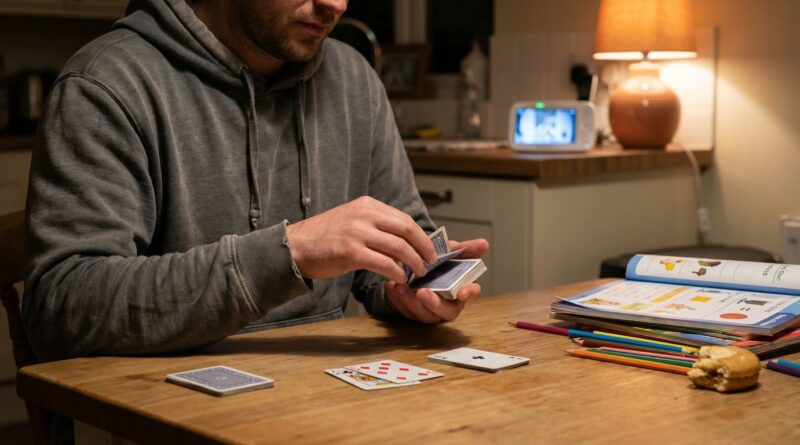
The 15‑Minute Sleight Session: How Busy Parents Can Build Real Card Skills On A Tight Schedule
You are not lazy, and you are not “behind.” You are busy. That matters. A lot of card magicians hit the same wall once kids, work, and normal adult life take over. They see polished clips of passes, center deals, and impossible-looking controls online, then look at their own 12 spare minutes after bedtime and think, “What is the point?” The point is this. Real card skill does not come from marathon practice sessions. It comes from repeatable, low-friction practice you can actually stick with. If you are trying to find the best sleight of hand practice routine for busy dads, the answer is not more ambition. It is less chaos. Pick three useful moves. Practice them in a simple order. Stop before you are frustrated. Done consistently, 15 minutes a day is enough to build clean, usable magic that fools real people, including the toughest audience of all, your own family.
⚡ In a Hurry? Key Takeaways
- The best starting routine for busy parents is 15 minutes: 5 minutes on a double lift, 5 on a false shuffle or control, and 5 on a force.
- Practice one tiny goal per session, like getting 10 smooth reps in a row, instead of chasing perfect sleights from social media.
- Short daily practice is better than long guilty sessions. It fits family life and builds real performance skill faster than random drilling.
Why busy parents struggle with card practice
The guilt is real. You sit down with a deck and part of your brain says you should be folding laundry, answering email, or being more present with your kids.
That mental tug-of-war ruins practice before it starts. Then social media makes it worse. You are not comparing your 15-minute kitchen-table session to another beginner. You are comparing it to someone who has likely spent years drilling one move for hours.
That is why most busy adults do better with a routine built around usefulness, not impressiveness.
Your goal is not to become a card mechanic by next month. Your goal is to become competent enough to do strong, clean magic with confidence.
The three sleights a busy dad should focus on first
If you only have a tight daily window, do not try to learn ten things at once. Start with three building blocks that show up in countless tricks.
1. Double lift
If you can turn over two cards as one, you can do a surprising amount of magic. Color changes. Transpositions. Ambitious Card phases. Simple packet tricks. It is one of the best returns on your time.
You do not need a fancy strike double on day one. Start with a basic push-off or get-ready version that looks natural.
2. Card control or false shuffle
You need a way to keep track of a selected card. For most beginners with limited time, that means either a simple overhand shuffle control or a false shuffle that keeps order while looking fair.
This is where practical beats flashy. A convincing overhand shuffle control is far more useful than a difficult pass you cannot do under pressure.
3. A force
A force lets you guide a spectator to a card while making it feel like a free choice. This opens the door to strong revelations and easy-to-reset tricks.
The riffle force or cross-cut force are perfect places to start. Some magicians turn up their nose at the cross-cut force because it is simple. Ignore that. Simple and effective wins when your practice time is short.
The 15-minute sleight session
Here is the best sleight of hand practice routine for busy dads because it removes decision fatigue. You do the same basic structure every day.
Minutes 1 to 3: Warm-up
Handle the cards. Spring them if you know how. Do overhand shuffles. Spread and square the deck. Turn cards over casually. The goal is not skill here. It is getting your hands relaxed.
Minutes 4 to 8: Sleight one
Work on your double lift only. Slow reps. No rushing. Aim for naturalness, not speed.
Good goal: 10 clean turnovers in a row with the same rhythm you would use for a single card.
Minutes 9 to 12: Sleight two
Practice your chosen control or false shuffle. Keep it in context. Shuffle, control, reveal. Do not just drill the move in isolation forever.
If you cannot use it inside a mini sequence, you do not really own it yet.
Minutes 13 to 15: Sleight three
Do your force. Alternate between mechanics and presentation. In real life, a force works because your timing and attitude feel relaxed.
Say the words out loud. “Touch any card.” “Take this one.” “We will leave it right there.” That matters.
What to do each day of the week
Busy people need a template. Here is one that actually fits real life.
Monday: Mechanics day
Focus on finger placement, grip, and smoothness.
Tuesday: Repetition day
Get your reps in. Keep count. Small wins are motivating.
Wednesday: Context day
Put each sleight inside a tiny trick sequence.
Thursday: Mirror or camera day
Watch your hands. Better yet, film 30 seconds. The camera catches tension and awkward pauses fast.
Friday: Performance day
Show one simple effect to your spouse, a friend, or even your phone camera as if it were a person.
Weekend: Light touch only
If family life is packed, just do five minutes of handling. Keep the streak alive without turning the hobby into another obligation.
How to avoid the biggest beginner mistake
The biggest mistake is practicing hard moves too early because they look impressive online.
A clean double lift, a basic control, and a force will get you into real tricks much faster than chasing advanced passes, one-handed shifts, or gambling moves you cannot yet support with fundamentals.
Think of it like cooking. You do not need restaurant knife skills to make a great dinner. You need a few reliable techniques you can use any night of the week.
How to know if you are actually improving
Do not measure progress by whether your move looks perfect next to a creator on Instagram. Measure it by these questions:
- Can I do the move without staring at my hands?
- Can I speak naturally while doing it?
- Can I do it five to ten times in a row without a miss?
- Can I use it inside a simple trick for a real person?
If the answer is yes more often this week than last week, you are improving.
A realistic first month plan
If you want a simple roadmap, use this.
Week 1
Choose your three moves. Do not change them midweek. Get comfortable holding the deck and starting each move cleanly.
Week 2
Increase consistency. Less stopping. Fewer resets. Start speaking your patter out loud.
Week 3
Link the moves together into one short routine. For example: force a card, control it, reveal it with a double lift sequence.
Week 4
Perform for one real person. Not ten people. One. Your goal is not to crush. Your goal is to finish the trick calmly.
Why this works better than binge-practicing
Long practice sessions feel productive, but they are hard to repeat when you are balancing school runs, work, dinner, and bedtime.
Short sessions lower the barrier. They also help your hands and brain learn in smaller chunks. That means less frustration and better retention.
Fifteen focused minutes a day beats two exhausted hours on Sunday night followed by six days of nothing.
At a Glance: Comparison
| Feature/Aspect | Details | Verdict |
|---|---|---|
| Best first sleights | Double lift, simple control or false shuffle, and a force | Best mix of usefulness and learnability |
| Practice length | 15 minutes daily, broken into warm-up plus three 4 to 5 minute blocks | Realistic for parents and easier to sustain |
| Main risk | Getting distracted by advanced sleights and abandoning the routine | Stick to one month before upgrading difficulty |
Conclusion
If Reddit is buzzing with people asking which three sleights a busy dad should focus on first, that tells you something important. Most magicians are not looking for the next knuckle-buster. They want a path they can actually follow after work, after dinner, after the kids are asleep. That is what this kind of routine gives you. Not fantasy progress. Real progress. Pick three useful moves, box the session into 15 minutes, and let consistency do the heavy lifting. You can start tonight, and that is the whole point. Card magic should fit your life, not fight it. When Magician Book helps turn all that hype and theory into something practical and life-proof, it becomes a lot easier to keep going.