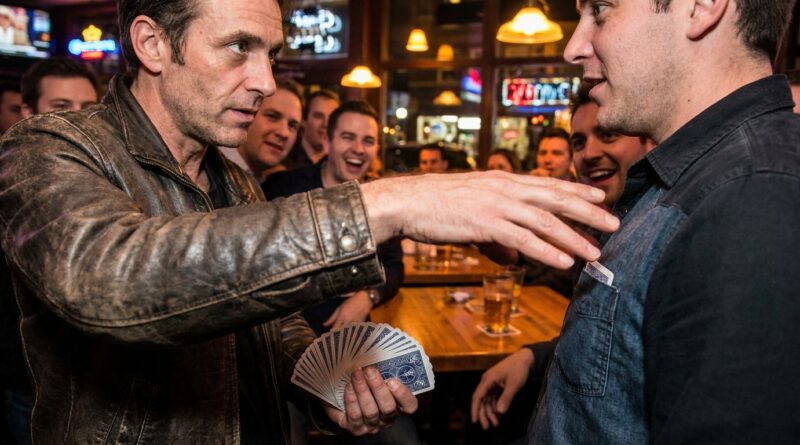
From Bare Palms To Borrowed Miracles: Build One ‘No‑Prop Pickpocket’ Sleight That Steals Anything From Their Mind, Not Their Pocket
You can feel the fatigue in magic right now. Another packet trick drops. Another clever gimmick promises a miracle. Then a real audience looks at you and says, “Do something with nothing in your hands.” That is the sting. They do not care what was expensive, limited, or underground. They care about a moment that feels impossible and human. If you have been quietly tired of buying props, learning stacks, or building your whole set around one fussy setup, this is the kind of move worth your time. A strong no prop pickpocket sleight of hand sequence gives you something rare. It feels dangerous, direct, and personal, yet it can be clean enough for close-up, casual performances, and even vertical video. Better still, it does not ask you to become a card memory machine. It asks you to get good at touch, timing, and audience focus. That is still where real reputations are made.
⚡ In a Hurry? Key Takeaways
- A no prop pickpocket sleight of hand routine can feel bigger than a gimmicked trick because the effect happens on the spectator, not on the table.
- Start with one transferable action pattern: touch, pause, redirect attention, then reveal a “stolen” thought, object, or choice.
- Keep it ethical and safe. Aim for playful theatricality, clear permission, and social comfort, not real-world invasive contact.
What “No-Prop Pickpocket” Really Means
Let’s clear up the phrase first. Most magicians hear “pickpocket” and think of watches, wallets, ties, and jackets. That is one branch of the tree. It is also a branch that can get socially awkward fast.
The smarter modern version is broader. A no prop pickpocket sleight of hand routine is built around the feeling that you removed something valuable without tools, without visible setup, and often without them noticing the key moment. Sometimes that “something” is physical. Sometimes it is a selection, a decision, a memory, a piece of information, or their certainty about what just happened.
That is why this plays so well today. Audiences are less impressed by tiny puzzle tricks and more impressed by experiences that feel impossible in the body.
The Core Idea: Steal Attention First
The secret is not superhuman fingers. It is attention management.
Real pickpocket-style magic works because the audience only has so much bandwidth. If one part of their brain is busy answering a question, laughing, reacting, or tracking one hand, another moment can slide past unnoticed.
That gives us a practical formula:
1. Create a reason to make contact
You need natural touch. Not sneaky touch. Natural touch.
That might be guiding their wrist, squaring their sleeve, demonstrating where to hold an imaginary object, or showing how to lock in a decision. The contact must make sense in the script.
2. Give their mind a job
Ask them to remember a color. Picture a coin. Name a stop sign shape. Think of the last thing in their pocket. Count backward. Anything that creates internal focus.
3. Use a small offbeat
The move should happen in the beat after the laugh, during the answer, or at the moment they look where you point.
4. Reveal the absence or the knowledge
This is where the trick becomes theater. Do not rush. Let them discover the gap.
That structure is simple, and that is the point. You can graft it onto material you already do.
Build One Reputation Piece, Not Ten Half-Learned Ones
Many performers get stuck because they collect methods instead of building a routine. One strong sequence beats a drawer full of almost-practiced novelties.
Here is a practical structure for a modern no prop pickpocket sleight of hand piece.
Phase 1: The test
Frame it as sensitivity, awareness, or reflexes.
Example patter: “Most people think they notice everything. They really notice what they expect to notice.”
Have them hold out a hand. Tap one finger, then another. Ask them to track which one you touched. This looks innocent. It also teaches them the game is about sensation and attention.
Phase 2: The miss
Now add a verbal task while repeating the touch sequence. Ask them a simple question at the same time. The point is for them to experience that their awareness drops the second the brain gets split.
This phase is gold because it proves your premise before the main effect.
Phase 3: The steal
Now you move to the real moment. It might be removing a pen from a breast pocket, shifting a ring to another finger with permission, sliding a folded note, or even secretly obtaining information they thought was private. In a zero-prop framing, the steal can also be conceptual. You can force a timing choice, guide a hand position, or shape where they think an object is.
The audience should feel, “Wait, when did that happen?”
Phase 4: The callback reveal
This is where many magicians leave impact on the floor. Tie the reveal back to the original “awareness test.” Now the whole routine feels designed, not improvised.
“You missed one finger in the practice round. Then you missed something bigger.”
Why This Hits Harder Than Many Low-Sleight Tricks
Self-working and low-sleight material has its place. No shame there. But a tactile routine creates a different kind of memory. People do not just remember what they saw. They remember what they failed to feel.
That lands on a deeper level.
It is also one reason social clips of this style travel well. A card revelation can look like editing. A person checking their pocket and finding something gone or moved feels raw and real.
How to Practice It Without Looking Creepy
This matters more than finger speed.
Practice the script and touch together
Do not learn the mechanics in silence and then bolt on words later. The words create the cover. The rhythm of your sentence often is the timing of the move.
Use household drills
Practice removing a sticky note from a shirt. Slide a receipt halfway from a pocket and replace it smoothly. Move a spoon from one place setting to another while speaking. Boring drills build clean hands.
Train soft contact
If your touch feels grabby, people tense up. If it feels casual and brief, people relax. This is as much social skill as manual skill.
Film from ugly angles
Do not just practice for the mirror. Use your phone low, high, and from the side. Vertical video is especially useful now because it copies how your work will actually be seen online.
Best Objects and Moments for the First Version
If you want this in your set tonight, start small.
Easiest targets
- Pen from a shirt pocket
- Napkin or folded receipt from a loose pocket
- Sunglasses from a neckline or shirt opening
- A watch steal only if you already understand comfort and timing
Best non-object versions
- Stealing a freely named number through timing and framing
- Stealing the location of an imagined object
- Stealing their confidence in which hand holds something, even when nothing does
The non-object versions are underrated. They keep the “nothing in your hands” promise while avoiding the social risk of touching valuables.
What Makes It “Modern” Instead of Old-School Pickpocketing
Classic pickpocket acts often played broad and cheeky. Great fun, but not always right for a tight cocktail group or a camera phone two feet away.
The modern version is lighter.
It uses less contact, cleaner motivations, and often ends with a psychological reveal instead of a pile of stolen accessories. Think less stage rogue, more impossible awareness experiment.
That is why it fits close-up, bars, busking, and short-form video. You are not carrying a table full of stuff. You are carrying timing.
Common Mistakes That Kill the Effect
Making the move the whole point
If the audience feels you are trying to “get away with something,” they go on guard. Frame it as an experiment in focus or memory first.
Touching without reason
Every contact needs a why. If there is no reason, there is suspicion.
Revealing too fast
Give them a second to register normality before the reveal. That tiny pause makes the shock bigger.
Starting with expensive or personal items
Do not begin with phones, wallets, or jewelry that could trigger real stress. Build trust first.
Ignoring consent and venue
A loud bar, a street circle, and a wedding cocktail hour all have different comfort rules. Read the room.
A Simple Working Script You Can Adapt
“People think awareness is like a camera. It’s not. It’s more like a flashlight. Wherever I point it, that’s all you get.”
“Hold your hand out. Good. I’m going to touch two fingers. Just remember the second one.”
Repeat once.
“Easy, right? Now do the same thing, but answer this at the same time. What was the first concert you ever went to?”
Run the second phase.
“That’s the weird part. The second your mind had a job, your body got easier to fool.”
Move into the steal or conceptual vanish.
Then slow down.
“Check your pocket.”
That last line should be plain, not dramatic. Let them supply the drama.
Why This Resets Better Than Most Reputation Tricks
Instant reset is not glamorous, but working pros know it matters. A no prop pickpocket sleight of hand piece resets because the secret is in your timing and route, not in replacing gaffs or rebuilding a stack.
That makes it perfect for walk-around. It also makes it easier to test in the real world. You can do it, adjust one line, and do it again five minutes later.
Who This Is Best For
This style is especially strong for:
- Close-up workers who want one non-card reputation piece
- Bar magicians who need direct, noisy-proof material
- Buskers who want intimacy inside a larger crowd
- Creators filming vertical clips without suspicious edits or props
- Serious hobbyists tired of buying tricks they never actually perform
If you hate memorized systems and do not want to carry another special wallet, this is a very sensible lane to explore.
At a Glance: Comparison
| Feature/Aspect | Details | Verdict |
|---|---|---|
| Learning curve | Can be learned in an afternoon at a basic level because the core is timing, touch, and scripting, not heavy finger gymnastics. | Friendly for working pros and committed hobbyists. |
| Practicality | No special props, instant reset, and easy to drop into close-up, street, or social media settings. | Excellent real-world value. |
| Audience impact | Feels personal and impossible because the effect happens on them, not just in your hands. | Stronger than many clever but forgettable tabletop tricks. |
Conclusion
If you have felt a bit stranded by all the talk about particle thinking, stacked systems, and low-sleight miracles, you are not behind. You may just be looking in the wrong drawer. A good no prop pickpocket sleight of hand routine gives you something many flashy releases do not. It gives you a gritty, practical, in-the-trenches weapon you can learn quickly, reset instantly, and use almost anywhere. It can play at a bar top, in a busking circle, during walk-around, or straight into a phone camera without changing your whole act. More importantly, it helps you stand out. Not because it is expensive. Because it feels real. Start with one clean sequence, make the contact natural, keep the ethics sharp, and build the reveal slowly. You do not need another trick to buy. You need one moment people talk about after you leave.