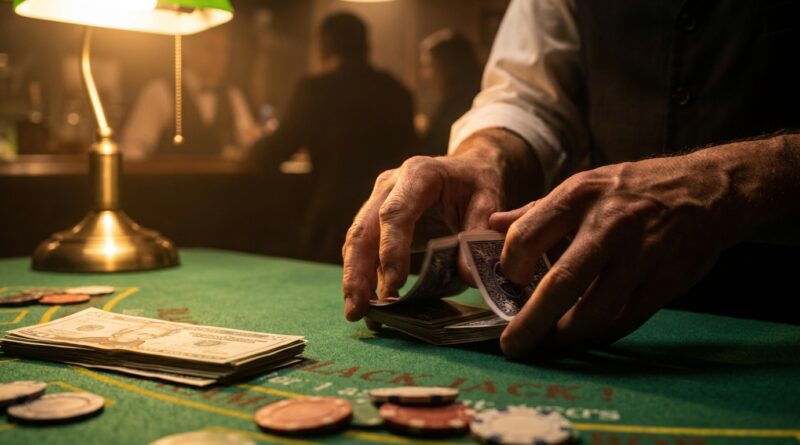
From Casino Myths To Close‑Up Miracles: Build One Blackjack‑Style Card Cheat That Is 100% Legal At The Card Table
If you have ever watched a flashy blackjack demo online and thought, “That looks great, but I’d get caught the second someone asks to see the deck,” you are not imagining it. A lot of gambling themed magic looks strong on camera and shaky in real life. That is frustrating, especially if you want something that feels dangerous, plays close up, and still survives a curious spectator breathing over your shoulder. The good news is you do not need a gimmicked deck or a real cheating move to sell a convincing blackjack moment. You need a routine built on timing, structure, and a fair looking procedure. The safest path is not teaching real casino fraud. It is building a blackjack style sequence that feels like advantage play, but is actually pure performance. Done right, it gives you the “show me how the pros cheat” hook without turning your act into an exposure session or putting your handling at risk.
⚡ In a Hurry? Key Takeaways
- Use a false demonstration, not a real cheating method. The strongest legal blackjack routine is a scripted magic sequence dressed like casino skill.
- Build it around known cards, controlled dealing, and a clean reveal. Keep the deck ordinary and the actions simple.
- This protects you and your audience. You get the card shark drama without teaching harmful real-world cheating.
The best route is not real cheating. It is believable theatre
Let’s be blunt. A real blackjack sleight of hand card cheat tutorial would cross a line. It is not just bad form. In the wrong hands, it becomes practical advice for actual game manipulation. That is why the smart performer takes a different route.
You present a pseudo cheat. In plain English, that means the audience thinks they are watching gambling skill, but what they are really seeing is a magic routine shaped like a casino demonstration.
This is how working magicians stay safe and strong. You are not exposing the craft. You are not teaching fraud. You are creating the feeling of inside knowledge.
The blueprint: a legal blackjack-style “cheat” that plays like a miracle
Here is the core routine. It uses an ordinary deck, basic card control, and presentation. No marked cards. No camera edits. No shady methods that belong in a real game.
Effect from the audience point of view
You explain that blackjack legends are not always about secret devices. Sometimes the edge comes from tracking high value cards and knowing when the table is “hot.” A spectator shuffles. You deal several blackjack hands to imaginary players and one hand to yourself. Despite the fair procedure, you end with a perfect twenty-one, or you build a run where your hand keeps landing on winning totals at exactly the right moment.
It looks like impossible control. In reality, it is controlled theatre.
What you actually need
- An ordinary 52-card deck
- A simple stack of a few key cards near the top, set before performance
- Comfort with false shuffles that retain top stock
- A natural blackjack presentation
The secret is not some underground move. It is preserving a few cards and dealing them into a story.
How to build the routine
Step 1: Prearrange a short top stock
You only need a tiny setup. For example, place cards that can create your final blackjack hand in positions you can track. Think in pairs and totals, not in full-deck order. An Ace and a face card are the obvious choice, but a more interesting version is setting up a two-phase reveal, such as landing on 20 first, then drawing exactly the Ace you “should not” be able to know is coming.
Keep the setup short. Four to eight cards is plenty. The shorter the stock, the less fragile the routine feels.
Step 2: Use a shuffle that looks casual but keeps the top cards safe
This is where many performers get in trouble. They do a fancy false shuffle that screams, “something happened.” Do less. A simple overhand shuffle that runs a few cards and keeps your stock in place is often stronger than a knuckle-busting flourish.
If someone asks, “Can I shuffle?” let them, but only after your effect is over. If audience handling is a must, switch the order of your set. Start with their shuffle, then cull or arrange during a previous trick before going into the blackjack phase.
Step 3: Frame it as tracking, not mechanical cheating
This matters. If you say, “I’m going to deal myself the winning hand,” people burn your fingers. If you say, “Let me show you why gamblers obsess over patterns and pressure,” they watch the story instead of every fingertip.
Your script should sound like this: some players count, some watch dealer rhythm, some trust instinct. Then you say you prefer “reading where the rich cards are likely to cluster.” That gives you a reason to pause, think, and deal with intention.
Step 4: Deal multiple hands slowly and clearly
Blackjack style magic dies when the layout is messy. Keep it neat. Three spots is enough. One spectator hand, one house hand, one for you. Deal in a clean rhythm. Say each total out loud as if you are teaching a table game.
The rhythm sells fairness. It also lets you hide the only thing that matters, which is that the cards you preserved land where they need to land.
Step 5: Build to a choice that feels free
The strongest version includes a decision point. Ask the spectator, “Should I stand on this, or take one more card?” They will feel involved, even though both roads lead somewhere strong if you planned well.
This is where outs matter. Do not build a one-track miracle. Build a routine that can end on twenty-one, on a “called shot” hit card, or on a demonstration that your hand beats all others by one point. Flexibility makes the effect look fearless.
A sample routine structure you can actually use
Here is a practical performance skeleton.
Opening line
“Blackjack myths are funny. People think the cheat is always in the fingers. Usually the real secret is getting you to remember the impossible parts and ignore the dull parts.”
Phase one: Fairness
Spread the cards briefly. Square them. Do a false shuffle that keeps your top stock. Explain that in blackjack, tiny edges matter.
Phase two: The deal
Deal three hands. Spectator, dealer, you. Repeat for the second round. Casually total the visible values.
Phase three: The decision
Your hand sits at a believable total, maybe 11 or 20 depending on your setup. Ask whether you should hit. Milk the moment.
Phase four: The miracle
Take exactly the winning card. Either reveal a perfect blackjack, a one-card rescue, or an impossible beat over the other hands.
Phase five: The kicker
Turn over the next card and say, “And this is why real gamblers stop before confidence becomes greed.” If that next card would have busted you, the routine gets a lovely extra sting.
Why this works better than a “real” blackjack sleight of hand card cheat tutorial
Because spectators do not grade you on legal casino technique. They grade you on clarity, tension, and payoff. A routine that feels fair and ends clean will beat a technically accurate cheating demo that looks suspicious halfway through.
Also, a real gambling move often needs perfect angles, specific conditions, and the kind of heat no sane performer wants at a restaurant table. A pseudo demonstration is more durable. It survives interruptions. It survives jokes. It survives that one guy who leans in and says, “Do that again.”
Common mistakes that get magicians burned
Making the plot too technical
If you start explaining second deals, clumping, slug tracking, and dealer procedure, most people tune out. Keep the idea simple. “I can sense where the high cards gather” is enough.
Using too many hands
Six spots may feel more casino-like, but they make the effect muddy. Three spots read better. Four at most.
Overproving the deck
The more you insist the deck is normal, the less normal it feels. Let the actions prove the point.
Confusing magic with exposure
You are not there to teach crime. You are there to create mystery. Leave the audience with a story, not a lesson plan.
How to make it fit different venues
For close-up tables
Keep it tight. One minute, maybe two. Fast setup. Strong ending.
For parlour shows
Use jumbo totals verbally. Narrate the decisions more clearly. A spectator can stand in as the “player at third base.”
For cruise ships or speakeasy themed events
Push the atmosphere. Talk about pit bosses, lucky streaks, and the psychology of when players hit or stand. The mood does half the lifting.
Ethics matter here
This is worth saying plainly. Gambling themed magic is fun because it brushes against danger without causing harm. Keep it that way. Do not market this as real cheating instruction. Do not perform it in a live casino in a way that creates confusion. And do not pretend you are exposing working scams for authenticity points.
The classy version is simple. You are demonstrating myth, psychology, and impossible timing.
At a Glance: Comparison
| Feature/Aspect | Details | Verdict |
|---|---|---|
| Method | Short top stock, false shuffle retention, scripted deal sequence | Best mix of safety and impact |
| Audience Perception | Feels like card tracking or table skill, not a puzzle trick | Very strong when paced clearly |
| Practicality | Works with a normal deck, no camera cuts, no gimmicks, minimal setup | Ideal for real-world close-up and parlour use |
Conclusion
The big opportunity right now is obvious. Audiences are already hooked on slick gambling clips, theatre shows with casino style staging, and social videos that promise secret card shark knowledge. That gives magicians a ready-made hook, but it also creates pressure to perform something that looks real under live conditions. A legal, blackjack inspired pseudo advantage play sequence solves that problem nicely. It lets you ride the current interest without drifting into real cheating, clumsy exposure, or prop heavy methods that fall apart the moment someone asks a question. Better still, this kind of routine is flexible. You can dress it up for poker nights, speakeasy sets, cruise ship lounges, or that familiar challenge, “show me how the pros really cheat.” If you build it around structure instead of stunt moves, you end up with something stronger than a demo. You get a repeatable miracle that protects the craft and makes you look like the calmest card handler in the room.