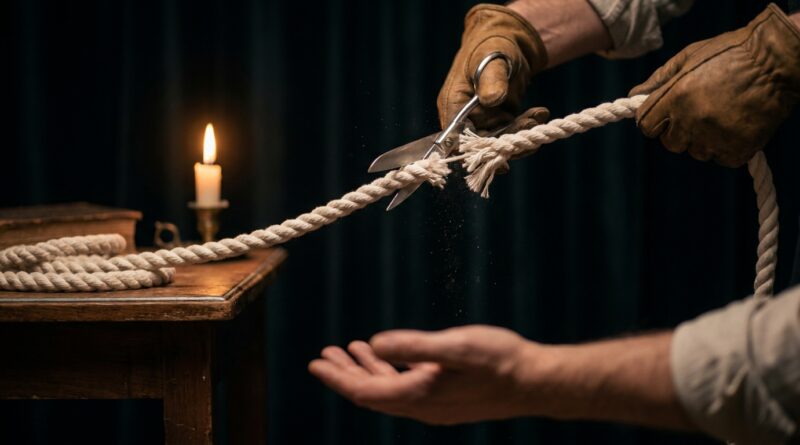
From Rope Tricks To Real Tension: Build One ‘Spectator-Cut’ Restoration That Feels Truly Impossible In Their Hands
If your cut and restored rope still feels like a puzzle, your audience is not wrong. Most versions look too clean in the wrong places. The magician holds the rope, chooses the moment, manages the cut, then reveals the fix. So the crowd does what crowds do now. They start hunting for the move, the fake cut, or the extra bit hidden somewhere in your hands. That is the real frustration. The effect is strong on paper, but the handling can feel overprotected.
The fix is not always a new gimmick. Often it is a new structure. If the spectator cuts the rope, holds the pieces, and feels the tension before the restoration, the trick stops reading like a skill demo and starts feeling impossible. That is where a good spectator cut and restored rope sleight of hand routine wins. You are not proving you are clever. You are letting them remember that they made the damage, and somehow the rope came back anyway.
⚡ In a Hurry? Key Takeaways
- Let the spectator do the cutting and confirm the break before the restoration. That is what makes it feel impossible.
- Build your sequence around tension, pause, and touch. Do not rush from cut to fix.
- Use a sturdy, repeatable setup. A strong routine beats a fragile gimmick or a one-time rope every time.
Why old rope magic can feel too safe
Classic rope magic still works. The problem is that many performers handle it like museum glass. Nobody gets too close. Nobody makes a real choice. Nobody feels the damage happen in their own hands.
That creates distance. And distance gives the audience room to explain things away.
The current shift in magic is simple. People want ownership. If they cut it, hold it, and still see it restored, the memory lands harder. It also changes your role. You stop looking like someone with quick fingers and start looking like someone who can reverse an event that already happened.
The goal: one restoration that feels raw and fair
Forget building a ten-phase rope act for a moment. Start with one beat. One restoration. One memory.
The target is this: the spectator cuts the rope. They know it is really cut. They help hold the tension point. The restoration happens with as little cover as possible. Then the rope can be shown whole without a suspicious cleanup sequence.
That is the frame for a modern spectator cut and restored rope sleight of hand routine.
A buildable spectator-driven sequence
What you need
Use soft cotton rope that handles cleanly and looks normal from a few feet away. Roughly 8 to 10 feet is enough for practice. Use sharp scissors. Most important, use rope you trust. If the rope is too stiff, too fluffy, or too cheap, the effect starts fighting you before the method even begins.
The sequence shape
Here is the structure you want, even if your exact method changes.
- Show one ordinary rope clearly and casually.
- Let the spectator choose where to cut, or at least feel that they did.
- Have them make the cut.
- Pause. Do not restore it yet. Let the reality sink in.
- Bring attention to the broken area while they still feel involved.
- Restore it in the smallest possible action.
- Immediately prove the rope is whole in a natural way.
That pause in step four matters more than many magicians think. If you rush, the audience assumes the trick happened during the cut. If you stop and let the broken rope exist for a second, they mentally lock in the fact that the rope was damaged.
The handling idea that sells it
The strongest moment is not the flashiest one. It is the moment when the spectator feels tension on both sides of the cut area. That physical sensation tells their brain, “This is one rope, and it was really in two.”
So build your restoration around contact and tension. Even if your method is classic, your staging should feel modern.
Try this performance logic:
- You hold one end.
- The spectator holds the other.
- The cut section is isolated between both hands.
- The spectator is asked to pull gently so the break is unmistakable.
- Only then do you restore.
That one change does a lot of work. The spectator is no longer watching a rope trick. They are inside a broken-rope event that should not be fixable.
How to script it so it does not sound like a puzzle
Bad script: “Watch carefully.” That tells them to hunt.
Better script: “I want you to be sure this happens on your terms.”
That line changes the emotional temperature. You are not daring them to catch you. You are giving them control.
Other useful lines:
- “Cut where it feels fair to you.”
- “Hold both sides. You should feel that break.”
- “If this goes wrong, it is just rope. If it goes right, it should not.”
Notice the tone. Calm. Slightly uncomfortable. Real. That is a better fit for this plot than cheerful challenge patter.
What to avoid
Do not overprove before the cut
If you spend too long showing the rope empty, straight, clean, and ordinary, people know a trick is coming. Show enough to establish fairness, then move on.
Do not restore too fast
This is the biggest mistake. Fast does not always look magical. Sometimes it just looks hidden. A short beat of silence can make a simple restoration feel far stronger.
Do not add extra phases unless they earn their place
A second restoration can weaken the first. If the crowd just saw an impossible event, do not explain it away by repeating it like a flourish.
A practical checklist for upgrading any old routine
If you already do a cut and restored rope, you may not need a new method. You may need a new frame. Use this checklist.
1. Can the spectator make a meaningful choice?
If they cannot choose the cut point, choose the hand that holds the rope, or decide when to pull, add one of those choices.
2. Can they confirm the rope is truly cut?
They should either see the separated ends clearly or feel the break through tension.
3. Is there a pause after the cut?
If not, put one in. Even one second helps.
4. Does the restoration happen near their hands?
The closer the miracle happens to their contact point, the stronger the memory.
5. Is the cleanup invisible in meaning, not just in mechanics?
This is important. A perfect secret move can still feel suspicious if the audience senses you are reorganizing the scene after the magic. Your ending should look like the most natural thing in the world.
6. Can you repeat it across gigs without babying the props?
If your setup is delicate, you will perform with caution. Audiences can feel caution. Use methods that let you relax.
Why this trend is catching on now
A lot of the newest visual restorations are chasing the same reaction. Not just “That looked good,” but “No way, I did it myself.” That is a different class of astonishment.
It is also more durable. When people retell the trick later, they leave out your careful setup and remember their own decision. That is what you want. Their memory becomes your best method.
And for hobbyists, this is good news. You do not need a drawer full of expensive one-shot gimmicks to join the trend. A well-built spectator cut and restored rope sleight of hand sequence can feel just as current as the latest release if the structure is honest and bold.
Rehearse the right parts
Most people practice the secret. You should also practice the open parts.
- How you hand out the scissors.
- How you invite the cut.
- Where the spectator stands.
- How much tension they apply.
- How long you wait before the restoration.
Those are not filler details. They are the effect.
If the staging feels clumsy, even a good method looks weak. If the staging feels inevitable, a simple method can look impossible.
At a Glance: Comparison
| Feature/Aspect | Details | Verdict |
|---|---|---|
| Spectator control | They cut the rope, hold tension, and confirm the damage before the restoration. | Essential for a modern feel. |
| Method style | A solid repeatable setup usually plays better than fragile gimmicks or one-time-use props. | Choose reliability over novelty. |
| Audience memory | People remember that they made the cut, not that you were fast with your hands. | Stronger reactions and better retelling. |
Conclusion
The best answer to the current wave of visual restorations is not panic-buying every new rope release. It is building one sequence that puts the impossible in the spectator’s hands. If performers are asking how to get that “no way, I did it myself” reaction without depending on fragile gimmicks or disposable props, this is the route worth taking. Let them make the damage. Let them feel the break. Then restore it with calm confidence. That shift is powerful because it changes the story from “the magician fooled me” to “reality changed after I touched it.” If you use the sequence and checklist above, even an older cut-and-restored can feel bold, current, and strangely real. That is exactly where rope magic should be heading.