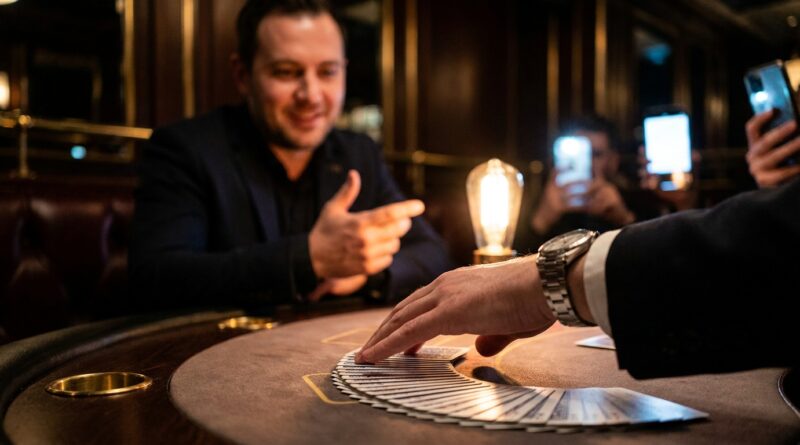
From ‘Pick A Card’ Cliché To Real Mind Games: Build One Invisible Influence Technique That Forces Their Choice On Camera
You can feel it the second a card force goes wrong. The spectator hesitates, the camera catches the beat, and the comments fill up with “they obviously made them pick that one.” That is the problem with a lot of current pick-a-card clips. They are built for one lucky take, not for replay, live pressure, or a crowd that now knows what a force looks like. If you want a stronger psychological card force sleight of hand approach, stop thinking about one move and start thinking about one protocol. The cleanest modern answer is not a knuckle-busting force. It is a layered influence sequence that guides timing, attention, wording, and physical handling so the same card feels freely chosen. Done right, it works on camera because nothing looks pushy, and it works live because you always have an out if the influence misses. That is what makes it practical instead of wishful thinking.
⚡ In a Hurry? Key Takeaways
- Use a layered force, not a single force. Combine language, rhythm, eye-line, and deck position to make one card feel natural to choose.
- Start with a force card near a psychologically comfortable grab point, then script the selection so the spectator acts before they start analyzing.
- Always build in a backup reveal. Real-world strength comes from being clean even when the force only partly lands.
The Real Fix Is a Protocol, Not a Trick
Most weak forces fail for the same reason. They ask the audience to do too much thinking.
The moment a spectator feels they are being steered, the magic thins out. On video, that gets worse. People replay. They freeze-frame. They watch your fingers instead of your face.
So the better approach is to build an invisible influence protocol. Think of it like a small system with four parts.
- Pre-condition the choice.
- Place the likely target where a hand naturally wants to go.
- Use clear language that speeds action.
- Have a safety net if they miss.
That is the difference between old “pick a card” handling and a modern psychological card force sleight of hand routine that survives both live and on camera.
The One Invisible Influence Technique
Step 1: Pick a Force Card With a Reason
Do not force a random card just because a classic method told you to. Choose a card that helps the routine.
Good options are cards with strong visual identity, like the Queen of Hearts, Ace of Spades, or Seven of Hearts. These are easier to remember, easier to reveal, and easier to justify in your script later.
If you are doing mentalism, use a card people already have opinions about. Familiar cards feel less suspicious when they show up in predictions.
Step 2: Put It Where Hands Naturally Go
Many performers obsess over psychology and forget basic body mechanics. Spectators do not choose evenly from a spread. They tend to pick from comfortable zones.
In a hand spread, that is usually a card that is slightly more available than the rest, not sticking out like a sore thumb, just easier to touch without reaching.
In a ribbon spread, many people avoid the extreme ends and drift toward the early middle. That is often a smart home for your force card.
This matters because real influence is often just tiny friction changes. Make your target the path of least resistance.
Step 3: Script the Choice So They Move Fast
Your words should remove analysis, not invite it.
Bad line: “Take any one you want. Change your mind if you like. Really make sure it is fair.”
That sounds honest, but it creates doubt and delay.
Better line: “As I spread, touch one. Go with your first instinct.”
That phrase does two jobs. It gives a simple action, and it frames speed as correctness. People like following clean instructions. “First instinct” is the psychological nudge. It gets them to act before their inner skeptic wakes up.
Step 4: Use Eye-Line to Sell Freedom
Here is the part many magicians miss. When you want someone to feel free, stop staring at the force point.
If your eyes lock onto the target card, their brain notices, even if only faintly. Instead, spread the deck, keep your body open, and look at their face as you say the instruction. That makes the moment feel social, not mechanical.
Then, as their hand starts moving, your own hand should stay relaxed. No tightening. No micro-corrections. No “helpful” little jog at the last second.
The less you chase the result, the fairer it looks.
Step 5: Lock It In With Soft Confirmation
Once they touch near the target, confirm quickly.
Say, “That one?” while already beginning to outjog it or separate it from the spread.
This is not the old, clunky version of equivoke that screams procedure. It is light confirmation. Natural conversation. The key is that the action starts as the question lands.
If they are even slightly committed, most people just agree and move on.
Why This Works Better Than Classic Forcing Alone
A classic force can still be beautiful, but by itself it is fragile. It depends on timing, nerve, and a cooperative grab. The protocol above gives the classic idea support from language and staging.
That is why it holds up better on camera. Viewers may replay the spread, but they also replay the spectator’s behavior. If the spectator looks relaxed and self-directed, the force feels cleaner.
This is very similar to what makes other modern visual effects stronger. The method is not just one secret move. It is method plus framing. If you liked the thinking behind subtle deception design, you will probably enjoy From Viral ‘Pay By Wand’ Clips To Real-World Deception: How To Build One Invisible Tap‑To‑Pay Switch That Looks Like Pure Sleight of Hand, because it solves the same problem in a different setting. The trick is never just the trick. It is how the audience experiences the moment.
How to Rehearse It Without Guessing
Practice the Spread First
Your spread has to look the same whether the force is on or off. That means same tempo, same width, same pressure.
Film yourself from the front. Then from the spectator side. Then in slow motion. If the force card flashes as “special” to you, it will flash to everyone else too.
Practice the Line Out Loud
Do not rehearse this silently. Influence lives in timing.
Say, “As I spread, touch one. Go with your first instinct.” Then actually spread on the words. The hand action and the verbal cue should feel like one thing, not two separate events.
Practice the Miss
This is the part that makes you a worker instead of a gambler.
Run drills where the spectator points one card early, one card late, or dead wrong. Build reactions for all three. If they miss by one, your handling can often absorb it. If they miss wide, move to a different reveal structure. Prediction envelope. Multiple out. Card-to-location with indexing. Plenty of strong routines do not require your original card if the moment stays smooth.
Common Mistakes That Get You Called Out
Over-selling the Fairness
If you keep repeating “free choice” and “totally random,” people start wondering why you need to say it so much.
Confidence reads cleaner than defense.
Parking the Force Card Too Obviously
A card that is too far out, too angled, or too isolated stops looking natural. Think available, not advertised.
Using Heavy Equivoque Language
If the script sounds like a customer service flowchart, people feel the rails. Soft, human confirmation is fine. A branching logic puzzle is not.
Forcing the Same Beat for Every Spectator
Some people are quick. Some are cautious. Your job is to keep the moment moving at their speed while still guiding the outcome.
Best Uses for This Technique
This protocol is especially useful when you want the selection to feel casual, not formal.
- Ambitious card openers
- Card to impossible location
- Prediction reveals
- Casual social media clips
- Mentalism hybrids where the card is a thought anchor
It is less ideal when the routine invites slow, suspicious procedure from the start. If the whole plot is “watch me make you pick one specific card,” people will switch into defense mode immediately.
What to Say, Word for Word
If you want a starter script, use this.
“I do not want a long process here. As I spread the cards, just touch one. Go with your first instinct. Perfect.”
That is clean, quick, and relaxed.
Notice what it avoids. No challenge language. No mention of fairness. No repeated pressure. You are treating the moment like the least important part of the trick, which often makes it the most deceptive part.
At a Glance: Comparison
| Feature/Aspect | Details | Verdict |
|---|---|---|
| Classic single-method force | Relies mainly on one timing window or one physical action landing perfectly | Strong when it hits, but more fragile on camera and under repeat viewing |
| Layered invisible influence protocol | Uses deck position, wording, eye-line, timing, and soft confirmation together | Best practical option for a clean psychological card force sleight of hand approach |
| Miss management | Built-in outs and alternate reveals keep the routine strong even when the exact force misses | Essential if you perform live, film often, or want repeatable results |
Conclusion
The feed is packed with pick-a-card clips, and audiences are much more choice-aware than they used to be. That is why old weak forces and stiff equivoke get spotted so fast now. The answer is not to hope harder. It is to use a clean, practical invisible-influence protocol that makes the choice feel easy, fair, and unimportant right up until the reveal lands. For working magicians, that means you can strengthen ambitious card, card-to-impossible-location, and mentalism pieces you already perform. For hobbyists, it gives you a repeatable system instead of a prayer. Build the layers, rehearse the wording, and plan the miss. Do that, and you stop chasing lucky takes and start looking genuinely one step ahead of your audience.