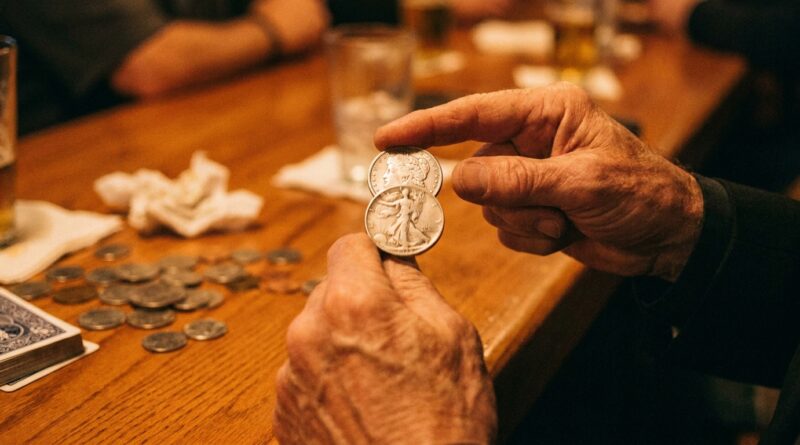
From One Coin To Real Reactions: Build One Pocket‑Ready ‘Hybrid Change’ That Fools Both Live And On Camera
You can feel the problem right away. Scroll any magic feed and it is the same visual card change over and over. It looks slick, sure, but spectators are catching up. They have seen the camera framing, the hand cover, the snap, the stare. What feels fresh now is something smaller, more ordinary, and harder to explain. A single coin change does exactly that. Better yet, a good hybrid method can look clean in person and still hold up when somebody points a phone at your hands. The goal is not to build a knuckle-busting move for magicians. It is to build one pocket-ready moment with loose change that feels impossible, needs no gimmick, and gives you a new ungimmicked coin sleight of hand change you can actually use at a bar, at your desk, or while killing time before a game starts.
⚡ In a Hurry? Key Takeaways
- A strong hybrid coin change mixes a real finger palm switch with a brief visual display, so it fools both live spectators and phone cameras.
- Start with two similar-sized coins and practice the timing of the reveal, not just the secret move. The sell is in the pause.
- Keep it ungimmicked and angle-aware. That gives you something practical you can carry every day, not just for social clips.
Why coin changes feel fresh again
Coins have an unfair advantage. People know what they are. They touch them. They hear them. They do not assume trick props the way they sometimes do with cards.
That matters.
When a quarter seems to turn into a copper coin, or a small silver coin becomes a larger one, the reaction is often more honest because the object feels real and familiar. There is less baggage. Less, “Oh, that is one of those card moves.”
If your goal is to build a new ungimmicked coin sleight of hand change, the sweet spot is a hybrid approach. Part of the illusion happens through actual sleight of hand. Part happens through how and when you let the eye register the change. That is why it plays in real life and still looks good on video.
What “hybrid change” really means
Hybrid does not mean complicated. It means you are not relying on just one thing.
The basic recipe looks like this:
- A visible coin display
- A hidden retention or finger palm action
- A motivated hand movement that covers the dirty beat
- A clean reveal that lands after the move is over
That last part is the one people skip. They rush. The move happens, then the reveal happens at the same time, and the audience feels the method even if they cannot name it.
A better hybrid change separates the secret from the moment of magic by a fraction of a second. That tiny delay makes the effect breathe.
The simplest practical version to build
Use two coins with clear contrast
Start with two ordinary coins that are easy to tell apart. A silver coin and a copper coin is ideal. Similar size helps. Different color helps even more.
For practice, use:
- A quarter and a copper foreign coin, if you have one
- Two same-sized coins with different tones
- Any pair that reads clearly on camera and in dim light
The handling in plain English
Display Coin A at the fingertips. Coin B is finger palmed in the same hand.
Your other hand comes over as if to rub, take, or frame the visible coin. During that action, Coin A is pulled into finger palm while Coin B is allowed to roll or slide into display position. Then you pause. Only after the hand moves away do you let the audience fully register that the coin has changed.
That is the heart of it.
You are using a standard hidden position, but the effect feels modern because the eye sees one coin, then sees the same area now holding a different coin. No extra prop. No shell. No flap. No edits needed.
The mechanics that make it deceptive
1. Finger palm has to look boring
If your hand looks tense, the trick looks tense. Finger palm should not look like you are hiding treasure. It should look like you are casually holding nothing.
Practice while doing normal things. Open a door. Pick up your phone. Point at something. The less special it looks, the stronger the change becomes.
2. The visible coin must stay in the light
Most weak coin changes die because the coin drifts into shadow or gets blocked by fingers. Keep the visible coin on the front edge of the hand, where people can track it.
If the audience loses sight of it for even a moment, they will credit the cover, not the magic.
3. The off-beat does the heavy lifting
The change should be finished before people think the change has happened. That sounds odd, but it is the whole game.
Make the secret switch under a natural rubbing action. Then stop. Then reveal.
That is the difference between “nice move” and “wait, what?”
How to make it work live and on camera
Live spectators and phone cameras catch different things. Live people notice rhythm, tension, and body language. Cameras notice flashes, bad angles, and suspicious framing.
A pocket-ready hybrid change survives both if you follow three rules.
Keep the action chest-high or table-high
Too low and people lean over you. Too high and it starts to look posed. Around mid-torso or just above a table is the sweet spot.
Do not perform into your own weak angle
You know where the hidden coin is. That means you also know which side must stay protected. Turn your body a few degrees. That small adjustment fixes a lot.
Use a short, honest camera frame
If you are filming, avoid the magician sin of framing too tight. A slightly wider shot looks more trustworthy and still captures the effect. People are suspicious when the camera feels trapped on the hands.
The same rule helps with PK and touch-style material too. If you like building effects that look impossible without looking edited, the thinking in From Viral ‘Invisible Touch’ Clips To Real-World Miracles: How To Build One Hands‑Off PK Routine With Nothing But Loops And Sleight Of Hand lines up nicely with this. The shared idea is simple. Let the conditions feel fair first. Then let the effect hit.
A practice plan that actually works
Week 1. Build the positions
Forget the full trick. Just get comfortable moving one coin from fingertips to finger palm and back again without looking at your hand.
Ten slow reps. Several times a day.
Week 2. Add the cover action
Now bring the other hand over and rehearse the rubbing or framing motion. Keep it gentle. Big dramatic gestures make people suspicious.
Week 3. Add the reveal timing
This is where the magic starts to show up. Switch first. Reveal second. Count “one” in your head between those beats if you need to.
Week 4. Test it on real humans
Try it for one friend. Then another. Do not ask, “Did you see that?” Just perform it and move on. Their first facial reaction tells you more than any technical note.
Common mistakes that ruin a coin change
Rushing
The biggest problem by far. You are excited, so you hurry. Slow down.
Over-proving the hand is empty
This usually backfires. Casual beats are stronger than legalistic displays.
Using mismatched coins
If one coin is much thicker, larger, or shinier than the other, the change can feel strange for the wrong reason. Contrast matters, but so does harmony.
Practicing only from your own view
Set up your phone and watch from spectator height. You will catch flashes you never knew existed.
How to turn one change into a full mini routine
A single visual change is nice. A sequence is better.
Here is a simple three-phase set:
- Show a silver coin. Change it to copper.
- Place the copper coin away. Reproduce the silver coin from the other hand or your pocket.
- End with both coins examinable.
Now you are not just doing a clip. You are doing magic.
This is where coin work becomes valuable in the real world. You can do it while waiting for drinks, sitting at a work desk, or between poker hands. No deck required. No reset headache. Just objects that belong there.
When ungimmicked beats gimmicked
Gimmicks are fine. They have their place. But for something you want to carry every day, ungimmicked wins more often than not.
Why?
- You can borrow or switch environments easily
- You are less worried about breakage or setup
- You can let moments happen naturally
- You build real hand skill, which improves everything else you do
That last point is easy to miss. Learning one solid coin change improves your palms, displays, timing, and confidence across your whole close-up set.
At a Glance: Comparison
| Feature/Aspect | Details | Verdict |
|---|---|---|
| Visual strength | A silver-to-copper or size-shift change reads fast, even for casual spectators and phone viewers. | Excellent if you keep the reveal clean and brief. |
| Difficulty | Moderate. The secret move is manageable, but timing and relaxation matter more than raw finger speed. | Very practical for regular practice. |
| Real-world usability | Uses ordinary coins, resets fast, and fits bars, desks, coffee shops, and casual hangs. | A smart everyday addition to your close-up repertoire. |
Conclusion
If you are tired of looking like every other reel, this is a good lane to move into. One strong hybrid coin change gives you something fresh, practical, and much more organic than another flashy card clip. The magic community is crowded with card-only visuals, but real people constantly handle coins, keys, and little objects from their pockets. A clean, ungimmicked coin change you can do at a bar table, at work, or between poker hands instantly broadens your repertoire. It also makes your hands look more skilled in a very believable way. Start small. Pick one change. Practice the timing until it feels calm. Once that lands, you will have a piece of close-up magic that does not depend on carrying a full deck everywhere, and that is worth a lot.