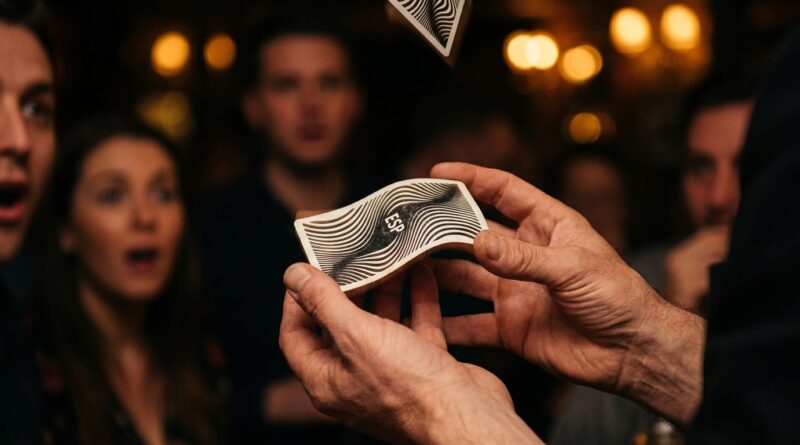
From Pocket Curiosity To Visual Shock: Build One ‘Flexible Wave’ Card Illusion That Practically Performs Itself
You can feel the fatigue, can’t you. You spend weeks grinding a pass, a shift, or some finger-twisting change, then land a reaction that is… fine. Meanwhile, a dead-simple visual clip blows up online because people saw something impossible happen in one second. That is why the flexible wave card magic trick idea has so much heat right now. It looks odd, organic, and slightly unreal, like the card briefly forgets it is made of paper. Better yet, you do not need months of bruised knuckles to get there. What you do need is the right structure, decent materials, and a smart way to hide the method behind timing and attitude. If you build it well, this becomes more than a social media toy. It becomes a pocket-sized visual shock you can actually carry, reset, and use in the real world without feeling like you bought another fragile novelty.
⚡ In a Hurry? Key Takeaways
- The flexible wave card magic trick works best as a short, visual moment, not a long routine centerpiece.
- Use a spare matching card, flexible support material, and clean audience positioning to make the gimmick look like pure skill.
- Build two or three backups, because durability matters more than cleverness if you want to perform it outside your house.
Why this plot is getting attention
People love visual magic that reads instantly. No setup speech. No counting procedure. No, “watch closely while I explain the conditions.” They see a playing card behave in a way it should not, and their brain stalls for a second.
That is the sweet spot.
The flexible wave card magic trick sits right in that lane. It feels modern because it is quick, camera-friendly, and strange-looking. But unlike a lot of trendy releases, you can shape it for live work if you stop thinking like a collector and start thinking like a worker.
The question is not, “Can I make a gimmick?” The real question is, “Can I make one that survives pockets, bad lighting, and spectators who stand too close?”
What the effect should look like
Keep the effect simple. A single card is shown. It visually ripples, bends, or waves in a controlled way while still seeming isolated and fair. Then the moment ends before people have time to switch from surprise to analysis.
That last part matters a lot.
If you hold the moment too long, the audience starts looking for mechanical clues. If you hit it, pause, and move on, it feels impossible. The best version is almost like a visual punctuation mark.
Think “moment,” not “demonstration”
This is where many magicians get it wrong. They want to prove the card is ordinary for too long. They repeat the motion. They chase a bigger reaction by stretching the sequence. Usually that hurts the trick.
Give them one clean impossibility. Then transition.
How to build a practical version
You do not need an over-engineered gadget. In fact, simpler is better. A practical build usually comes down to four parts.
1. Start with a matching spare card
Use the same back design and finish as the deck you actually carry. If your gimmick looks even slightly off under restaurant light or daylight, you are done.
Pick a card you do not mind sacrificing. Court cards often work well because the printed design can help hide tiny construction details.
2. Use a thin flexible core
You want controlled movement, not floppy movement. Thin acetate, a sliver of plastic from clean packaging, or other light flexible stock can work. Too stiff, and the wave looks mechanical. Too soft, and it looks messy.
Your goal is a natural-looking curve that snaps back consistently.
3. Keep glue use minimal
More glue does not mean more strength. It often means warping, bubbling, and ugly edges. Use just enough to secure the working part while keeping the card surface flat. Press it under weight while drying so the final card stays neat.
4. Test pocket durability
This is the step hobbyists skip. Put the gimmick in a real pocket. Sit down. Walk around. Remove it one-handed. If it catches, bends wrong, or prints through clothing, rebuild it.
A trick is not practical because it fooled you at your desk. It is practical when it survives being carried.
Angle management is everything
The reason some visual gimmicks look amazing online and shaky in person comes down to angles. The flexible wave card magic trick can be strong live, but only if you control where people are standing.
Best performing conditions
One to three spectators. Chest-level display. Soft front lighting. Audience mostly in front of you.
That is your happy place.
Bad performing conditions
People seated low while you stand high. Harsh side lighting. Spectators burning your hands from both sides. Surrounded cocktail situations with no body turn available.
Can it still work? Sometimes. Should this be your first choice there? Probably not.
A simple fix
Turn your body slightly and treat the effect like a quick aside, not a formal exhibition. A small shift in stance does a lot of the dirty work for you without looking suspicious.
How to make a gimmick look like skill
This is the difference between “cute trick” and “that was impossible.” The prop may do some of the heavy lifting, but the audience should remember your control, not your gadget.
Use intention
Do not hold the card like it is dangerous. Hold it like you know exactly what will happen. Calm hands sell mystery better than twitchy fingers.
Add a reason
Maybe you say the card stock has “memory.” Maybe you frame it as static, heat, tension, or practice. The explanation does not need to be true. It just needs to give the moment shape.
Do not over-prove
One casual display is stronger than a long suspicious one. If you keep showing the same card from every angle, you are telling them there is something to find.
This is also where the thinking in From Viral ‘No-Skill’ Gift Tricks To Real Workers: How To Build Invisible Sleight Into Everyday Objects fits nicely. The strongest gimmick-driven magic still benefits from invisible handling choices that make the method disappear into normal actions.
A simple working structure you can adapt
If you want this to play beyond a quick clip, use a three-beat structure.
Beat 1. Establish normal
Show the deck casually. Remove a card naturally. No dramatic clean-display sequence. Just normal handling.
Beat 2. Hit the visual
Make the card wave or flex in the strangest, cleanest way possible. Hold for just a second. Let the image land.
Beat 3. Transition immediately
Either ditch, switch, or move into a second effect. A color change, a transposition, or a reveal works well. The audience now files the wave under “magic happened,” and their attention moves forward.
That is a much better use of the gimmick than ending cold and inviting inspection.
Best deck themes for this idea
One nice thing about this build is that it is not tied to one style. You can adapt it.
Standard bicycle-style deck
Best for general close-up. Familiar. Easy to match. Low suspicion.
Dark or custom deck
Great for moody social clips or themed performances. Just be careful. Some custom finishes wear differently, and replacement cards can be annoying to source.
Vintage or distressed look
Very forgiving. Tiny build marks often hide better in aged designs than in crisp modern backs.
What can go wrong
Plenty, if you rush it.
The wave looks jerky
Your internal material is probably too stiff, too thick, or badly positioned. Rebuild. Do not try to talk your way past an ugly visual.
The card warps in the pocket
You need better pressure during construction or a better carrying solution. Some performers keep it in a card wallet or in the deck box flap for protection.
Spectators ask to hold it
That means your routine needs a stronger exit. Build the next action into the trick. Put the card away as you reach for a marker. Hand them the deck instead. Direct attention forward.
Is it worth buying a release, or should you build your own?
That depends on what you want.
If you buy a release, you are often paying for speed and someone else’s testing. That can be worth it. But many trendy products are built for one good camera take, not a month of gigs.
If you build your own, you get control. You can match your deck, tune the flexibility, and make backups cheaply. The trade-off is time. You may make two bad ones before you hit the sweet spot.
For most working magicians, the smart move is this. Learn the plot. Understand the mechanics. Then make a version that suits your hands and conditions.
At a Glance: Comparison
| Feature/Aspect | Details | Verdict |
|---|---|---|
| Visual impact | Fast, strange, highly shareable moment that reads instantly to laypeople | Excellent if kept short |
| Skill requirement | Low knuckle-busting demand, but needs timing, audience control, and clean handling | Beginner-friendly with rehearsal |
| Real-world practicality | Depends on build quality, pocket protection, and smart angle use | Good worker if you make backups |
Conclusion
The flexible wave card magic trick is worth your attention because it solves a real problem. It gives you a sharp, modern visual without demanding months of hard sleight practice, but it still leaves room for craft. If you build it with durability in mind, respect the angles, and frame it like a deliberate piece of magic instead of a novelty toy, you can get the kind of reaction people usually save for much harder moves. That is the real value here. You are not wasting money on another fragile fad, and you are not stuck in theory. You get a concrete, adaptable structure you can fit to almost any deck theme, plus a smart lesson in modern close-up: gimmicks fool best when they look like skill. For the Magician Book community, that is exactly the direction worth chasing.