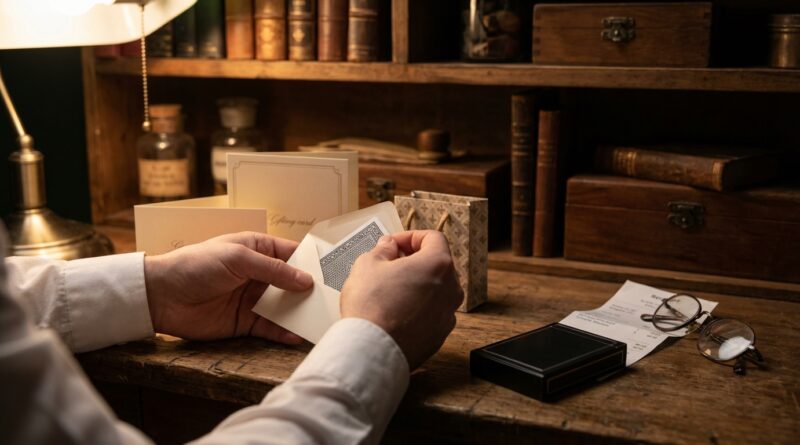
From Viral ‘No-Skill’ Gift Tricks To Real Workers: How To Build Invisible Sleight Into Everyday Objects
If you feel a little worn out by the flood of “no sleight required” gift tricks, you are not alone. They look amazing in a short clip. A packet changes. A ribbon vanishes. A present box seems to do the impossible by itself. Then the prop arrives, and the magic often stops right where real life starts. Someone asks to see it again. They reach for the object. The angles get tighter. Suddenly that miracle feels thin. That is the problem working magicians keep running into right now. The good news is you do not have to reject these ideas to stay honest. The smarter move is to treat every viral self-working effect as a shell, then build a little real handling inside it. A touch of timing. A simple switch. A casual ditch. That is how a flashy no sleight of hand gift trick with real sleight becomes something you can actually perform twice, carry daily, and trust in front of living, breathing people.
⚡ In a Hurry? Key Takeaways
- The best answer is not “gimmick or sleight.” It is gimmick plus just enough real technique to survive repeat viewing and casual handling.
- Start by adding one invisible move to any viral prop trick, usually a switch, load, steal, or cleanup that happens before or after the main moment.
- If a trick only works once, only from one angle, and only if nobody touches it, treat it as a demo item, not a worker.
Why so many viral “no skill” tricks feel disappointing in real life
Social media rewards the first second of astonishment. It does not reward durability.
That is why so many marketed packet effects, gift effects, and novelty props are built to crush in a clip but not in a set. They are engineered for the camera and the scroll. They are not always built for the second performance, the curious hand, or the friend who says, “Do it again, but slower.”
For a beginner, that can be a costly trap. The ad says no practice. No sleight. Instant miracle. What it often means is this: all the risk has been moved into the prop. If the prop is burned, examined, flashed, or repeated, there is nothing underneath to save you.
For a pro, the frustration is different. Audiences are now seeing these clips all day. So you have to know the visual language they are reacting to, without becoming dependent on throwaway gadgets yourself.
The fix: build invisible sleight into ordinary-looking objects
The sweet spot is simple. Use the viral idea. Hide one real method inside it.
Not knuckle-busting technique. Not a move-heavy routine that screams “skill.” Just enough honest handling to make the effect breathe in the real world.
Think of it like good home tech. A smart doorbell is useful. A smart doorbell that still works when the app is slow is better. In magic, a gimmick that gets help from basic human timing is stronger than a gimmick left alone.
What “real sleight” actually means here
For this kind of trick, real sleight usually means one of four things:
- A secret switch
- A hidden load or steal
- A cleanup after the effect
- A controlled display that looks fairer than it is
That is it. You are not trying to turn a cute gift trick into a gambling demonstration. You are trying to remove the weak points that make these products feel hollow.
A practical framework for any no sleight of hand gift trick with real sleight
When you see a marketed trick that claims the prop does everything, run it through this test.
1. Find the dirty moment
Every self-working visual has one awkward beat. Maybe the item cannot be shown on the back. Maybe the box has to be set down fast. Maybe the spectator can look only, not touch.
That awkward beat is where your sleight goes.
If the trick ends dirty, add a cleanup. If it starts dirty, add a switch-in. If the handling looks stiff, add a false display that feels natural.
2. Ask for a normal object path
How would a real person handle this item?
If it is a gift tag, they would turn it over. If it is an envelope, they would squeeze it. If it is a small present box, they would shake it, open it, and hand it back.
Your job is to make the object travel that normal path. Any trick that forces weird handling raises suspicion. Sleight helps restore normal behavior.
3. Add one move before the effect, not during it
This is where many people go wrong. They try to cram a secret move into the magical moment itself.
Better plan. Do the work early or late.
Before the reveal, switch in the prepared piece. After the applause beat, ditch the extra something. Let the actual magic moment stay clean and still.
4. Build a repeat strategy
If you cannot do the trick again in some form, you are carrying a one-shot novelty.
That may be fine for a trailer. It is not great for strolling, table work, or casual performances with friends.
A repeat strategy can be as simple as this. The first phase uses the gimmick. The second phase uses a sleight-based variation with a different ending. Now the audience thinks they understand the object, but you are already somewhere else.
Examples of invisible sleight added to everyday-object magic
Gift box effects
These are popular because they feel emotional. A ring appears. A prediction is inside. A folded note changes places with a tiny present.
The weak point is usually the box itself. People want to open it, close it, and inspect it.
A useful fix is a box switch. Show one ordinary gift box casually before the effect. During offbeat handling, bring in the working version. After the reveal, switch back or steal away the extra insert. To the audience, the box was normal the whole time.
Packet and tag tricks
Small paper props are all over the market because they are cheap to make and easy to film. The downside is they often rely on restricted displays.
Add a simple count, a buckle, or a packet switch and suddenly the item can be shown more openly. Even a basic handling change can turn “do not grab that” into “sure, take a look.”
Envelope and voucher style reveals
These can be beautiful, but many are dead on arrival once opened.
The secret is to build in a load or secret transfer while attention is on the story. An envelope should not only hide a gimmick. It should give you a reason to go near a pocket, a notebook, or another object. That turns it into a tool, not a trap.
What working magicians should steal from the viral crowd
Not the method. The clarity.
The reason these clips spread is that the effect is easy to understand in one glance. Box empty. Now impossible object inside. Card plain. Now transformed. Tag blank. Now printed.
That is worth learning from.
Many traditional performers already have stronger methods, but weaker framing. The online world has trained audiences to expect a fast visual headline. You can meet that expectation and still keep your standards high by placing one bold image at the center, then using sleight to protect it.
What hobbyists should stop buying
Here is a blunt but useful filter.
Be careful with any release that sells itself mostly on these phrases:
- No skill needed
- Do it in five minutes
- Perfect for social media
- No audience management required
- Can be performed surrounded, instantly, with zero reset, and fully examinable
Sometimes those claims are partly true. Often they are a sign that the ad is doing the heavy lifting.
A better purchase is a trick that teaches a small transferable idea. A switch you can use elsewhere. A fold you can adapt. A convincer that improves more than one routine. That is how you build a toolkit instead of a drawer full of dead props.
How to practice this without becoming move-obsessed
You do not need to disappear into a mirror for six months.
Start with one utility move
Pick one switch, one steal, or one false display. Use it in three different tricks. That is real progress.
Practice entries and exits
The move itself matters less than how you arrive and leave. Rehearse the line before it. Rehearse what your eyes do. Rehearse where the object goes next.
Film from ugly angles
Not your best angle. The worst one. The side seat. The standing spectator. The friend leaning in too close. If it survives that, it will survive real life.
Test with people, not just cameras
Cameras notice surfaces. People notice behavior. A move that looks fine on video can feel suspicious live if your rhythm changes.
The bigger point: props should hide method, not replace skill
This is where the current wave of releases has pushed people off course. A gimmick is not the enemy. Plenty of great magic uses one. The problem starts when the gimmick is the whole trick and your hands, timing, and structure are doing nothing.
That kind of magic is fragile. It cannot adapt. It cannot recover. It cannot grow with you.
But when you put a little craft behind the gadget, the trick stops being disposable. It becomes yours.
At a Glance: Comparison
| Feature/Aspect | Details | Verdict |
|---|---|---|
| Pure “no sleight” prop trick | Looks strong in a demo, but often has strict angles, limited repeat value, and weak examination conditions. | Fine for a one-off clip, risky for real-world work. |
| Prop plus one hidden utility move | Adds a switch, load, or cleanup so the object can be shown more naturally and the ending can feel cleaner. | Best balance for most magicians. |
| Fully sleight-based version | Usually more flexible and repeatable, but may lose some of the instant visual punch that made the viral version attractive. | Great long-term goal, but not always the fastest route. |
Conclusion
The last day of magic chatter has been packed with “no sleight” launches and slick clips where the prop seems to do everything. It is easy to see why that pulls people in. It promises the feeling of impossible magic without the work. But that shortcut usually leaves newer magicians dependent on one-off methods, and it leaves experienced performers annoyed when the trick collapses under normal attention. The smarter path is not to sneer at these trends. It is to improve them. Add one honest move. Build in a cleanup. Make the object behave like a real object. That simple framework turns disposable hype into lasting skill, helps pros stay current with what audiences are seeing online, and saves hobbyists from burning money on every new miracle box that promises results without practice. A no sleight of hand gift trick with real sleight is not a contradiction. It is often the version worth keeping.