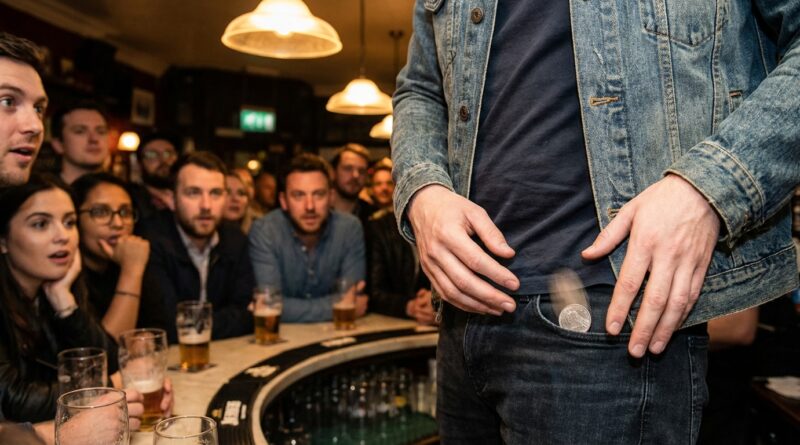
From Viral ‘Coin Melt’ Clips To Real Workers: How To Build A One‑Hand Pocket Vanish You Can Use Surrounded
You have probably felt this sting already. You watch a viral coin melt online, rewind it three times, and think, “Great. But what happens when a real person is standing on my left?” That frustration is real. A lot of social-media vanishes are built for one lens, one moment, one clean frame. Real work is messier. People drift. They lean in. They stand behind you at the bar. If you want a one hand coin vanish sleight of hand that survives that kind of heat, you need something less flashy and more solid. The good news is you do not need a drawer full of gimmicks to get there. You need a vanish built around hand shape, timing, body line, and a pocket path that looks natural from more than one angle. Done right, this kind of vanish is practical, fast, and good enough for the real world, not just your camera roll.
⚡ In a Hurry? Key Takeaways
- A usable one-hand pocket vanish is not about a secret move alone. It is about angle control, relaxed timing, and a pocket action that makes sense.
- Start with a finger-palm or curled classic-palm hold, then rehearse the hand going to the pocket for a normal reason before adding the vanish.
- If a vanish only looks good from one side, treat it like a camera stunt, not a worker for bars, weddings, or walk-around.
Why the camera version so often fails in real life
Phone magic has changed what people think a vanish should look like. Audiences now expect that soft, melty moment where the coin seems to dissolve instead of just getting tucked away.
That is not all bad. It pushes everyone to clean things up. But it also creates a trap. Many of those clips are really edited for a single viewing lane. Move ten degrees off center and the whole thing starts shouting method.
For working magicians, that matters more than ever. If you perform at a cocktail hour, in a restaurant, or during close corporate walk-around, you cannot ask the room to freeze in your best angle.
That is why a practical one hand coin vanish sleight of hand has to answer a boring but important question. Can it survive real humans?
What a real one-hand pocket vanish needs
A worker-friendly vanish usually has four parts.
1. A believable display
The coin has to be seen clearly before the vanish. Not flashed for the camera. Seen by people. That means avoiding a cramped fingertip display that looks pretty from the front and suspicious from the side.
2. A safe hidden position
You need a hold that does not tense the hand into a claw. For most people, that means finger palm or a light classic palm, depending on coin size and hand shape.
3. A motivated trip to the pocket
The pocket cannot be a panic room. If the hand darts down right after the vanish, spectators may not know the method, but they will smell the clean-up. The pocket action has to fit your script and your body language.
4. A clean ending posture
After the coin is gone, your hand and shoulders have to look normal. That is where many vanishes die. The secret is technically over, but the body still looks guilty.
A practical build: the one-hand pocket vanish framework
Let’s keep this simple and useful. This is not a knuckle-busting flourish. It is a structure you can build into your own style.
Step 1: Start with a natural coin display
Hold the coin at the fingertips of the working hand. Do not pinch it like you are trying to show the date on the coin to the back row. Just let it be visible and casual.
The palm should stay soft. Fingers slightly curved. Think “I happen to be holding a coin,” not “please admire my hand modeling.”
Step 2: Retire the coin into finger palm early
Before the vanish moment, let the coin settle into finger palm during a natural hand adjustment. This is where the move starts becoming real-world friendly. The dirty work happens before the audience thinks the effect has started.
If finger palm feels unstable, use a looser classic palm. The right choice is the one you can hold while keeping the fingers relaxed.
Step 3: Use the fingers to sell empty, not the palm
Many magicians try to prove the hand is empty by opening it too much. That often does the opposite. It stiffens the hand and creates weird displays.
Instead, think of showing the front of the fingers and the general openness of the hand. Let spectators get the idea of emptiness without turning your hand into a police inspection.
Step 4: Vanish on the offbeat
The best moment for the vanish is often not when everyone is burning the hand. It is right after a line, a question, or a beat of eye contact. The secret move should land when attention softens for half a second.
This is one reason viral clips can mislead people. On video, the vanish frame is everything. In live work, the frame before and after matter just as much.
Step 5: Go to the pocket for a reason
This is the part that makes it usable surrounded. Your pocket trip needs a job. Maybe you are reaching for a marker. Maybe you are getting another coin. Maybe you are casually resetting your stance and hooking a thumb near the pocket opening.
What you are trying to avoid is the classic “vanish, then immediate dump.” If the action has no reason, it reads as suspicious even if nobody can explain why.
The best pocket path for being surrounded
If people may be on your sides, the coin should enter the pocket on a short, covered path. Keep the hand close to the body. Big arcs expose too much.
A good rule is this. The hand should travel as if it belongs there anyway. Elbow near the side. Wrist neutral. Fingers not squeezing. The less dramatic the trip, the safer it is.
Jeans pockets are fine, but they are not all equal. Tight pockets can make you fumble. Deep loose pockets are usually kinder. If you work in suits, rehearse with the exact trousers you perform in. Pocket depth changes timing more than people think.
How to rehearse it without fooling only yourself
This is where a lot of improvement happens fast.
Use three mirrors or one phone and two chairs
You do not need a studio. Put your phone in front. Use mirrors or reflective surfaces to check the side lines. Then stand where spectators would actually stand. Front left. Front right. Slightly behind.
If the move only survives your favorite angle, it is not ready.
Practice the innocent actions more than the secret one
Rehearse taking your hand to the pocket with no coin at all. Then do it while holding out. Then do the full vanish. This keeps the choreography normal.
Most tells happen because the body handles the “secret version” differently than the innocent one.
Use a short script
Words smooth timing. Even a simple line like, “Watch. It does not go fast. It just goes,” can give you a built-in rhythm. Script makes your pauses repeatable. That makes your vanish more reliable.
Common mistakes that wreck an otherwise good vanish
Opening the hand too wide
This usually screams that something is being hidden. Relaxed beats wide.
Staring at the hand
Your eyes tell the audience what matters. If you keep checking the dirty hand, they will too.
Rushing the pocket load
Fast does not equal invisible. Natural is better.
Using the wrong coin
A coin that is too big can warp the hand. Too small and it becomes slippery and hard to manage. Pick one that sits well in your normal relaxed palm.
Confusing “angle-proof” with “show everything”
No vanish is perfect from every possible spot. The goal is angle-managed, not reckless. You are building something that survives normal audience movement, not a forensic hand examination.
How this compares with viral visual vanishes
Social clips still have something to teach. They remind us that laypeople love visual magic. The mistake is assuming that visual and practical are the same thing.
If you want a smart middle ground, it helps to study routines built for both live eyes and lenses. That is exactly the issue explored in From Viral Multi‑Angle Coin Clips to Real Workers: How To Build ‘Two‑Perspective’ Vanishes That Fool Cameras And Live Spectators. The big lesson is simple. Do not copy the frame. Build the structure behind it.
When to use this vanish in performance
This kind of vanish is strongest when the pocket action already belongs in the routine.
- Coin across where another object is coming out next
- One-coin routines with a casual reset
- Bar magic where hands naturally drift to pockets or the rail
- Walk-around sets where you need to clean up while talking
It is less ideal when the whole effect ends with “both hands absolutely empty, frozen, sleeves rolled up, everybody burn me from all sides.” That is a different problem with a different solution.
What “surrounded” really means
Let’s be honest for a second. Magicians sometimes use “surrounded” very loosely. If someone is directly behind your working hand at chest height, many coin techniques get tougher. That is not failure. That is geometry.
A good real-world vanish does not promise miracles. It gives you enough cover, enough flexibility, and enough naturalness to handle the way people actually stand most of the time.
That is a much better goal than pretending any move is bulletproof.
At a Glance: Comparison
| Feature/Aspect | Details | Verdict |
|---|---|---|
| Visual impact | A one-hand pocket vanish can look very clean, though usually less flashy than a camera-built melt. | Best choice for live work, not viral flash alone. |
| Angle safety | Strong from normal front and side positions if the hand shape and body line are rehearsed well. | Much more dependable than one-lens social vanishes. |
| Practical use | Works in jeans, bars, receptions, and walk-around if the pocket action has a reason. | Excellent worker when built into real performance timing. |
Conclusion
Magicians everywhere can feel it. Audiences are quietly resetting their standards for what a “simple” coin vanish should look like. That does not mean you need to chase every new download or copy every flashy reel. It means you need one vanish that actually holds up in the places you really perform. A practical, angle-managed one hand coin vanish sleight of hand gives you exactly that. It can live in jeans. It can work at a bar. It can survive close corporate walk-around with people drifting to bad spots. More importantly, it puts the focus back where it belongs, on technique, rehearsal, timing, and smart construction. That is the good stuff. The lasting stuff. If you build this vanish carefully, you will not just keep pace with modern expectations. You will meet them in a way that still works when the camera is off.