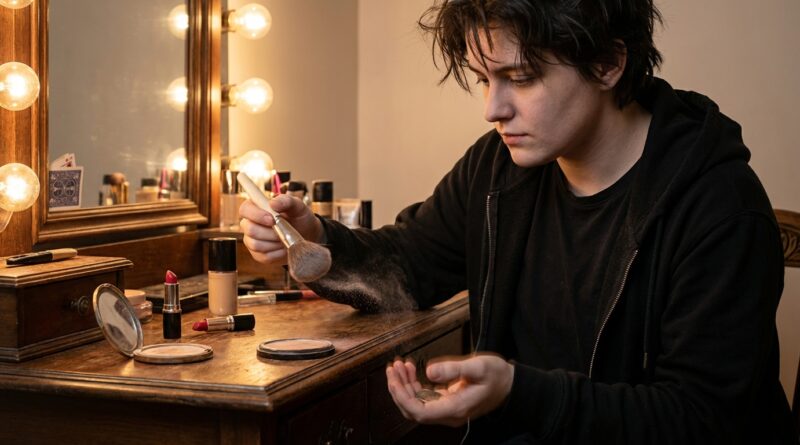
From TikTok ‘Beauty Hacks’ To Real Slealth Magic: How To Turn Everyday Makeup Moves Into Invisible Sleight Of Hand
You have probably heard the advice a hundred times. Use everyday objects and your magic will feel more real. Fair enough. But then what? Most magicians get stuck right there, back in coin rolls, card controls, and the same pocket stuff everyone else is doing. Meanwhile, social feeds are full of beauty creators doing brush taps, compact flips, lipstick turns, and fingertip changes that already look like tricks. That gap is frustrating because the raw material is sitting in plain sight. The good news is that everyday makeup sleight of hand magic is not about learning makeup. It is about learning the movement language people already accept as normal. Once you start hiding loads, switches, and vanishes inside those familiar mirror gestures, the effect feels less like a “magic trick” and more like something impossible that just happened in real life. That is where the modern feel comes from.
⚡ In a Hurry? Key Takeaways
- Everyday makeup sleight of hand magic works best when you copy real grooming rhythms, not old magic poses.
- Start with simple props like a brush, compact, sponge, or lipstick tube, then build vanishes and switches around natural mirror actions.
- Use clean, non-messy items and respect personal products if performing for others. The goal is smart handling, not a hygiene gamble.
Why makeup actions hide sleights so well
People already believe a hand near the face is busy for a reason. That matters.
When someone opens a compact, checks a reflection, taps a brush, twists a lipstick, or dabs with a sponge, the audience has a ready-made explanation for the motion. Their brain stops asking, “Why is the hand doing that?” and starts reading the action as normal.
That is gold for magicians.
Traditional sleight of hand often looks like a hand doing something suspicious near an object. Beauty motions are different. They are casual, justified, and full of direction changes, cover, and rhythm breaks. In plain English, they come with built-in misdirection.
Stop thinking “prop.” Start thinking “routine of use”
This is the part many performers miss. A compact is not just a shiny circle you can palm behind. A brush is not just a stick to spin. What sells the illusion is the routine around the object.
Ask simple questions:
- How does someone normally pick this up?
- Where do they naturally look while using it?
- What repeated motions happen every time?
- Where are the natural pauses?
Those answers give you your steal points, ditch points, and moments of offbeat.
Example: the compact mirror
A compact gives you three strong beats. Open. Check. Close.
That means you can hide a lot in the “check” phase. The face turns slightly. The eyes shift to the mirror. One hand adjusts angle. The other hand comes in briefly. That small window is enough for a billet switch, a small-object vanish, or a hidden display if your blocking is clean.
Example: the makeup brush
A brush gives you taps, swirls, flicks, and soft contact with the skin. Those motions are loose and forgiving. That makes them great for timing-based false transfers. A brush also acts as a pointer, which means it can pull attention away from the dirty hand without looking like obvious misdirection.
The core idea: hide the method inside accepted motion grammar
Short-form video has trained viewers to read fast transformations through certain visual beats. Tap. Cover. Swipe. Turn. Reveal.
Beauty content uses those beats constantly.
If you build your method around them, your magic feels current right away. Not because of a gimmick. Because the audience already understands that visual language without realizing it.
Think of these as your five best friends:
1. Tap to justify contact
A light tap with a brush or sponge makes contact feel normal. That can hide a small load or a secret retention moment.
2. Swipe to cover movement
A horizontal swipe across the cheek or the air in front of a compact creates motion blur and attention flow. That is useful for visual changes.
3. Turn to reset angles
Twisting a lipstick tube or rotating a compact is a natural reason to adjust finger positions.
4. Check the mirror to redirect gaze
When the “user” looks into a mirror, the audience often follows the face, not the fingers. That buys you a beat.
5. Reveal on the beat after the action
Do not rush the magic moment. In beauty videos, the reveal lands after the last brush flick or close of the compact. That delayed beat makes the change feel cleaner.
Best everyday items to start with
You do not need a full makeup bag. Start with objects that are common, clean, and easy to handle.
Compact
Great for switches, peeks, hidden displays, and reflection-based reveals. Works on video and live if the audience is in front of you.
Brush
Great as a wand substitute that does not scream “magician.” Good for taps, directional misdirection, and cover.
Lipstick tube
Perfect for twists, caps, appearances, and color-change style plots. The cap-on, cap-off rhythm is naturally magical.
Makeup sponge
Soft, compressible, and innocent-looking. Good for vanishes, hidden holds, and surprise productions.
Powder puff or pad
Acts like a soft curtain. One dab can cover a lot of secret work if the object is small enough.
How to build a routine that feels real
The easiest mistake is turning a makeup action into a magician move. The fix is simple. Build from real use first, then add method.
Step 1: Watch real handling
Study how people actually use the item. Not models in ads. Real people. Notice where the object rests in the fingers. Notice where the wrist angles. Notice what looks relaxed.
Step 2: Pick one magic effect only
Do not cram in three phases. Start with one strong moment. A vanish. A switch. A transformation. A production.
Step 3: Put the secret in the least interesting beat
Usually that is not the flashy brush flick. It is the reset before it, or the casual close after it.
Step 4: Keep the object’s purpose intact
If you are holding a brush, let it behave like a brush. If you are using a compact, open it the way a person actually would. Once the object stops acting like itself, suspicion starts creeping in.
Three practical routine ideas
1. The “shade change” switch
Show a small prediction, swatch card, folded note, or tiny colored object. Place it near or inside a compact. Open, check, tap with a brush, close, reopen. It has changed color or meaning.
Why it works: the audience accepts opening and closing as normal handling, so the switch has cover built in.
2. The lipstick vanish
Display the tube. Twist it up. Cap it. Gesture with it near the face as if checking the look. Reopen and the lipstick is gone, changed, or replaced by a message.
Why it works: twisting and recapping already involve hidden mechanics in the audience’s mind, so they are less likely to track exact positions.
3. The brush-transpo
Tap one hand with the brush. A small item vanishes. Tap the compact or sponge, then reveal the item there.
Why it works: the brush becomes the “cause” of the change, while your real secret happens during the accepted prep motions around it.
What works on video versus live
Some of this material is perfect for both. Some is not.
For video
Use tighter framing, cleaner lines, and slightly slower reveals. Short-form viewers are used to quick cuts, but if you want the magic to feel impossible, the final reveal should breathe for a second.
Avoid edits doing the heavy lifting. If the trick only works because of a hidden cut, it may get likes, but it will not build trust.
For live performance
Choose larger actions and fewer tiny objects. A compact opening reads well. A tiny secret fold may not. Keep the strongest effect at chest or face height where people naturally look.
Also, test your angles. Makeup gestures are naturally front-friendly, which is good news, but side views can expose cramped finger positions fast.
Common mistakes that make it look fake
Overacting the beauty motions
If it looks like parody, the cover is gone. Underplay it.
Using messy or questionable products
No one wants surprise powder flying around or used applicators near their face. Keep it neat. Better yet, use clean demo items reserved for performance.
Forcing the plot
Not every trick belongs in a compact. If the effect has no emotional or visual link to the object, it can feel random.
Doing old sleights with a new prop
This is the big one. If your hand still pauses in that classic “nothing to see here” magic pose, the object will not save you. The method has to match the object’s natural use.
A smart way to rehearse
Practice in two layers.
First, rehearse only the real-life actions with no secret method at all. Open the compact. Check. Close it. Tap the brush. Twist the lipstick. Get those motions boring and natural.
Then add the sleight later.
This matters more than most magicians think. When the natural layer is solid, the secret layer has somewhere to hide. Without that, every move looks decorated.
Safety, hygiene, and respect matter here
This should be obvious, but it is worth saying out loud.
Do not use someone else’s real makeup without permission. Do not put shared applicators on skin. Do not build a routine around touching a spectator’s face unless you have clear consent and a very good reason.
You can get the same magical feel with clean props, demonstration items, or products that never actually touch skin.
At a Glance: Comparison
| Feature/Aspect | Details | Verdict |
|---|---|---|
| Best starting prop | A compact or brush is easy to justify, easy to frame, and useful for simple vanishes and switches. | Start here first |
| Video vs live use | Video rewards tight visuals and delayed reveals. Live needs clearer angles and slightly bigger motions. | Works for both with smart blocking |
| Learning curve | The hard part is not the sleight. It is making the handling look like genuine everyday behavior. | Moderate, but worth it |
Conclusion
The real trick here is not makeup. It is context. Audiences already understand the quick tap, the mirror check, the twist, the swipe, and the reveal. That movement language is everywhere now, especially in short-form glow-up clips and beauty tutorials. If you hide your method inside those familiar beats, everyday makeup sleight of hand magic feels current, casual, and oddly impossible in the best way. It plays well on camera, it can hit just as hard live, and it lets you build fresh material from objects people actually recognize. No expensive gimmick. No need to recycle the same old coin or rubber band plot. Just better camouflage, using motions your audience already trusts.