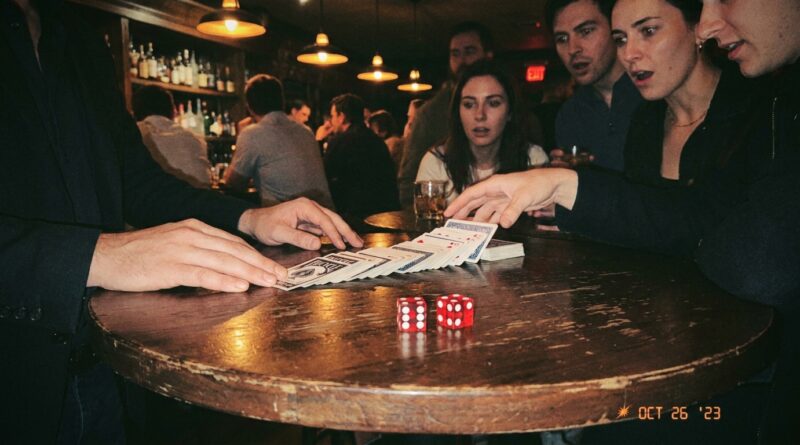
From Viral ‘Angle Exposures’ To Real Crowds: How To Build One Honest-Looking Any‑Card‑At‑Any‑Dice Miracle You Can Repeat All Night
You have probably seen the clips. A die is rolled, a card is named, the deck is counted, and somehow the named card lands at the exact number. It looks clean. It looks casual. Then you try to do that same kind of miracle for real people and the whole thing gets annoying fast. The prop is fussy. The handling only works from one angle. Somebody reaches for the deck. Worst of all, a spectator says, “Cool. Do it again,” and suddenly the method has nowhere to go. That is the real pain with so much viral magic right now. It is built for replay online, not repeat performance in the wild. The good news is you do not need a special box, a loaded die, or one perfect camera frame. If your goal is an honest-looking any card at any dice sleight of hand routine you can actually repeat all night, there is a practical way to build it from ordinary tools and smart structure.
⚡ In a Hurry? Key Takeaways
- Use a regular deck, normal dice, and a layered routine where fairness is felt more strongly than it is technically literal.
- Build the trick around one reliable control, one false shuffle, and one simple force-out so you can repeat it without heat.
- A practical, ungimmicked version is often stronger for live work than flashy dealer items because it survives bad angles, interruptions, and grabby spectators.
The Real Goal Is Not “Perfect ACAAN”
This is the first thing to get straight. If you chase the purest possible version of ACAAN with dice added on top, you can end up with a routine that is mathematically pretty and theatrically weak. Real people do not score methods on a spreadsheet. They remember a feeling.
That feeling is simple. They chose a card. The dice gave a number. The deck stayed in play the whole time. The result felt impossible.
That is what you need to protect.
So instead of asking, “How do I make this 100 percent hands-off and technically perfect?” ask a better question. “How do I create the cleanest experience with the least fragile method?” That one question will save you money, practice time, and a lot of awkward table-side moments.
What An Honest-Looking Any Card At Any Dice Sleight Of Hand Routine Needs
1. A deck that can be handled naturally
No box that has to be opened just so. No stack that dies after one spectator shuffle. No setup that needs a reset longer than the trick itself.
The sweet spot is a deck you can false shuffle, casually spread, and openly count from. If the cards cannot survive normal social handling, the trick is living on borrowed time.
2. Dice that only do one job
Do not make the dice carry the whole effect. They should supply a number, frame the drama, and justify the count. That is enough. Once the dice also need to secretly force, signal, lock, or align something, you are usually in prop-trick territory.
3. A repeatable route to the named card
This is the engine. You need one method that lets you place, keep, or arrive at the called-for card with confidence. For most working performers, that means one of three things.
- A control to a known position.
- A force disguised as freedom.
- An out that turns near misses into clean hits.
You do not need all three every time, but your routine should quietly contain them.
A Strong Working Blueprint
Here is the version I would suggest for most readers who want something practical. It is not a knuckle-busting contest piece. It is a worker’s structure.
Phase 1. Let a card be “freely” named from a manageable pool
This is where many routines become too ambitious. A full any-card verbal naming condition is sexy on paper, but it can make the method ugly. In live performance, spectators do not care nearly as much as magicians think they do.
A better route is to shape the choice without announcing that you are shaping it. You might spread the deck and ask them to touch one. You might dribble and have them call stop. You might offer a peek. To them, a thought-of or touched card still feels personal. To you, it creates control.
This is the biggest secret to honest-looking magic. You give people a memory of freedom, not a legal contract.
Phase 2. Use the dice to create a number that feels impossible but stays useful
Two ordinary dice are great because they feel casual. They also produce numbers in a believable range. Instead of promising “any number from 1 to 52,” let the sum of two or three rolls create your counting position or a component of it.
For example, two dice can create a number between 2 and 12. That range is small, which is good for handling and visibility. If you need a larger range, roll twice and combine the totals. That sounds more random, gives more byplay, and buys you time for secret work.
The audience sees fairness. You see structure.
Phase 3. Secretly place the card where the count will land
This is where your actual sleight of hand earns its keep. The cleanest method for most performers is not some impossible new move. It is a basic control plus a convincer.
Control the selected card to the top or bottom. Then, during the relaxed moment when the dice are rolled or discussed, transfer it into the needed position. A simple overhand shuffle control, a jog shuffle, or a pass if that is already in your toolbox can be enough. The best move is the one you can do while making eye contact and speaking normally.
If the number is known after the roll, place the card at that position using a natural action. If the number is set before the card is fixed, use a force or a cull to meet the condition. There is no shame in choosing the order that makes the routine sane.
Why This Plays Better Than Most Viral Versions
Online clips often trade on one giant advantage. Editing by camera choice. Even without cuts, the lens can hide tension, weird grips, soft counts, and suspicious procedures. Real spectators do not watch like cameras. They interrupt. They burn your hands at the wrong time. They ask to see the deck before the trick is over.
An honest-looking any card at any dice sleight of hand routine should be built for that world.
That means:
- Minimal table setup.
- No dependence on one viewing angle.
- No impossible memory load after two hours of walkaround.
- A believable reason for every action.
If your method cannot survive those conditions, it is not ready. It may still be a fun puzzle. It is just not a worker yet.
How To Make It Feel Fair Without Making It Fragile
Let them handle the dice early
Handing out the dice before anything important happens is smart. It kills the idea of trick dice before it starts. It also lowers heat on the deck because their attention is split naturally.
Be casual with the deck before the effect tightens
Spread the cards. Shuffle in a normal way. Let them see faces and backs. You are building trust. Once people believe the deck is ordinary, they stop chasing method as aggressively.
Count slowly at the end, not the whole way through
This is a simple staging tip. If the number is, say, 18, you do not need to make every count equally dramatic. Count briskly at first. Slow down near the final few cards. That shapes suspense and also reduces the audience’s chance to backtrack the procedure in real time.
The Best Sleights For This, Ranked By Real-World Use
Overhand shuffle control
Unflashy. Reliable. Criminally underrated. If you can hold a card on top or bottom through a conversational shuffle, you have the start of a working miracle.
Double undercut
Not glamorous, but very practical. In real performance it flies, especially when the heat is on the dice or on the person who named the card.
Cull or spread control
Excellent if you are smooth with it. It lets you maintain the illusion of openness. If your cull is still “movey,” though, do not force it. Under pressure, basic often beats elegant.
False shuffle
You do not need five. You need one that matches your natural style. If your normal shuffle looks clumsy and your false shuffle looks graceful, people will notice. The false action has to sound and look like the real one.
A simple force
Classic force, riffle force, dribble force, Hindu force. Pick one that fits your handling. A force is not cheating the effect. It is often what makes the effect performable.
What To Say When People Ask, “Do It Again”
This is where a lot of marketed tricks tap out. They have one lane. Once driven down it, the scenery is gone.
Your routine should have a second gear.
Option 1. Repeat with the method changed
First time, use a touched card and a rolled number. Second time, let them roll first, then “just think of” a card from a spread or a shorter packet. Different order. Different rhythm. Same emotional beat.
Option 2. Repeat as a variation, not a rerun
Instead of saying yes to the same trick again, say, “Let’s make it harder.” Then have the card appear at the number from the top and then the same number from the bottom, or use two spectators and two dice totals. This keeps control of the framing in your hands.
Option 3. End clean and move on
There is nothing wrong with preserving mystery. “I can do something with the same deck, but not the same way,” is a healthy line. It sounds honest, not defensive.
Common Mistakes That Make The Trick Feel Fake
Talking too much before the reveal
If you over-explain fairness, people smell method. Fair things do not need speeches. State the conditions plainly and keep moving.
Counting in a suspicious way
The count should look like a count, not like surgery. If you need delicate handling to protect the method, the method is too delicate.
Using dice only because dice are trendy
The dice need a reason to exist. They should create suspense and give the audience ownership of the number. If they are just visual decoration, people feel that, even if they cannot say it out loud.
Building for magicians instead of normal humans
Magicians obsess over conditions. Laypeople obsess over moments. Build more moments.
A Simple Practical Template You Can Rehearse Tonight
Here is a bare-bones structure that keeps things realistic.
- Casually shuffle and show the deck mixed.
- Have a spectator touch a card in the spread. Control it.
- Hand another spectator two normal dice.
- They roll once or twice to generate a number you can use.
- During the attention on the dice, place the card into position.
- Recap in one sentence. “You chose the card, you rolled the number.”
- Count to the position cleanly and reveal.
That is it. No overbuilding. No fussy prop management. Just one strong sequence with room for your personality.
How To Practice This Without Burning Out
Do not rehearse the whole trick from top to bottom for an hour. Break it into jobs.
Job 1. Card control
Can you reliably get a selected card to a known place while talking? If not, stop there and fix that first.
Job 2. Number management
Can you hear a rolled total and instantly know what secret action you need? Practice that mental step until it is boring.
Job 3. Final count and reveal
Can you count to the number without looking tense? Record yourself. If you look like you are diffusing a bomb, smooth it out.
The nice part is that once these parts are stable, the routine becomes very durable. That is the opposite of many trendy releases, which feel amazing on day one and shaky by day five.
When A Gimmicked Version Still Makes Sense
To be fair, there are times when a prop-based version is worth using. Stage settings. Filmed promos. Controlled formal close-up. Or if the gimmick truly saves you effort without adding fragility.
But for table-hopping, casual sessions, club nights, and situations where spectators may reach in, ungimmicked often wins. It gives you freedom. And freedom is what makes a trick feel alive.
At a Glance: Comparison
| Feature/Aspect | Details | Verdict |
|---|---|---|
| Method style | Regular deck, normal dice, simple controls and false shuffles instead of a dedicated gimmick | Best for repeat performances and real spectator handling |
| Fairness feel | Spectator chooses or touches a card, spectator rolls dice, deck stays in view, reveal comes from counting | Strong enough to match the emotional punch of viral clips |
| Repeat value | Can be rerun with a changed order, different force, or new framing without exposing the backbone | Much more practical than one-shot dealer-room puzzles |
Conclusion
The smartest answer to the current wave of dice-driven ACAAN hype is not to pretend the trend does not exist. It is to translate the feeling of those trailers into something you can actually trust in front of living, breathing people. A clean, ungimmicked any card at any dice sleight of hand routine does exactly that. It lets hobbyists keep up without buying every shiny new box. It gives workers a closer that still functions when the special prop is at home, sold out, or acting temperamental. More importantly, it teaches a habit that matters far beyond this one trick. Do not just ask whether a method fools. Ask whether it lives. If it can survive bad angles, eager hands, repeat requests, and your own third set of the night, that is not just good technique. That is good judgment. And right now, with social media racing ahead of practical performance, good judgment is worth more than any viral gimmick.