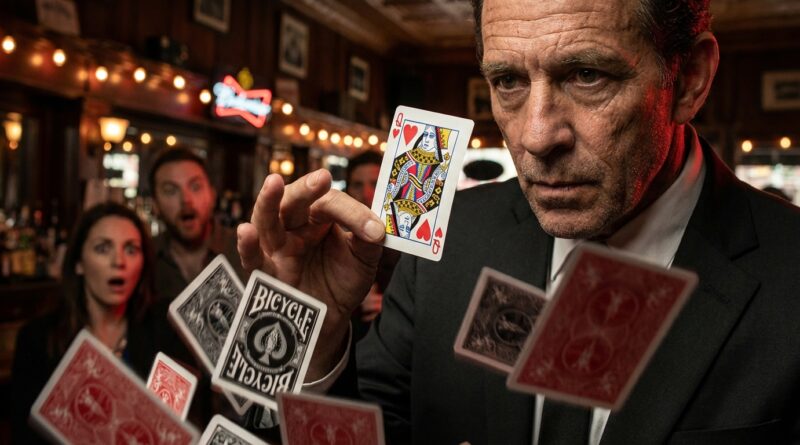
From Viral Card Catches to Real-World Control: How To Learn the ‘Single Card From the Shuffle’ Sleight Without Gimmicks
If you have watched one of those viral clips and thought, “Come on, that has to be a fake deck,” you are not alone. Even experienced card people look at a clean single-card catch from a shuffled deck and assume there must be a gimmick, camera cut, or some hidden setup. The annoying part is that a few performers really can do it with an ordinary deck, and that makes the rest of us feel like we are missing some secret switch. Usually, there is no secret switch. There is tracking, deck control, timing, and an almost unfair number of practice reps. The good news is that this kind of move is learnable if you stop treating it like one impossible stunt and start treating it like four separate skills. That is the difference between staring at the comments and actually learning how to catch a single chosen card from a shuffled deck.
⚡ In a Hurry? Key Takeaways
- You do not need a gimmick deck. The real work is card tracking, controlled shuffling, and a reliable catch.
- Start by learning to control one known card to a predictable position before you ever try the flashy toss and catch.
- Practice safely with low tosses over a soft surface, because chasing cards around the room teaches frustration, not skill.
Why this move looks fake even when it is not
The viral version sells one big lie to your eyes. It looks like the deck is fully mixed, fully squared, casually tossed, and then one exact card is somehow plucked from chaos. That sequence feels impossible because your brain reads “shuffle” as “random.”
But card handlers know something the audience usually does not. A shuffle can look chaotic while keeping one card tracked, protected, or steered to a known zone. That does not make the move easy. It just makes it human.
So if you want to learn how to catch a single chosen card from a shuffled deck, do not ask, “How do I grab one card in midair?” Ask a better question. “How do I know where that card will be when the deck opens up?”
The move is really four skills, not one
1. Controlling the chosen card
This is the foundation. If the chosen card is truly lost, the trick is over before the toss starts.
Your first job is to control the card to a known location. Top, bottom, second from top, or a small block near one end. It does not matter which at first. What matters is that you can do it every single time without looking guilty.
Good starting methods include:
- A simple key card approach
- An overhand shuffle control
- A jog shuffle that keeps one card in place
- A false shuffle that looks mixed but is not fully random
If you cannot repeatedly keep one card where you want it, the catch will always feel like luck.
2. Keeping orientation after the shuffle
This is where many people fall apart. They control the card once, then lose track during the square-up. Or they know the card is near the top, but not whether it will leave first, second, or buried in a clump.
You want the deck to behave in a predictable way when released. That means paying attention to:
- How tightly the deck is squared
- How much bend or pressure is in the pack
- Whether the packet leaves as a spray, a clump, or a short ribbon
- Which edge leads when you toss
Think of it like throwing a handful of dry leaves versus one neat stack of index cards. Tiny differences matter.
3. Creating a repeatable toss
The toss is not random flair. It is engineering.
Most clean catches come from a low, controlled pop, not a dramatic throw to the ceiling. The deck opens. The target card separates enough to become visible and reachable. Your free hand intercepts it. The flashier the throw, the less control you usually have.
Start with:
- Chest-height tosses
- Minimal forward travel
- A soft upward pop with a slight opening action
- The same grip every time
If your toss changes every rep, your brain cannot build the timing.
4. Making the catch look intentional
The catch is the part people obsess over, but it is usually the last thing to train. First know where the card should appear. Then train your hand to arrive there on time.
At first, do not “snatch” at the card. Let your hand meet it. Many successful catches are more like a guided interception than a lightning-fast grab.
The move should look calm. If you are swiping wildly through a cloud of cards, the audience reads effort instead of skill.
How to practice it without wasting six months
Stage 1: Forget the toss
Take one chosen card and control it to the top or second from top. Do this 50 times. Then 50 more. You should be able to chat while doing it.
Your benchmark is simple. If someone stops you and asks where the card is, you know the answer instantly.
Stage 2: Work with one card only
Now use a deck, but isolate the behavior of one card. Place it on top. Toss the pack lightly onto a bed, couch, or close-up pad and watch how the top few cards separate. You are not performing. You are studying.
Notice what changes when you:
- Tighten the square
- Loosen the top stock
- Add slight bend
- Change release angle
This part feels boring, which is exactly why many people skip it. It is also where the real progress happens.
Stage 3: Catch the top card on purpose
Before you try a thought-of card from a “shuffled” deck, learn to catch the known top card from a controlled toss. This gives you the flight path, timing, and confidence.
Keep the toss low. Use the same release every time. Catch with the same hand every time. Build one version first.
Stage 4: Add a false shuffle
Once the top-card catch feels real, add a convincing false shuffle or retention sequence that keeps your target where you need it. This is where the move starts to feel magical instead of like card juggling.
The audience must believe two things. The card is genuinely lost, and the catch happens on instinct. You know both are partly theater. That is fine. Magic lives there.
What magicians in the comments usually get wrong
“If it looks that clean, it must be gimmicked”
Sometimes, sure. But not always. A normal deck in good condition can do a lot in skilled hands. Card mechanics have spent years proving that things which look edited are often just painfully practiced.
“It’s just cardistry, not magic”
That is a false fight. If the audience experiences impossibility, it can absolutely serve magic. Sleight-of-hand has always borrowed from gambling moves, flourishes, and pure dexterity. The question is not what bucket the move belongs in. The question is whether it creates a strong effect.
“I need insane reflexes”
You need consistency more than reflexes. The cleaner your control and toss, the less “reaction speed” you actually need. Most of the move is won before the card leaves the deck.
Best beginner route if you want this fast
If your goal is a usable version soon, not a viral-demo version someday, use this path:
- Control the chosen card to top.
- Do a false shuffle that preserves top stock.
- Toss low and open the deck slightly.
- Catch the top card cleanly.
- Only later experiment with deeper positions and more chaotic-looking shuffles.
This gives you a practical performance version while you build the harder, more advanced one.
Common mistakes that make the move look worse
- Throwing too high. It looks dramatic, but kills control.
- Using a warped, sticky, or overly soft deck.
- Trying to learn the catch before learning card control.
- Practicing ten variations instead of one repeatable method.
- Performing it too early for real people.
A fresh but broken-in deck helps. Not brick-stiff. Not greasy and collapsing. Goldilocks rules apply here.
Can this be done with a genuinely shuffled deck?
If by “genuinely shuffled” you mean fully randomized by the spectator with no control retained, then no, not in the reliable way those viral clips suggest. At that point you are moving from sleight-of-hand into luck, marked information, crimps, peeks, or some other method.
But if you mean “it looks honestly shuffled to normal people,” then yes, absolutely. That is the sweet spot. Many strong card effects live in that gap between what the audience believes happened and what actually happened.
How long does it take?
Longer than the clip makes it seem. Shorter than you fear if you train smart.
A basic controlled version might be within reach in a few weeks of focused practice. A version that fools magicians, looks effortless on camera, and works on demand is more likely a months-long project. Sometimes longer.
That should not discourage you. It should calm you down. The reason the move looks rare is because it is rare.
At a Glance: Comparison
| Feature/Aspect | Details | Verdict |
|---|---|---|
| Deck type | An ordinary deck can work if it is in decent condition and the card is controlled, not truly lost. | No gimmick required for a solid version. |
| Core skill | The real secret is not superhuman catching. It is controlling and tracking one card through convincing shuffles. | Learn control first, catch second. |
| Practice method | Use low tosses over a soft surface, repeat one grip and one release, and build up from catching the top card. | Best route for steady progress. |
Conclusion
The reason this sleight has people arguing is simple. It sits right on the line between impossible-looking magic and very real card mechanic skill. That is why one camp says “gimmick” and the other says “thousands of reps.” In many cases, the second camp is closer to the truth. If you break the move into control, tracking, toss, and catch, it stops being a myth and becomes a training plan. That is the real value of this moment for the Magician Book crowd. While everyone else is still fighting in the comments about whether the deck is real, you can start building a version that is real, practical, and strong enough to make people remember your name after one performance.