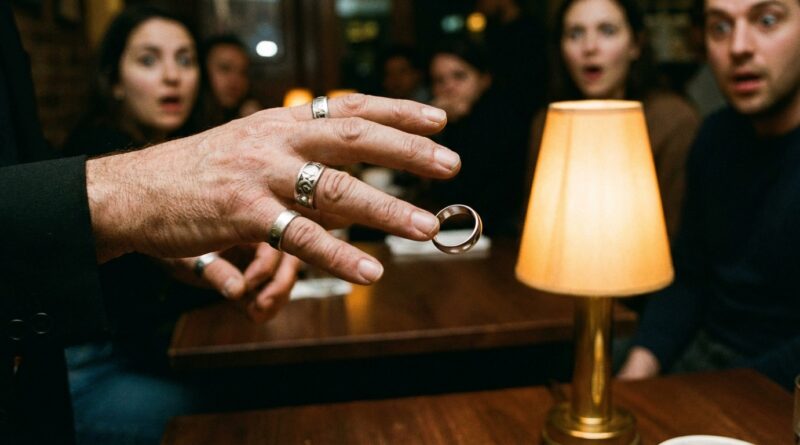
From ‘Physics-Defying’ Ring Reels To Real Workers: How To Build A Practical Ring‑Melt Sleight You Can Use Anywhere
You have probably seen them. A ring seems to melt through a finger, slide through another ring, or pass through solid flesh like gravity and common sense took the day off. Then you try it in the mirror and reality shows up fast. The angles are bad. Your fingers feel tied in knots. The move only looks good from one camera position, with one light, after ten takes. That is the gap between a viral ring reel and a real-world effect you can do for live people.
If you want to learn how to do the melting ring sleight of hand trick in real life, the fix is not chasing the prettiest clip. It is building a routine around clear displays, natural hand positions, and a method that survives standing spectators on both sides. Think less “perfect frame” and more “practical sequence.” Once you do that, the plot gets stronger. It stops looking like a social media edit and starts feeling like actual magic.
⚡ In a Hurry? Key Takeaways
- The best real-life melting ring sleight uses simple concealments, relaxed timing, and audience-friendly angles, not impossible camera framing.
- Start with one clean “melt” beat, then build a short routine around conviction displays and a logical finish.
- If the move hurts your fingers, flashes from the side, or only works on video, it is not ready for live performance yet.
Why the Instagram Version Falls Apart in Person
Most ring reels are built backward. The creator starts with the visual, then uses camera position, editing, or repeated takes to force the illusion into existence. That is fine for content. It is not fine for performance.
In live magic, people move. They lean in. They look from the wrong side. They interrupt your timing. The “physics-defying” look only works if your handling has room to breathe.
That is why so many magicians get frustrated with this plot. The ring melt is not failing because the idea is weak. It is failing because the handling was designed for a lens, not a human being standing three feet away.
Start With the Right Goal
Before worrying about secret mechanics, decide what your audience is supposed to remember.
The memory should be simple
Not, “He twisted his hand and then maybe switched fingers.”
You want them to remember this instead. “The ring visibly melted through.” That is the whole game.
One strong moment beats three shaky ones
A lot of performers cram in multiple phases because the online clips reward nonstop motion. In real life, that can make the method easier to spot.
Build around one convincing penetration. If you can do a second phase under different conditions, great. If not, stop at the strongest point and get out clean.
The Practical Formula for a Real-World Ring Melt
If you want to know how to do the melting ring sleight of hand trick in real life, this is the practical formula.
1. Use an object people understand
A borrowed ring is strongest. Your own ring is fine if the setting is casual and you want reliability. Either way, the object should look ordinary and be easy to show openly.
2. Pick a display position that looks relaxed
This matters more than many magicians think. If your hand looks cramped, the audience reads that tension as “something sneaky is happening.”
Your fingers should look like they naturally landed there. Not like you are trying to solve a tiny metal puzzle.
3. Hide the secret in the moment of adjustment
Most practical ring melts do not happen in the still image. They happen in transition. As you rotate the ring. As the other hand briefly points. As your fingers loosen before the “melt.”
That tiny beat of adjustment is where the method lives.
4. Slow down at the magical moment
This sounds backward, but rushing is what makes a melt look fake. The secret action can be quick. The effect should breathe.
Show the condition. Pause. Let the melt happen. Then separate your hands without panic.
5. End cleaner than you started
If the audience sees the ring clearly free at the end, they will often forgive a less-than-perfect setup. If the ending looks muddy, even a nice visual loses power.
What a Worker-Friendly Sequence Looks Like
Here is a simple structure you can actually use at a table, in strolling work, or as a quick close-up moment.
Phase 1. Establish fairness
Show the ring openly. Let them see which finger it is on, or what it is pressed against. Keep your words simple. “Watch the ring. Nothing else matters.”
Phase 2. Create a reason to focus
Bring attention to the point of impossibility. “If metal could soften for one second, it would look like this.” That line gives the audience a picture to hold onto.
Phase 3. Execute the melt
Use the secret action during a natural adjustment or beat of motion. Then let the penetration register. This is where many performers make a mistake. They move on too soon.
Phase 4. Prove the aftermath
Once the ring is through, show the new condition clearly. Empty space matters. Separation matters. Open fingers matter.
Phase 5. Either stop or go to a logical follow-up
A good follow-up is a clean removal, a second melt under a new condition, or a spectator-held ending. A bad follow-up is repeating the same move from the same angle and hoping nobody notices.
The Three Biggest Mistakes
Bad angle management
The side view kills many ring melts. Practice in a mirror from front and both sides. Better yet, use your phone and record at chest height from several positions. If one side exposes everything, redesign the move or change when you perform it.
Finger positions that scream method
If your thumb is pressing too hard, if one finger is bent for no reason, or if your hand looks clawed, the audience may not know the secret, but they will know where to look.
Confusing speed with deception
Going faster does not make a move more magical. It often makes it more suspicious. Clean timing beats frantic timing every single time.
How to Practice Without Fooling Yourself
Mirror practice is useful, but it can also lie to you. You already know where the move is, so your brain fills in the effect.
Use three test conditions
Practice seated. Practice standing. Practice while talking out loud. If the move only works in silence while you stare at your own hands, it is still in the lab.
Watch for “dead giveaways”
These include a sudden finger squeeze, a hand dipping out of frame, an unexplained turn of the wrist, or your eyes looking at the secret spot right before the move.
Test on one real person early
Not a magician. Not your most polite friend. Use someone who will react honestly. Ask one question after. “What did it look like happened?” If their answer matches your effect, you are on the right track.
Choosing Between Visual Purity and Performance Strength
This is the tradeoff nobody likes to admit. The cleanest-looking version on video is often not the best version for work.
A worker-friendly handling may look 10 percent less impossible in a frozen frame, but 50 percent more convincing in motion because it feels natural and survives real heat.
That is the standard worth chasing.
How to Script It So It Feels Like Magic, Not a Puzzle
Good scripting helps because ring effects can become “look what my fingers can do” demonstrations if you are not careful.
Use physical language
Words like “soften,” “melt,” “stretch,” and “slide through” help the audience track the image.
Do not over-explain
If you keep talking about how impossible it is, people brace for a trick. A short line is better. Then let the visual land.
Give the moment a reason
You are not just moving a ring around. You are showing a strange property for one second. That tiny frame changes how the audience experiences the effect.
When This Plot Works Best
The ring melt shines in informal close-up settings. It works well:
- As an opener, because the props are small and familiar
- Mid-set, when you want something visual and intimate
- As a short offbeat miracle between bigger routines
It is less ideal when surrounded tightly with no audience control, or in loud environments where you need bigger, broader visuals.
Make It Your Own With Classic Ring Thinking
The good news is that this trend is not really new. It is a modern skin on old principles. Magicians who already study ring-on-finger penetrations, false displays, retention ideas, and offbeat timing have a head start.
That is the exciting part. You do not need to copy a reel exactly. You can take the feeling of the visual and rebuild it with classic structure. That is how a trendy clip becomes a real routine.
At a Glance: Comparison
| Feature/Aspect | Details | Verdict |
|---|---|---|
| Camera-first handling | Looks amazing from one view, often needs retakes, tight framing, or awkward hand positions. | Great for clips. Weak for live work. |
| Worker-friendly handling | Uses natural displays, safer angles, and timing that holds up with real spectators. | Best choice for performance. |
| Routine structure | One clear melt, solid proof, optional follow-up under changed conditions. | Stronger than stacking flashy but weak phases. |
Conclusion
The ring melt does not need to stay trapped in the world of impossible-looking reels. If you build it from the ground up for real spectators, with natural finger positions, honest angle management, and a clean ending, it becomes something you can actually use. That is the point. The magic community already has enough eye-candy clips that collect likes but never make it into a real set. What performers need is a roadmap. A practical, technique-first way to turn a viral visual into a repeatable routine. Done right, this plot can help you avoid the usual handling traps, make use of classic ring ideas you already know, and give you a modern effect that feels current without depending on social media trick photography. That is where the real value is, and that is exactly the kind of thinking that makes Magician Book useful instead of just noisy.