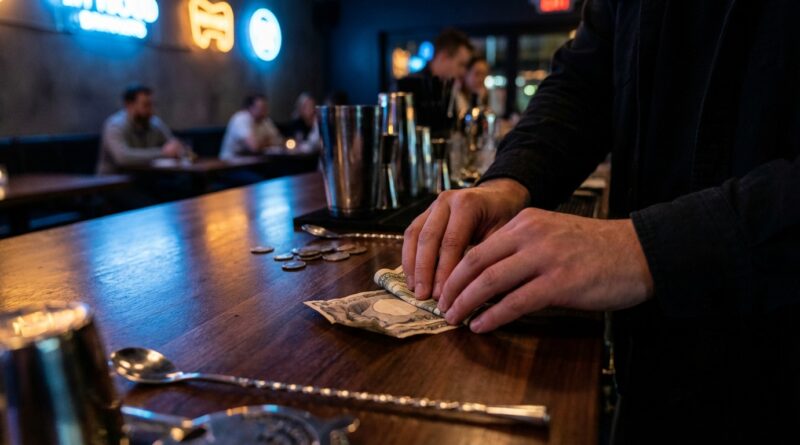
From Viral ‘Bartender Switches Your Cash’ Clips To Real Workers: How To Turn Everyday Money Handling Into Slealth Sleight Of Hand
You have probably seen the clips by now. A bartender takes a note, flashes it once, and somehow it becomes a different bill in the same beat it takes to make change. It looks casual, dirty, and real. That is exactly why so many magicians get annoyed watching them. The standard thumb-tip bill change can feel too formal for a bar. A lot of clean switches need sleeves, a table, or a precious setup you would never trust near spilled beer and impatient customers. If you want that bartender money magic sleight of hand look, the good news is you do not need to rebuild your whole act. You just need a handling that feels like everyday money handling first, magic second. The sweet spot is a switch hidden inside actions people already know, folding, straightening, counting, and passing a note from one hand to the other. That is what makes it fly in the real world.
⚡ In a Hurry? Key Takeaways
- Use a money switch that looks like normal bar handling, not a formal magic move.
- Build the change around folding, flattening, and handing over the bill, because those actions are natural and easy to hide in plain sight.
- Practice with real-world angles and real bills first, so you do not flash the method under café lights or at a crowded bar.
Why these viral money clips hit so hard
The reason these clips spread is simple. They do not look like tricks. They look like workers doing what workers do. A bartender swaps notes while talking. A street hustler changes one bill into another while moving, turning, and engaging a crowd. There is no magician pause. No big setup. No “watch closely” moment.
That style matters. Spectators are now primed for money magic that feels spontaneous. If your bill change still looks like a special move from a lecture note, it can feel out of step with what people are seeing on their phones.
So the goal is not just to change a bill. The goal is to make the change feel accidental, fast, and wrapped inside ordinary handling.
The core idea: hide the switch inside work
The best bartender money magic sleight of hand does one thing well. It makes the secret action ride along with a normal action. That means the audience should remember you folding the bill, squaring it, tapping it on the bar, or handing it to them. They should not remember a “move.”
What normal handling looks like
Think about how people really handle cash in bars, cafés, and shops.
- They smooth a crumpled note.
- They fold it once to make it easier to hold.
- They transfer it between hands while reaching for something else.
- They count change while talking.
- They briefly look away because the social moment matters more than the money.
Those are your covers. If your switch can live inside one of those beats, it will feel believable.
A practical handling you can bolt onto your existing bill tricks
Here is the basic structure. Not an exposure of a single marketed move, but a working approach you can fit onto methods you already use.
1. Start dirty, not pristine
A crisp, perfectly displayed note screams “prop.” A slightly handled bill looks real. That helps more than people think. If you begin with a bill that is lightly creased, you gain a reason to straighten and refold it. That gives you motion and motivation.
2. Use a half-fold as your action beat
The half-fold is useful because normal people do it all the time. It also narrows the bill, reduces open display time, and gives your fingers more cover. Many standard bill switches become stronger when they happen as the note is folded and then casually reopened, rather than shown flat for too long.
3. Transfer on an offbeat
The transfer is often where the magic really hides. Ask a question. Make eye contact. Gesture toward the drink, the tip jar, or the person next to them. Then move the bill from one hand to the other. A switch done during a social beat feels like nothing because the audience is processing the interaction, not burning your fingertips.
4. Reveal while doing something else
Do not freeze and present the changed bill like a museum object. That is what makes many money changes feel too “magician.” Instead, reveal it while unfolding, handing it out, or using it to make a point. The reveal should look like the end of an ordinary action, not the start of applause.
What makes this feel like bar magic instead of parlour magic
Bars are messy. People are standing at odd angles. Lighting is bad. Surfaces are wet. Attention comes in bursts. That sounds like a problem, but it actually helps if your handling is built for that environment.
Keep the bill moving naturally
A still hand invites scrutiny. A hand that is casually active looks normal. The trick is not to wave the bill around. It is to keep it in believable motion, the same way someone would while talking and handling cash.
Use body turn, not big misdirection
You do not need dramatic distraction. A slight turn of the shoulders can clean up angles. So can stepping half a foot to one side. In a real venue, tiny adjustments are stronger than theatrical flourishes.
Work chest-high if possible
Too low, and people above you can see more than you think. Too high, and the move feels staged. Around lower chest height is usually the sweet spot for walk-around money handling. It keeps the action in a social frame and protects your angles.
Common mistakes that ruin the illusion
Most money changes do not fail because the move is bad. They fail because the performance says, “Here comes the trick.”
Over-proving the bill
If you keep showing the bill front and back before the change, people know it matters. That creates heat. Show enough to establish fairness, then move on.
Rushing the fold
When the secret moment happens faster than your natural rhythm, it reads as suspicious. The fold should match how you would really handle a note.
Revealing too cleanly
This sounds odd, but a reveal can be too perfect. Real-life money handling has texture. A slight crumple, a casual snap open, or a handoff can make the effect feel more authentic than a pristine display pose.
Ignoring the audience on your sides
Phone clips are often shot from one sweet angle. Your gig is not. Practice with someone standing left, right, and slightly behind. If the handling does not survive that, it is not ready.
How to practice for real venues
Mirror practice is fine at the start, but it is not enough. A move that looks great head-on can die the moment someone leans on the bar next to you.
Use your phone like a spectator would
Record from awkward positions. Low angle. Side angle. Slightly behind your shoulder. Harsh kitchen light. Dim lamp. This will tell you much more than a front-facing mirror ever will.
Practice with conversation
Money switches are social tricks. So say the words while you do the handling. Ask a question. React to an answer. Laugh. If the move only works in silence, it is probably not settled enough yet.
Use the same wallet and pocket setup you will use live
Do not rehearse from a perfect desk setup and then perform from tight jeans or an apron full of bar tools. The load, ditch, and reset need to fit your actual working clothes.
Best use cases for this style of switch
This approach works best when you want the magic to feel like it came out of the environment around you.
- Turning a small bill into a larger one as a quick opener.
- Changing a borrowed bill into your own for a transposition plot.
- Producing a tip, prediction, or signed note from an apparently ordinary fold.
- Linking a bill switch to a bar bet or playful challenge.
It is especially strong in cafés, bars, festivals, and standing cocktail events where people expect quick, visual moments.
How to script it so it does not feel cheesy
You do not need a long patter line. In fact, less is better here. The style should feel tossed off.
Try lines built around everyday ideas:
- “Inflation is getting out of hand.”
- “This is how tips look in my memory.”
- “I swear it was a bigger bill a second ago.”
- “Bartender math. Very advanced.”
Keep it light. The visual does the heavy lifting.
Should you replace the thumb-tip switch completely?
No. The thumb-tip is still useful. So are traditional bill switches. The point is not that the old tools stopped working. It is that the current moment favors methods that look rougher, faster, and more accidental.
Think of this as adding a new accent to your existing language. If you already do a bill switch, ask yourself one simple question. Can I hide this inside a believable money-handling beat? If the answer is yes, you are already halfway there.
At a Glance: Comparison
| Feature/Aspect | Details | Verdict |
|---|---|---|
| Style of handling | Looks like folding, smoothing, and passing cash during normal conversation. | Best choice if you want a casual, worker feel. |
| Angle safety | Usually stronger than formal display-based switches, but still needs side-angle testing. | Good for bars and walk-around if rehearsed realistically. |
| Setup and reset | Can often be added to methods you already use, with little or no table work. | High practical value for repeat performances. |
Conclusion
The reason this matters right now is not just that money magic looks good on camera. It is that spectators have spent the last day watching impossible cash changes from bartenders and street performers, so the plot already feels current and believable in the wild. If you can turn your bill switch into something that looks like ordinary money handling, you can meet that moment instead of missing it. Start with folds, transfers, and natural offbeats. Test the angles honestly. Then drop it into your existing routines in bars, cafés, and walk-around gigs. Done well, this style does not feel like you copied a viral clip. It feels like you have always been able to do something impossible with a banknote and a second of casual handling.