From Viral Water Paper Trick To Real-World Worker: Building a Killer Everyday Liquid Illusion
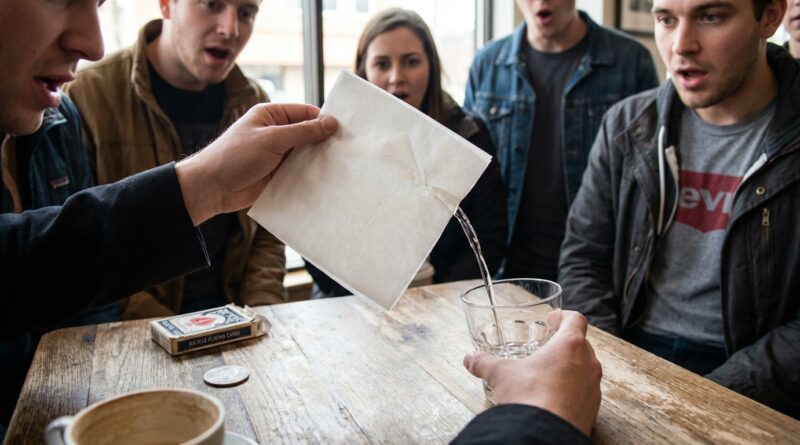
You have probably seen the clip by now. Someone folds a piece of paper, gives it a squeeze, and suddenly water pours out as if the laws of nature took the afternoon off. It is a great viral moment. It is also the exact point where many magicians get annoyed. The stunt looks amazing on a phone screen, then falls apart the second you ask normal questions. Can I do it surrounded. Can I reset fast. Can I carry it in a jacket. Can I repeat it without heading back to a sink. That gap matters. A visual is not the same thing as a routine. If you want a real water from paper magic trick real world routine, you need more than a secret. You need structure, timing, angle control, a reason for the paper, and a finish that feels clean. That is what separates a scroll-stopper from something you can actually work with at the bar, at school, or table to table.
⚡ In a Hurry? Key Takeaways
- A real-world water from paper routine needs repeatability, angle safety, and a clean ending, not just a pretty moment.
- Build the effect backward from your performance conditions, then choose the liquid load, paper type, and reveal timing that fit that space.
- Keep safety and mess in mind. Small liquid amounts, controlled pours, and backup cleanup make the trick practical instead of stressful.
The viral version is not the working version
This is the part social media usually skips. A clip can hide dead time, off-camera prep, one perfect angle, and cleanup that happens after the recording stops. Live performance is less forgiving.
In walk-around magic, every prop has to earn its place. If a folded paper can only produce one flashy pour and then leaves you wet, exposed, and hunting for a trash can, it is not really ready.
That does not mean the plot is weak. Quite the opposite. The plot is strong because it is simple. Paper should not hold water. If it does, people care right away. The challenge is turning that premise into a routine with an opening, middle, and ending.
What makes a water from paper magic trick real world routine work
1. A reason for the paper
If the paper appears out of nowhere, people start solving the trick before the magic even begins. Give it a job. Maybe it is a receipt, a napkin, a prediction slip, or a torn corner from something already in play.
The best versions feel like the liquid is a surprise, not the whole point from second one. That buys you attention and lowers suspicion.
2. A small, believable amount of liquid
Bigger is not always better. Online, a huge pour gets views. In person, a small controlled stream often gets a stronger reaction because it feels impossible and tidy at the same time.
Once the amount becomes silly, people start assuming hidden containers. Keep it in the range that feels like “that cannot be in there,” not “well, obviously something was in there.”
3. A clean display before and after
This is where many methods live or die. The audience needs a clear memory of the paper looking ordinary before the pour and harmless after it. You do not need to prove every square inch, but you do need to manage what they remember.
Think like a director. What is the snapshot they will replay later? A fair fold. Empty hands. Sudden water. Casual ditch. Strong routines are built around those memory beats.
4. A reset that does not ruin your night
If you work more than one group, reset matters as much as method. A killer visual that takes three minutes in a bathroom is not a worker. A practical version should reset in seconds or let you carry multiple ready units without feeling like a plumber.
Build the routine backward
Here is the smartest way to develop this plot. Start with the place you will actually perform it.
Bar or restaurant
Noise is high. Lighting may be dim. Surfaces may be wet already. This helps in one way and hurts in another. A bar gives you motivation for liquid, but it also means spills are less charming. Your version needs a very controlled output and almost no visible setup.
School or casual hangouts
This is the best environment for the plot. People are close, curious, and often carrying paper already. A folded note, quiz paper corner, or napkin makes sense. Angle safety is more important here because friends drift around you.
Formal close-up set
Now the question changes. Does this fit your material, or does it feel like a random internet stunt dropped into a card set? The strongest answer is to connect it to another object. A signed card appears damp. A drawing turns into real water. A prediction in a folded slip “melts” into liquid. Now it belongs.
The best routine shape: intro, impossibility, release, clean exit
A good everyday liquid illusion usually follows a simple shape.
Intro
You show or justify the paper. Keep this brief. The longer you camp on the prop, the more suspicious it becomes.
Impossibility
You fold it clearly and casually. This phase should feel fair, but not like a courtroom proof sequence. Overproving screams method.
Release
The water appears. This is the money moment. Do not rush it. Let the stream register. Let people react before you start talking again.
Clean exit
This is the part creators often forget. What happens next? Do you toss the paper aside. Hand out a different object. Go into another effect. Wipe your fingers with a napkin that was already in play. The ending should feel like a normal human action, not emergency cleanup.
Method thinking without tipping method
You do not need exposure to understand design. In broad terms, methods for this plot usually trade off between four things: capacity, cleanliness, angle safety, and setup speed.
If you push one, you often lose another. A method that holds more liquid may become harder to conceal. A very clean display may cut down repeatability. A super easy setup may leave you with a weaker after-image.
That is why builders usually beat collectors. Collectors chase the newest secret. Builders ask better questions. What am I wearing. Who is on my sides. How many times will I perform it tonight. What is my out if someone asks to hold the paper.
Those questions create working material.
How to make it feel like your magic, not borrowed internet magic
If you already do cards, coins, or mentalism, this plot can still fit. You just need a bridge.
For card workers
Use the folded paper as a prediction slip, score marker, receipt, or torn card box tab. The water reveal then acts as a kicker, not a random side quest.
For coin workers
Frame it as impossible containment. A dry object becomes wet, then the water is shown to have come from the paper itself. That keeps the logic in the same lane as vanishes and productions.
For mentalists
Use the liquid as a dramatic reveal. A thought-of word is written on paper, then the ink runs, or the folded note releases water as if emotion, memory, or pressure made it happen. It sounds theatrical, but in the right hands it plays big.
Practical details that matter more than the secret
Paper choice
Not all paper behaves the same. Thickness, absorbency, stiffness, and sound all matter. A paper that looks innocent may fold badly. One that handles well may look too prepared. Test in the real world, not just at your desk.
Pocket management
Liquids and clothing are old enemies. If your carry system is awkward, you will stop performing the trick no matter how strong it is. Your setup should survive sitting, walking, and mild bumps.
Weather and room temperature
This sounds fussy, but it matters. Heat, cold, and humidity can affect handling, timing, and comfort. If a trick becomes moody every time the room changes, it is not ready.
Patter discipline
Talking too much can kill this plot. The effect is visual. Let it breathe. A short line before the moment is enough. Then shut up and let the water do the work.
Common mistakes that make the effect look fake
The first mistake is overproving the paper. People do not need a full documentary. They need a fair impression.
The second is using too much liquid. A tiny impossible pour feels magical. A comedy splash feels gimmicked.
The third is weak motivation. If the paper has no story, it becomes “the trick paper,” and your audience starts hunting.
The fourth is bad follow-through. If you freeze after the reveal because you are worried about angles or mess, the audience feels that tension. A worker keeps moving.
How to test whether your routine is actually ready
Before calling it finished, run it through this checklist.
- Can you perform it standing, without a table?
- Can you reset in under 30 seconds?
- Can you survive one spectator slightly off to the side?
- Can you end clean enough to move into your next effect?
- Can you explain why you had the paper in the first place?
- Can you do it for a second group without stress?
If the answer is no to more than one of those, you probably have a cool stunt, not a finished routine.
Why this plot matters right now
Liquid magic always gets attention because it feels primal. Everyone understands water. Everyone knows paper and water are supposed to be a bad mix. That makes the effect instantly readable, which is gold in live performance.
And right now, with social feeds full of eye-candy, there is a real chance to take a trendy image and give it a backbone. That is where magicians can do better than creators chasing one more viral clip. We can build something that holds up under pressure.
At a Glance: Comparison
| Feature/Aspect | Details | Verdict |
|---|---|---|
| Viral visual appeal | Fast, shocking, easy to understand in seconds. Great for grabbing attention. | Strong opener, but not enough on its own. |
| Real-world practicality | Depends on setup speed, pocket management, angle safety, and controlled cleanup. | This is what turns the idea into a worker. |
| Routine integration | Best when linked to cards, coins, predictions, or a reason for the paper to exist. | Essential if you want it to feel like your magic. |
Conclusion
The smart move is not copying the clip beat for beat. It is asking how to make the moment survive real people, real angles, and real repetition. That is the value of a true water from paper magic trick real world routine. It takes a hot visual and gives it bones. Liquid magic is suddenly everywhere again, and people want a version that does not rely on camera edits, sink-side gimmicks, or one-and-done TikTok handling. A careful, technique-driven teardown of this plot fills a real gap. It gives experienced close-up magicians a fresh piece that still fits beside cards and coins, and it teaches newer performers how to think like builders instead of collectors. Get that part right, and you are not just chasing the feed. You are creating something you can actually use.