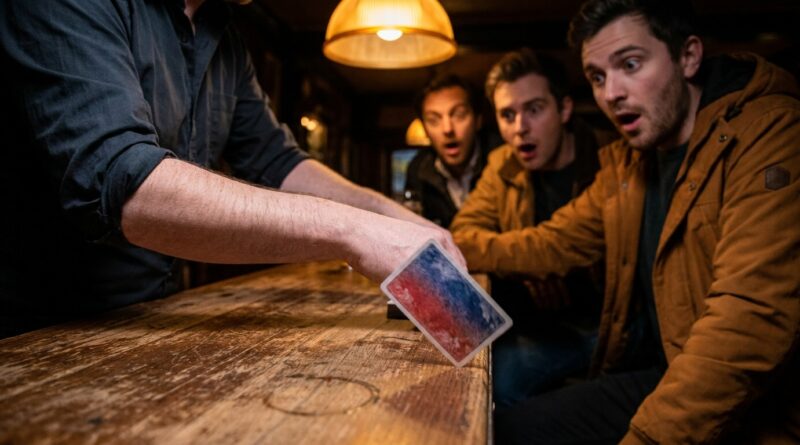
From ‘Visual Card Changes’ Hype To Real-World Reactions: Build One Table‑Edge Color Change That Survives Any Angle Check
You know the feeling. A color change looks insane on your phone screen, you hit it once for the camera, and for six seconds you feel like a genius. Then a real person stands a little to your left, your right thumb flashes, and suddenly that miracle turns into “wait, what was that?” That frustration is real. A lot of modern visual changes are built for one lens, one take, and one perfect viewing line. They are not built for the messy little world of dinners, bars, coffee tables, and friends who burn your hands from the side.
The fix is not to give up on visual magic. It is to rebuild it around better conditions. If you want a visual angle proof card color change sleight of hand, the best answer is often a table-edge change. The table gives you cover. The edge gives you timing. Your body gives you natural shade. Done right, it keeps the snap and shock of a viral reel, but survives the simple test that matters most: “Can you do that again?”
⚡ In a Hurry? Key Takeaways
- A table-edge color change is one of the best ways to get a visual, live-friendly card change without the brutal side-angle problems of many reel-based moves.
- Start with one card displayed cleanly, use the table edge as cover for the secret turnover or swap action, and time the reveal to the moment the card clears the edge.
- Keep spectators in a soft front arc, not behind you or at knee level. It is angle-safe, not angle-free, and that difference matters.
Why so many viral color changes fall apart in real life
Most of the changes filling your feed are not bad. They are just optimized for the wrong job.
On camera, a move can live inside a tiny tunnel. The lens sees one narrow picture. In person, people see from above, from the side, and sometimes from that annoying seat that seems designed to expose every hidden corner of a sleight.
That is why some changes feel amazing online and shaky live. They depend on three things that real performance rarely gives you.
1. A fixed viewpoint
Social clips get one clean line of sight. Live magic does not. If a move dies when someone shifts six inches left, it is not ready for casual work.
2. Perfect rhythm
Video lets you trim hesitation. Real people do not. If your fingers need an extra beat to settle a card, somebody will catch that beat.
3. Forgiving lighting
Phone-friendly magic often hides in contrast and exposure. Restaurant lighting is rude. It shows shine, edges, bends, and tiny flashes you never noticed at home.
This same problem shows up outside card changes too. If you liked the idea of taking flashy social media magic and making it usable, you would probably enjoy From Viral Finger Bends To Real-World Miracles: Build One ‘Micro-Sleight’ That Looks Like Camera Tricks In Close-Up. It hits the same nerve. The trick looks modern, but the method has to survive real eyes.
The better goal: angle-safe, not angle-free
Let’s be honest. Almost no sleight is truly angle-proof from every possible seat. That phrase gets tossed around too easily.
A smarter target is angle-safe.
Angle-safe means the move works under normal close-up conditions. People are in front of you. Maybe one person is a little left, one a little right. You are seated or standing at a table. Nobody is crouched at your elbow trying to inspect your thumb.
That is where the table-edge color change shines. It uses the furniture already in front of you as part of the choreography. Instead of fighting every angle with finger tension and speed, you let the environment help you.
The table-edge change: the practical rebuild
Here is the simple idea.
You display a card fairly. You bring it to the table edge for a casual tap, drag, or momentary rest. During the split second where the lower edge is shaded by the table and your hand position looks natural, the secret action happens. Then the card rises or slides back into view as a different card.
To a spectator, the change seems to happen in open air. To you, the secret happened in a tiny protected zone.
That is the whole reason this family of changes works so well live. The eye remembers the reveal, not the covered beat.
What makes it stronger than many hand-held changes
- The table edge blocks the worst low-angle view.
- Your wrist can relax more, which cuts down on suspicious finger clawing.
- The action has a reason. People rest cards on tables all the time.
- The reveal happens after the dirty work, which feels cleaner to the audience.
How to build one that actually survives angle checks
You do not need a fancy new move. You need a better structure.
Step 1: Pick a change shape, not a flashy method
Forget the viral handling for a minute. Ask what the audience should experience.
Do you want:
- a face-up card to visually become another face-up card?
- a card to be rubbed once, then shown changed?
- a card to touch the table and instantly transform?
That outer effect is what matters. The cleaner the plot, the more freedom you have in method.
Step 2: Use the edge as cover, not as the effect
A common mistake is making the table edge look too important. If you stare at it, hover over it, or line up the card too carefully, you are hanging a sign over the secret spot.
The edge should feel like a casual waypoint. Tap. Drag. Rest. Square. Then up comes the changed card.
Natural beats beat dramatic beats here.
Step 3: Keep the audience in a front arc
This is the part magicians skip because it sounds boring, but it saves routines.
Even an angle-safe table-edge change still needs decent audience management. Try to work to a soft semicircle in front of you. If someone drifts too far to the side, turn your torso a little. If you are seated, use your chair and shoulders to set the frame.
You do not need to announce rules. Just perform in a way that gently places the good view where you want it.
Step 4: Make the reveal happen after the secret is over
This is huge. Many weak color changes blur the secret action and the magical moment together. That is why they flash.
With a table-edge design, the hidden action should finish before the reveal starts. Then all the audience sees is a clean changed card coming into full view.
That separation is what makes the effect feel impossible instead of suspicious.
A simple working script for the move
If you want to test this at a casual jam, use a script this plain:
“I’ll make this slow so you can see it. Watch the queen. If I just brush it against the table like this, it changes before it even comes back up.”
That script helps for three reasons.
- It gives a reason to touch the table.
- It directs attention to the card identity, not your fingers.
- It frames the magic as happening during the brush, while the real conviction lands on the reveal.
Practice notes that matter more than speed
Most performers think they need to get faster. Usually they need to get quieter.
Quiet hands
The move should look like you are handling paper, not defusing a bomb. Any sudden tension in the fingers reads as secret work.
Even tempo
Do not slow down only for the method beat. If your rhythm changes at the edge, people will feel it even if they cannot explain it.
Consistent card height
Bring the card to the same level before and after the edge contact. Random dips and lifts create heat.
Rehearse from bad seats
Set your phone slightly left, slightly right, and a little low. Not just straight on. A move is only as honest as the worst reasonable angle it survives.
Where this kind of change works best
This is not only for formal close-up sets.
It plays especially well in the exact places where flashy online magic often fails:
- dinner tables
- bars
- casual sessions with other magicians
- coffee shop performances
Why? Because those places already give you a surface, relaxed pacing, and a reason to rest or brush a card.
If somebody says, “Do that again,” you are still in business. That matters.
Common mistakes that ruin the illusion
Turning the table edge into a suspicious prop
If you keep returning to the exact same spot with too much care, people will smell method. Vary the placement a little. Stay casual.
Over-proving the first card
You do not need to wiggle it, shake it, and display every corner like a product demo. Show the card clearly, then move on.
Chasing the same pop as an edit-friendly reel
Live magic does not need to look edited. It needs to look impossible. That is a different standard, and honestly a better one.
Ignoring reset
If the move leaves you in a weird position, you will hesitate after the reveal. Build a version that lets you continue naturally, spread, or hand off when needed.
How to judge whether your version is ready
Ask yourself four plain questions.
- Can I do it with someone slightly left or right of center?
- Can I repeat it without acting nervous?
- Does the table contact feel motivated?
- Can I move into the next phase without awkward cleanup?
If the answer is yes to all four, you are a lot closer to a worker than to a clip.
At a Glance: Comparison
| Feature/Aspect | Details | Verdict |
|---|---|---|
| Visual impact | Not as hyper-clean as the most camera-locked changes, but still sharp and magical when timed to the card clearing the edge. | Best balance for live use |
| Angle safety | Uses the table edge, body shade, and natural motion to protect the weak moments from common side views. | Much safer than many reel-style hand-held changes |
| Real-world practicality | Works at dinners, bars, and jams. Easier to repeat, easier to justify, and less stressful under heat. | Strong worker option |
Conclusion
The big lesson is simple. Stop judging a color change by how wild it looks in a six-second reel, and start judging it by whether you would happily do it twice for real people. A good table-edge approach gives you a visual angle proof card color change sleight of hand that feels modern without leaving you exposed the second someone shifts in their chair. That is the real win. The community is chasing eye candy changes that play great online but can make workers nervous when someone says, “do that again.” Rebuilding that energy into one angle-safe, table-edge change gives you something useful this weekend, not just something pretty for your camera roll. And right now, that bridge between social-media magic and real-world performance is exactly what a lot of card handlers need.