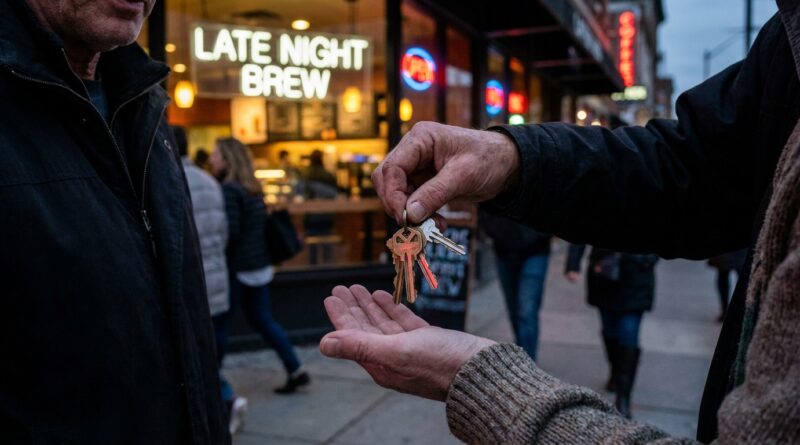
From Borrowed Keys To Street Mindreading: Build One ‘Pocket Pulse Peek’ Sleight That Lets You Reveal Any Thought Without Touching The Deck
You can feel the moment slipping away when someone says, “Show me something,” and all you have is another card move. That frustration is real. People have seen too many fast cuts and shiny edits online, and now they want something that feels raw, close, and impossible. Not a phone trick. Not a deck trick. They want to believe you caught a thought in the wild. That is where a strong impromptu sleight of hand trick with borrowed keys can hit much harder than another ambitious card phase.
The good news is you do not need electronics, a table, or a packet of gimmicks. You need one solid pocket peek idea, built around an object everyone understands. Keys are perfect. They are personal, noisy, ordinary, and always justified in the hand. If you can turn a borrowed set of keys into a reason to focus attention, create a beat of misdirection, and secretly gather a tiny piece of information, you can reveal a thought in a way that feels startlingly direct. That is the real power here. It does not look like “doing a trick.” It looks like reading somebody.
⚡ In a Hurry? Key Takeaways
- A borrowed-key peek works best when it feels like a casual object moment, not a move-heavy magic trick.
- Build one repeatable sequence: borrow keys, frame a thought, create a natural glance point, then reveal slowly.
- Keep it respectful and practical. Do not over-handle personal items, and always return borrowed keys cleanly and quickly.
Why Keys Work Better Than Another Card Change
Cards come with baggage. The second a deck appears, people know they are watching “a trick.” That is not always bad, but it does change the temperature in the room. Borrowed keys do the opposite.
Keys are innocent. They belong to real life. They fit a bar, a driveway, a kitchen counter, a lobby, or a wedding cocktail hour. And because people carry emotional stories on their keyrings, car key, apartment fob, gym tag, mystery bottle opener, they already feel personal before you do anything.
That matters if your goal is not just surprise, but mindreading. You are not trying to say, “Look how fast my hands are.” You are trying to say, “I noticed something you did not realize I could notice.”
What “Pocket Pulse Peek” Should Actually Do
At its core, this kind of routine needs to accomplish four things.
1. It needs a reason to exist
Do not start with, “Can I see your keys?” That sounds odd. Give the keys a job. Maybe you are talking about intuition, habits, lucky objects, or how people carry their whole life in one pocket.
2. It needs a natural information moment
The secret in any peek is not just getting information. It is getting it at a moment the audience would never flag as important. With keys, that can be during a handoff, while separating items, while asking them to focus, or while using the keys as a pointer or marker.
3. It needs almost no visible technique
If your fingers look busy, you lose the point. The best impromptu sleight of hand trick with borrowed keys feels hands-off even when it is not.
4. It needs a reveal that feels bigger than the method
Do not rush to blurt out the thought. Milk the human side. Describe the feeling first. Then the shape. Then the exact thought. That pacing is what sells mindreading.
A Clean Performance Frame You Can Use
Here is the structure that makes this kind of piece play well without getting fussy.
Borrow
Ask for keys only after a line that makes sense. Something like, “Everybody carries a little map of their life in their pocket. House, car, work, gym. Your keys tell a story before you do.” That feels conversational, not grabby.
Anchor a thought
Have the spectator think of something connected to their keys. It could be a place, a recent drive, a room in their home, or one meaningful item on the ring. This keeps the routine grounded in real life instead of random word-game territory.
Create a casual handling beat
This is where the peek lives. The exact method is your secret work, but the visible action should look like nothing. You are weighing the keys, turning them over, isolating one, or simply using the sound and shape to keep the attention on the object instead of on your eyes.
Step away from the object
Once the secret work is done, the keys should matter less. Give them back if possible. The farther your reveal happens from the handling, the cleaner it feels.
Reveal in layers
Do not go straight to the final answer unless the moment demands a punch. Start broad. “This is not work.” Then tighter. “This feels like a place you return to late.” Then specific. “You are thinking of your apartment building.”
How to Make It Look Like Mindreading Instead of Puzzle-Solving
This is the part many performers miss. A good peek gets information. A good performance turns information into emotion.
Use pauses
If you answer too fast, it can feel procedural. A tiny pause says, “I am sensing this now,” not “I already got the data.”
Talk like a person
Skip robotic lines. Speak plainly. “You changed your mind halfway through.” “You picked the obvious one first, then switched.” “This feels important, not random.” Those lines sound human and observant.
Do not over-prove
One strong hit beats five weaker details. Leave them wanting one more thought, not wishing you would stop.
Practical Tips for Working with Borrowed Keys
Borrowed objects come with social rules. Ignore those and the trick gets awkward fast.
Be gentle
Do not swing the keys, toss them, or let them clang onto a hard table. People notice. Car fobs are expensive.
Keep the handling short
The longer you hold someone’s keys, the more suspicious it feels. Borrow, justify, use, return.
Watch the noise
Keys make sound. That can help with rhythm and misdirection, but too much rattling looks nervous. Quiet hands read as confident hands.
Respect personal space
Never pat pockets or reach toward someone’s belongings uninvited. Ask, wait, receive.
Best Places to Use This
This format shines in places where a deck can feel too formal.
Bars and restaurants
No table needed. Little reset. Strong for couples and small groups.
House parties
Keys fit the environment. The object already belongs there.
Walk-around gigs
You can drop this between card sets and suddenly feel less like “the card guy” and more like the person who can do impossible things with anything.
Social media clips
This is exactly the kind of material that looks honest on camera because the object is familiar and the framing is tight.
Common Mistakes That Ruin the Effect
Most failures come from performance choices, not method.
Too much setup
If the instructions sound like a memory test, people check out. Keep the thought simple.
Looking guilty during the peek
Your face tells the story before your hands do. If your eyes dart, the move gets heat.
Turning it into a key trick
The keys are not the magic. They are the cover and the story. The thought is the miracle.
Repeating it for the same group
Mindreading pieces are strongest as one clean impossibility. Do not explain them by accident through repetition.
Why This Matters Right Now
Audiences have changed. They have seen polished edits and impossible jump cuts, so live magic has to feel even more real to stand out. A borrowed-object routine does that instantly. It says, “No camera trick. No app. No prepared deck. Just this moment.”
It also helps card-first magicians broaden their thinking. If all your stories begin with “pick a card,” you miss a lot of modern texture. Keys, receipts, rings, headphones, lip balm, parking stubs. Everyday objects let your magic live where people actually live.
At a Glance: Comparison
| Feature/Aspect | Details | Verdict |
|---|---|---|
| Visual cleanliness | No deck, no phone, no table. The object is borrowed and familiar. | Excellent for casual and professional close-up. |
| Difficulty | Moderate. The handling can be simple, but timing and body language matter a lot. | Worth learning if you want stronger non-card material. |
| Audience impact | Feels personal because the object belongs to them and the reveal feels intimate. | Often stronger than a flashy visual change. |
Conclusion
If you want one practical answer to the demand for cleaner, more believable live magic, this is a smart place to start. Spectators are watching short clips of magicians doing impossible things in cars, kitchens, and crowded bars with borrowed objects and a camera aimed right at their hands. A clean, angle-friendly key-based peek gives you a real-world response to that trend. It is non-card, non-tech, and easy to carry because it is already in the room. Better still, it pushes you to build effects around everyday stories instead of defaulting to another card sequence. Done well, this kind of routine does more than fool people. It feels current, personal, and impossible in exactly the way live magic needs right now.