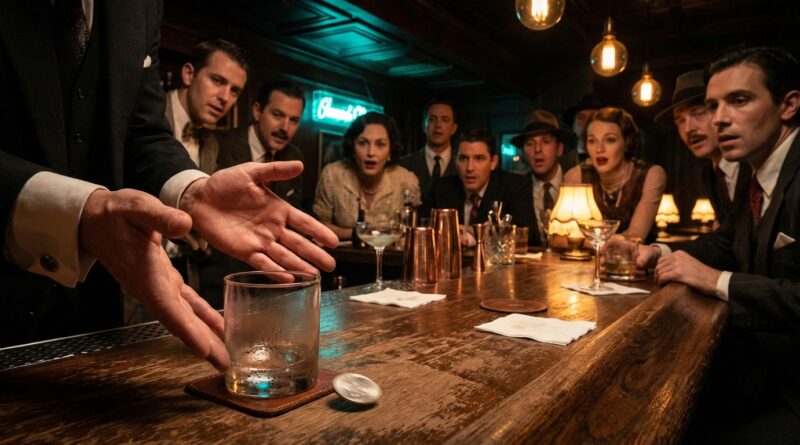
From Cocktail Bars To Close‑Up Miracles: How To Build One Invisible ‘Sleight‑Of‑Drink’ Switch Behind Any Glass
People are tired of seeing another ambitious card routine next to the bread basket. You can feel it. They smile, they clap, and then their eyes drift. But let something impossible happen inside a drink they are holding, and suddenly the whole table wakes up. That reaction is real. The trouble is, most performers chasing that moment go down one of two bad roads. They either buy fragile gimmicks that fail after a few shifts, or they try risky bar stunts that no sensible venue wants near paying guests. The better answer is older and simpler. Build one invisible switch that works behind or around the glass, then dress it in strong timing, natural handling, and venue-safe objects. That is where good bar magic sleight of hand with drinks lives. Not in gadgets. In structure. If you can make one switch reliable, clean, and repeatable, you can turn ordinary glassware into a stage and one strong beat into a paid signature piece.
⚡ In a Hurry? Key Takeaways
- Use a simple, repeatable behind-the-glass switch, not delicate gimmicks, if you want drink magic that survives real shifts.
- Start with one safe object, one clear moment of cover, and one reason for your hands to go near the glass.
- Keep it venue-safe and food-safe. Avoid breakage, flash paper, chemicals, and anything that could touch the guest’s drink without approval.
Why drink magic hits harder than card magic right now
It is not that cards stopped being powerful. It is that audiences think they know the picture already. A card trick starts, and they assume they understand the game.
A drink changes that. A glass feels personal. Immediate. It is already in the guest’s hand or right in front of them. When the magic happens there, it feels less like a performance and more like reality bending for a second.
That is why bars, lounges, and immersive venues are pushing “magic cocktails” so hard. The glassware is not just a prop anymore. It is the stage.
The good news is you do not need a suitcase full of custom gear. You need one good switch, built for the way bars really work.
The core idea: build one invisible switch, not ten clever moves
Most failed drink routines suffer from the same disease. Too many methods. Too many conditions. Too much setup.
The smart approach is boring on paper and brilliant in use. You create one hidden exchange point behind, under, or at the edge of the glass. Then you make everything around it feel motivated.
What an invisible switch really means
It does not mean nobody could ever explain it in slow motion. It means nobody thinks a switch happened because your actions made sense in the moment.
In a bar setting, that usually comes from one of four covers:
- The hand adjusts the glass.
- A coaster is placed or removed.
- A napkin wipes condensation.
- An ingredient or garnish is introduced.
Those actions belong in the world of the trick. That matters. If your hand suddenly hovers near the rim for no reason, people smell method. If you wipe a damp glass with a napkin, nobody cares. That is where the work happens.
The blueprint for a strong behind-the-glass switch
1. Pick a safe object with a clear before-and-after
Start with objects that read instantly. A sugar packet becomes a folded prediction. A lime wedge changes color. A marked stirrer turns into one with a guest’s initials. A paper tab vanishes and appears frozen against the inside wall of the glass.
The audience should understand the change in less than a second.
If they need a speech to follow it, the moment will die.
2. Use the glass as a visual shield, not a hiding place
This is the mistake beginners make. They think the method has to happen inside the drink. Usually it should not.
The glass gives you refraction, reflection, and blocked sightlines. That is enough. The dirty work often happens just behind the stem, just under the bowl, or at the exact moment the glass is lifted and set back down.
Think like a stage manager. The glass is scenery. The switch happens in the blind spot it creates.
3. Give your hand a normal reason to enter
Never reach in “to do the move.” Reach in to solve a visible problem.
Examples:
- “Let me get this coaster under there before your table floods.”
- “Hold on, your garnish is sliding.”
- “That glass is sweating like crazy.”
- “Let me turn the logo toward you.”
Real-world motivation beats fancy finger work every time.
4. Build the moment of off-beat
The best switch rarely happens on the big line. It happens one beat before or one beat after.
You ask a question. They answer. You smile at the friend across from them. You react to a joke. In that tiny drop of tension, the move rides through clean.
That is why bar magic sleight of hand with drinks feels so strong when done well. The environment gives you natural noise and motion. Use it.
5. Reveal fast
Do not switch and then fiddle. Do not “prove fairness” for fifteen seconds. If the object changed, let them see it now.
Fast reveals erase suspicion. Slow cleanup creates it.
A practical example structure you can adapt
Here is a simple framework that works in real rooms without exposing method.
The coaster-to-impossible-location sequence
You show a small paper item, something that can be initialed or recognized. It is placed openly near the guest’s drink.
You comment on the condensation under the glass and slide a coaster or napkin into place. During that motivated action, the visible item is invisibly exchanged.
The guest keeps attention on the original memory of the item, not the exact physical details. Then, almost immediately, you reveal the switched piece in a stronger location. Stuck to the outside base. Under the coaster. Seemingly inside the glass wall. Somewhere impossible but readable.
The lesson is the point, not the prop. The switch happened because the environment gave you a reason to touch the glass.
What to avoid if you work real bars
Fragile gimmickware
If a method needs perfect lighting, a spotless surface, and ten quiet seconds, it is not a working-bar method. It is a demo video method.
Unsafe inserts and chemicals
Never put anything into a guest’s actual drink unless it is venue-approved, food-safe, and completely routine for service. Even then, think twice.
If there is any chance of contamination, skip it.
Glass-risk stunts
No surprise impacts. No stress on rims. No heat gimmicks near crowded tables. A broken glass kills the mood and may kill your booking too.
Moves that need a perfect angle
Bars are not theaters. People lean. Stand. Film. Walk behind you. Build for ugly angles or do not build it at all.
How to rehearse this so it survives a shift
Practice in the place where the trick will live.
Not at your desk. At a table. With wet glassware. With napkins sticking. With background noise. With someone interrupting you halfway through.
Run these three tests
- The moisture test. Can you still handle the glass and object when everything is damp?
- The reset test. Can you be ready again in under 20 seconds?
- The interruption test. If a server cuts in or a guest grabs the glass early, can you bail out cleanly?
If the answer is no, the routine is not ready. Good working material is not just fooling. It is durable.
How to script the moment so it feels impossible
The wording should be light. Almost throwaway. Drink magic gets stronger when you do not oversell it.
Try this rhythm:
- Frame the condition casually.
- Touch the glass for a normal reason.
- Shift attention with a question or joke.
- Reveal before they settle back into method-hunting.
That last part matters most. The reveal should feel like a surprise, not a courtroom exhibit.
Why this can become paid signature material
When you stop thinking in single tricks and start thinking in repeatable environments, your work gets more valuable. Venues notice that.
A drink-based switch is not just a trick. It is a fit. It belongs in cocktail bars, hotel lounges, spirit tastings, private parties, and immersive dining rooms.
And once you have one piece that reliably destroys, it can anchor something bigger. That is the same thinking behind turning strong close-up into a destination event. If you are looking beyond walk-around, read From Close‑Up Crowds To Ticketed Theatre: How To Turn Your Table Sleights Into A 40‑Seat ‘Micro‑Residency’ Show. The jump from “cool trick at the bar” to “people bought tickets for this” often starts with one routine that feels unlike everybody else’s.
At a Glance: Comparison
| Feature/Aspect | Details | Verdict |
|---|---|---|
| Method style | Simple behind-the-glass or coaster-based switch with motivated hand movement | Best choice for real-world bar work |
| Setup and reset | Should use ordinary bar items and reset in seconds between groups | Essential if you work a live shift |
| Safety and venue fit | No risky stunts, no breakage, no unapproved contact with drinks | Non-negotiable for repeat bookings |
Conclusion
The smart play is not to chase the flashiest gimmick on your feed. It is to build one invisible, venue-safe switch that works with real glasses, real moisture, real interruptions, and real guests. Every week more venues are selling magic cocktails and immersive bar shows where the glassware is the stage, yet almost nobody is teaching serious sleight-of-hand thinking for that environment. That gap is your opportunity. A solid drink-based switch helps you ride the trend now, stand apart from TikTok quick cuts, and create paid material that actually survives contact with the job. Get one routine working well, and even jaded close-up audiences will look at a simple glass like it just became impossible.