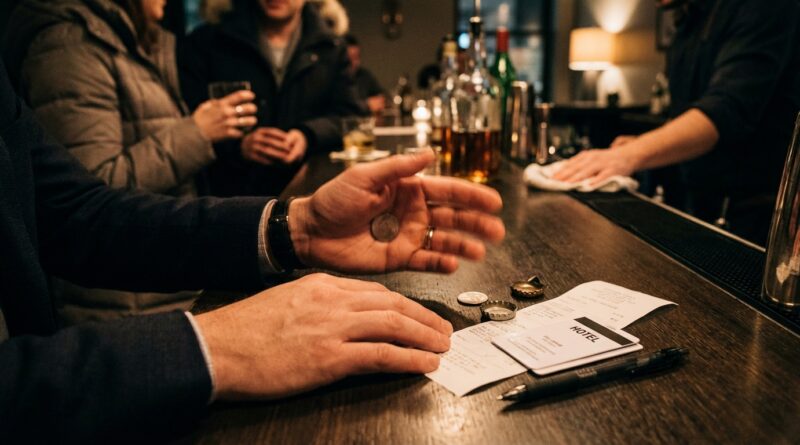
From Viral ‘Bar Bet’ Clips To Real Workers: How To Build One Killer Everyday Object Steal You Can Use In Any Bar Or Café
You have probably felt this already. A slick little bar stunt blows up on your feed. Someone vanishes a coin, steals a bottle cap, or ditches a folded receipt in one casual beat. Then you try it at a real bar and the whole thing falls apart. Someone is standing too close. A phone camera catches the wrong side. The lighting is harsh. There is no edit to hide the ugly moment. That is why the best answer is not chasing camera tricks. It is building one reliable everyday object steal that works under pressure, from bad angles, and in the middle of real conversation. If you can secretly take or load a coin, cap, sugar packet, or receipt while looking relaxed, you suddenly have a move that upgrades half your set. Better still, it feels natural in bars and cafés, because your hands already have a reason to be near the objects.
⚡ In a Hurry? Key Takeaways
- The smartest bar magic sleight of hand with everyday objects is a relaxed offbeat steal done during a natural action like moving a drink, picking up a receipt, or clearing space.
- Start with one object, usually a coin or bottle cap, and drill the same pickup, concealment, and eye-contact pattern until it looks identical whether you take the object or not.
- Do not chase flashy viral handling. A simple, angle-tested steal that survives close spectators and phone cameras is worth far more in real work.
The move you actually need is not flashy
Most people hunting for a new bar piece go looking for a trick. That is usually the wrong place to start.
What gets used over and over in walk-around work is a utility move. A steal. A secret pickup. A quiet load. Call it what you like. It is the moment that lets a coin vanish cleanly, a cap appear somewhere impossible, or a receipt switch places with another object.
The good news is that one well-built steal can cover all of that.
What makes a killer everyday object steal?
It needs four things.
First, it has to happen inside a normal action. Sliding a cap aside. Folding a receipt. Picking up change. Reaching for a napkin.
Second, it needs cover from timing, not finger flinging. The secret action should happen when attention naturally softens.
Third, it must reset instantly. Bar work moves fast. You do not get to hide in a corner for thirty seconds after every group.
Fourth, it should work with ordinary stuff on the table. Coins. Caps. Receipts. Sugar packets. Business cards.
The best model: a soft pickup into finger palm
If you want one move to start with tonight, make it a soft pickup into finger palm. Not a knuckle-busting grip. Not a clip that looks tense. Just a relaxed steal of a small object as your hand apparently squares, moves, or gathers items on the table.
This is the backbone of practical bar magic sleight of hand with everyday objects because it does not scream, “A move happened.” It looks like tidying up.
Why finger palm works so well in bars and cafés
Your hand can stay loose.
You can gesture right after the steal.
You can rest the hand on the table or on a glass.
You can transfer, ditch, or load from it with very little drama.
And most important, spectators expect your hands to be near loose objects in a bar setting. That gives you built-in camouflage.
How to build the steal so it survives real people
1. Pick one object and one setting
Do not practice with five props at once. Start with a bottle cap or a coin. Those are ideal because they are common, sturdy, and easy to repeat with.
Now choose one setting. A high table. A café counter. A small two-top. Different surfaces change sound and friction. You want your practice to match the real world.
2. Give your hand a real job
The hand doing the steal should appear to be doing something ordinary.
Good excuses include:
- making space near a drink
- straightening a receipt
- sliding a cap toward the edge of the table
- grouping coins together
- lifting a napkin to show the surface is empty
The steal should ride inside that action. If the move only works when your hand moves in a weird, careful way, it is not ready.
3. Use the offbeat, not speed
This is where many viral clips cheat. They use a hard snap of motion and a camera angle that helps. In person, speed often reads as guilt.
Instead, steal on the offbeat. Ask a question. Make eye contact. Point to the spectator holding the marker. React to their joke. The instant after a laugh is gold.
People do not burn your fingers every second. They look where the moment tells them to look.
4. Match your “take” and “no-take” actions
This is the drill that separates workers from hobbyists.
Perform the exact same table action ten times. On only some repetitions, actually steal the object. On the rest, do nothing. Video both. If you can tell which is which, so can your audience.
Your goal is sameness. Same speed. Same posture. Same breath. Same eye line.
A simple practice sequence you can start tonight
Here is a clean training loop.
Phase 1: Silent mechanics
Steal the coin or cap twenty times with no patter. Focus on no scraping sound, no finger tension, and no awkward hand shape after the pickup.
Phase 2: Add conversation
Now talk while doing it. Introduce yourself. Ask where they are from. Say the lines you actually use at tables. A move that only works in silence is not really learned.
Phase 3: Add eye contact
Do the steal while looking up, not down. If you must stare at your hand, the action is still too fragile.
Phase 4: Add bad angles
Set your phone low and to the side. Then high and slightly behind. Real spectators are rarely directly in front of you. Train for the ugly view.
Phase 5: Build the vanish or load after it
Once the steal is stable, connect it to one effect. A vanish into the other hand. A cap appearing under a glass. A folded receipt found in a pocket. One move, one trick, one route.
Where this fits into actual routines
This is the part many performers miss. A utility steal matters because it gives structure to lots of tricks you already do.
A coin routine gets cleaner because the dirty work happens while you casually regroup the change.
A bottle cap sequence gets stronger because the cap can secretly travel before the magical moment is announced.
A receipt effect becomes more believable because the audience remembers an ordinary piece of paper being handled in an ordinary way.
If you liked the idea of turning social-media visuals into practical performance pieces, you will probably also enjoy How to Turn Viral Ring‑Through‑Finger Clips into a Real‑World Worker You Can Perform Anywhere. It tackles the same problem from another angle. A move can look amazing online and still need rebuilding before it is safe in the wild.
Common mistakes that make a steal flash
Tension in the fingers
If your hand suddenly looks like it is holding a live bee, people will sense it even if they do not know why. Relaxation sells innocence.
Looking at the object at the wrong time
Your eyes are a spotlight. If you glance down during the steal, others often follow.
Doing the move at the “magic moment”
The secret work should happen before the audience thinks anything important is happening. Then the effect lands later.
No sound control
Coins click. Caps scrape. Receipts crackle. In quiet cafés, that matters. Practice on wood, stone, and metal-topped tables so you know what changes.
No exit plan
After the steal, what next? If your hand just sits there looking guilty, the move is unfinished. Always know where the object will go next.
How to make it feel effortless instead of sneaky
Real bar magic should feel like you are sharing a weird moment, not trying to beat a security camera.
That means your body language matters as much as the mechanics.
Keep your shoulders loose
When people try to hide a move, their whole upper body stiffens. Stay casual.
Talk through the ordinary moments
Patter is not there to distract. It is there to make the handling feel socially normal.
Do less
You do not need three fake takes, a flourish, and a joke all at once. One clean secret action beats a pile of suspicious business.
Respect the environment
Do not grab people’s things without permission. Do not move drinks in a way that could spill them. Practical magic should feel smooth and considerate.
At a Glance: Comparison
| Feature/Aspect | Details | Verdict |
|---|---|---|
| Viral visual move | Looks strong on camera, often relies on one safe angle, speed, or edits | Great inspiration, poor default choice for live bar work |
| Soft pickup into finger palm | Uses a natural table action, hides in the offbeat, and works with coins, caps, and other small objects | Best all-round worker for real-world conditions |
| Heavy gimmick-based method | Can be strong, but may need setup, reset time, or special handling that feels less casual | Useful in the right set, not as flexible as a simple utility steal |
Conclusion
The pressure is real. Short vertical clips make everything look easy, and audiences now expect that same casual impossibility when you are working a bar, hopping tables, or showing friends something quick over coffee. The answer is not to copy the clip beat for beat. It is to build one dependable, angle-tested everyday object steal that holds up when people are close, distracted, chatty, and filming from the worst possible spot. Get that move solid, and your coin work gets cleaner, your cap magic gets stronger, and your receipt effects start to feel impossible without looking staged. Best of all, you do not need special gimmicks or hours of choreography. Pick one object, drill one natural action, and make it invisible through timing and ease. You can start tonight, and by tomorrow it can already be quietly improving the material you perform in the real world.