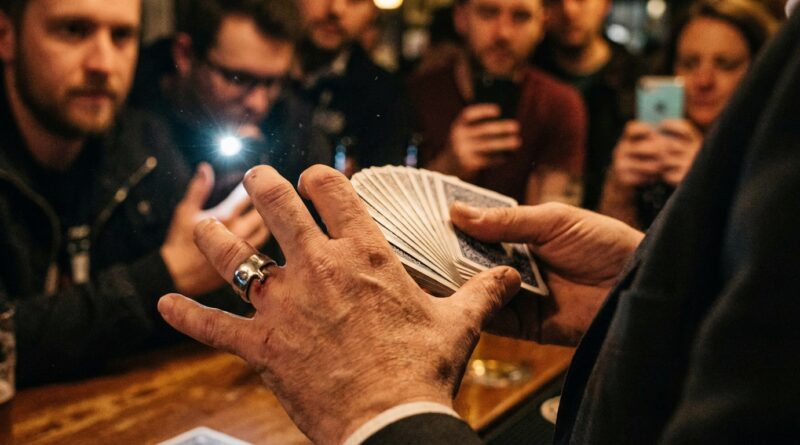
How to Turn Viral Ring‑Through‑Finger Clips into a Real‑World Worker You Can Perform Anywhere
You have probably seen the clip. A ring seems to melt straight through a finger in one clean, impossible beat. It kills on a phone screen. Then you try to do it for real people, under bar lighting, with someone burning your hands from the side, and suddenly the miracle turns into a puzzle with bad angles. That is the frustration. The plot is too good to ignore, but a lot of viral versions are built for the camera, not for the real world. The good news is you do not need to give up on it. You just need to rebuild it like a worker. That means choosing handling over hype, structure over one-shot visuals, and moments that survive bad lighting, repeat requests, and real spectators. If you want a real world ring through finger sleight of hand routine, start by treating the viral clip as inspiration, not as the finished method.
⚡ In a Hurry? Key Takeaways
- A real world ring through finger sleight of hand routine should favor angle safety, repeatability, and clear audience memory over a single flashy visual.
- Build the effect in phases. Show the ring solid, prove the finger is really inside, then give the penetration a reason and a clean ending.
- If a move only works for one camera angle or perfect lighting, treat it like social media candy, not working material.
Why viral ring-through-finger clips struggle in the wild
The problem is not that the plot is weak. The plot is fantastic. A borrowed ring and a finger are simple objects everyone understands. The problem is that social media rewards a very different kind of magic than live performance does.
On a phone, you can control the frame, the lighting, the timing, and where people look. In the real world, none of that is guaranteed. People lean. They interrupt. They ask to see the ring. They want you to do it again.
So the question is not, “How do I copy that clip?” The better question is, “What part of that clip actually matters to an audience standing in front of me?”
Usually, the answer is simple. They want a clear image. Ring. Finger. Impossible penetration. They do not need the exact same beat-for-beat sequence from the reel.
Start with the effect, not the move
This is where a lot of magicians get stuck. They see a visual and fall in love with the method. That is backwards. Start with the effect you want people to remember.
The audience memory you want
At the end, the spectator should be able to say something like this:
“He put the ring on his finger. You could see it was really on there. Then it came straight through.”
That memory is gold because it is clean and easy to retell. If your method forces you into weird finger positions, twitchy displays, or suspicious pauses, it will not survive retelling.
Work backward from that memory
Ask yourself:
- Can I show the ring naturally before the penetration?
- Can I get into position without looking like I am getting into position?
- Can the moment happen from more than one angle?
- Can I end cleaner than I started?
If the answer is no to most of those, it is probably a clip, not a routine.
What makes a ring-through-finger sequence a real worker
A worker is not just a trick that fools. It is a trick you can trust. That means it has a few qualities that viral material often skips.
1. Borrowed object logic
If you can borrow a ring, great. It raises the stakes right away. But do not force borrowing if it creates risk. Some rings are expensive, fragile, or emotionally loaded. If you use your own ring, frame that choice with confidence instead of apology.
The important thing is that the ring feels ordinary and examinable within reason.
2. A natural setup
The setup should happen while people think nothing has started yet, or during an offbeat after laughter, a question, or a quick demonstration. If your hands suddenly become precious, spectators feel it.
3. One clean visual moment
You do not need five penetrations. You need one that lands. One strong, readable moment beats a string of half-clean ones.
4. A clean aftermath
This is huge. The second after the penetration matters as much as the penetration itself. If you have to instantly hide, ditch, or reset in a panic, people will smell it. Your finish should let you relax.
Build the routine in phases
The easiest way to turn a viral idea into working material is to stop thinking in terms of a single move and start thinking in phases.
Phase 1: Establish fairness
Show the ring openly. Let them register its shape, size, and solidity. If appropriate, let them hold it for a beat. You are building a mental photograph.
This is also where you slow down. Viral clips rush because they know the replay button is doing half the work. Live magic needs clarity.
Phase 2: Frame the challenge
Put the ring against or onto the finger in a way that reads clearly. Keep your lines simple. Something like, “A ring is not supposed to pass through a finger unless one of them cheats.”
That line gives the audience a rule. Once they have the rule, breaking it becomes magical.
Phase 3: Create the impossible moment
This is where your sleight happens. The best handling is the one that looks least like handling. Keep the action motivated. The ring twists, rubs, presses, or settles. Then it is through.
Avoid making the move the headline. The effect is the headline.
Phase 4: Let them breathe
Do not step on the reaction by talking too much. A short pause sells the moment. Let them see the impossible state before you move on.
Phase 5: End with purpose
Hand the ring back. Or slide it off cleanly. Or transition into another ring phase if you actually have one. But do not add extra bits just because the viral clip did.
Angle management without looking scared
This is where real world ring through finger sleight of hand either becomes practical or dies.
You do not need perfect 360-degree freedom. Almost no close-up magic has that. What you need is smart audience placement and body language that makes the safe view feel natural.
Use your chest as a frame
Hold the action slightly higher and closer to your body than you would for a camera clip. That gives you a natural background and blocks the worst low-side flashes.
Turn with a reason
If you need a small body adjustment, do it while addressing a spectator, asking a question, or shifting attention. Tiny turns are invisible when they feel social instead of technical.
Do not challenge the worst angle
If one spectator is badly placed, bring them in verbally. “Watch this side.” “Come here, you’ll get the best view.” That sounds generous, not defensive.
Lighting matters more than magicians want to admit
Some viral handlings need bright, flat lighting to hide shape, depth, or tiny gaps. Real venues are messy. Warm bulbs, shadows, colored LEDs, daylight from the side. It all changes what reads.
Test your routine in ugly lighting. Seriously. Bedroom practice lies to you.
Three lighting tests worth doing
- Overhead restaurant lighting
- Dim bar lighting
- Window light from one side
If the trick falls apart under two of those three, it is not ready.
What to say when they ask, “Do it again”
This is the moment that exposes a lot of social-media magic. A real routine needs a plan for repeats.
Option 1: Repeat with variation
Do not repeat the exact same beat the exact same way. Change the timing, the finger, or the condition. The audience feels they are getting more, while you keep control.
Option 2: Use a callback line
Something like, “The second time turns into a lesson, and I need plausible deniability.” It gets a laugh and lets you move on.
Option 3: Flow into a related object routine
This is often the smartest path. If you like the mindset of turning online eye candy into usable magic, the same thinking applies to bands too. How to Turn Viral Rubber Band Magic into a Killer Everyday Sleight‑of‑Hand Routine nails that exact shift from camera trick to something you can actually carry and perform.
Build in outs before you need them
Professionals do not just practice the perfect take. They prepare for the slightly messy one.
If the setup feels off
Abort early and turn it into a false attempt or a joke. “That was the rehearsal version. Let me show you the one I can legally claim.” Then reset.
If the angle burns you
Move forward immediately. Do not freeze. Most flashes become suspicious only when the magician acts guilty.
If the ring catches or sticks
Have a line and a softer ending ready. A ring-through-finger can become a ring escape, a quick vanish-and-return beat, or a transition into another object. The audience does not know your original map.
Make it feel less like a stunt and more like magic
A lot of viral penetrations look impressive but emotionally empty. They are visual puzzles. To make the effect stronger live, give it a little reason.
Simple presentation hooks that help
- “Metal remembers shapes.”
- “If you find the weak point, solid things stop acting solid.”
- “The strange part is not going through. It is deciding where ‘through’ even starts.”
You do not need a story about ancient alchemy. Just a thought that gives the action a frame.
Practice like a worker, not like a content creator
Here is the big shift. Content creators practice for the take. Workers practice for the tenth table.
Useful practice goals
- Can you do it while talking?
- Can you do it after walking over from another group?
- Can you do it with dry hands and cold fingers?
- Can you do it without needing to check yourself visually?
If you can only hit the move in silence, in one room, from one angle, you are still practicing a clip.
How to judge whether your handling is ready tonight
Before you take it into the real world, run this quick test. Your ring-through-finger routine is probably ready if:
- The setup happens naturally.
- The effect reads from normal spectator distance.
- The penetration is clear once, not just on replay.
- The finish is relaxed.
- You have a line or transition for repeat requests.
- You have tested it in bad lighting.
If you miss two or three of those, keep refining.
At a Glance: Comparison
| Feature/Aspect | Details | Verdict |
|---|---|---|
| Viral clip handling | Often built for one camera angle, one lighting setup, and one perfect take. | Great for inspiration, risky for live work. |
| Real-world routine structure | Uses clear phases, natural setup, angle management, and a clean finish. | Best choice for bars, walk-around, and repeat performances. |
| Repeatability and outs | Prepared lines, alternate phases, and backup endings keep you in control. | What separates a worker from a one-hit visual. |
Conclusion
The community really is in a strange spot right now. Audiences have been taught by Instagram and TikTok to expect instant, ultra-clean miracles on demand. But working magicians know a lot of those moments are held together by edits, ideal lighting, and gimmicks that never leave the house. That does not mean you should ignore the plot. It means you should respect it enough to rebuild it for reality. A grounded ring-through-finger approach gives you something you can actually use at a bar table, during walk-around, or in the middle of a noisy set tonight. It still hits that visual sweet spot people want, but it does it with structure, audience control, and outs. And that is the bigger lesson. When you can reverse-engineer a viral visual into a dependable routine, you stop chasing clips and start building material.