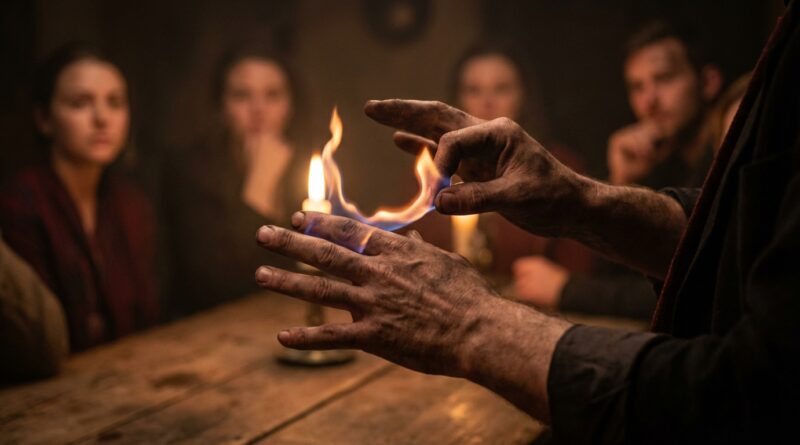
From Viral ‘Blind Double Fingertiptails’ To Real Workers: How To Build Fire‑Safe Finger Manipulation That Plays In Any Room
You have probably seen them by now. The clips where someone seems to balance, split, roll, and switch objects across the fingertips with no visible setup, then suddenly adds fire and turns the whole thing into a tiny action movie. It looks incredible on a phone screen. Then you try it in real life and the problems show up fast. The move only works from one angle. The grip feels shaky. The timing falls apart when a real human is standing two feet away instead of a camera lens. Worst of all, the fire version can turn a clever sleight into a very bad afternoon. That frustration is real. The good news is the answer is not “be braver.” It is to build the move like a worker builds any routine. Start with control. Add consistency. Then add safety. If your goal is a solid blind double fingertiptails sleight of hand tutorial in practice, not just another flashy clip, that is the path that actually holds up.
⚡ In a Hurry? Key Takeaways
- Build the sleight in stages. Dry handling first, heat simulation second, real flame last if ever.
- Test every phase standing up, from multiple angles, with normal room lighting and a live observer.
- If a move only works on camera, it is not performance-ready. If it is not fire-safe, it is not worth forcing.
Why these clips fool you so easily
Short video rewards the moment, not the method. A creator can shoot ten takes, trim away the ugly beats, light the hand from one side, and cut right before the dangerous part. Viewers see a miracle. Performers trying to copy it inherit all the hidden problems.
That is especially true with fingertip work. Tiny changes in finger pressure, skin moisture, object weight, and hand angle matter a lot more than people think. Add flame and the margin for error shrinks even more.
So the first mental shift is simple. Stop treating these moves like tricks to copy. Treat them like a new manipulation category that needs practice standards.
Start with the right goal
The goal is not to make a clip. The goal is to perform a sequence that is:
- safe for your skin, clothes, and venue
- repeatable under stress
- readable from more than one angle
- strong enough to survive normal audience attention
If you keep those four tests in mind, bad ideas tend to reveal themselves early.
Build the sleight in four layers
1. Dry object control
Begin with a non-flame object that matches the size and balance of what you eventually want to use. Silicone training pieces, wooden beads, cork-tipped props, or soft contact-juggling practice objects are all better than jumping straight to anything flammable.
At this stage, work on three basics only:
- clean pickup onto the fingertips
- stable transfer between finger groups
- calm recovery when the object shifts
If you cannot save the move when it starts to slip, you are not ready for the next step.
2. Blind handling
The “blind” part matters because many social versions secretly rely on visual checking. In real performance, you need to feel where the object is without staring at your own hands like you are defusing a bomb.
Practice in short rounds with your gaze forward. Count out loud. Talk while doing it. Turn your head and keep the object moving. That is when you learn whether the placement is real or whether you have been cheating with your eyes.
3. Heat simulation
Before real fire, use a safe stand-in that adds stress without adding danger. A warm prop, a bright LED insert, or even a timed pressure drill can force you to move with intention. This sounds less exciting than flame, but it is where a usable routine is born.
You are testing whether the choreography stays intact once your body feels urgency.
4. Live flame, only after the move is boring
This is the rule most people skip. If the sequence is not boring in practice, it is too early for fire. “Boring” means you can do it consistently, recover from tiny mistakes, and still speak, smile, and manage the room.
That is the level where adding flame becomes a controlled theatrical choice instead of panic with branding.
What makes fingertip manipulation play in any room
A lot of camera-born sleights die in person because they are too small, too flat, or too angle-sensitive. To fix that, think in terms of room playability.
Use bigger shapes than you think you need
Tiny props can look elegant up close but disappear in a living room, bar, or small stage setting. A slightly larger object often reads better and is easier to control safely.
Separate moments clearly
If the audience cannot tell when one impossible thing ended and the next one began, the sequence blurs together. Build pauses. Show stillness. Let them see a condition before you change it.
Keep the dirty angle moving
Every sleight has a weak side. The answer is not pretending it does not exist. Block your body so the weak angle is either in motion, naturally shadowed, or pointed away from the crowd at the exact risky beat.
Design an exit
The strongest workers know how the sequence ends before they start. Can you cleanly ditch, extinguish, pocket, or transform the prop without a suspicious fumble? If not, the routine is unfinished.
Fire safety is not optional theater. It is part of the method
Here is the plain truth. Fire magic attracts beginners because it looks advanced fast. But the gap between “looks cool” and “is safe” is huge.
At minimum, your process should include:
- a non-flammable practice area
- hair and sleeves secured
- a fire-resistant surface nearby
- an extinguishing method you have already tested
- a second person present during early flame sessions
- clear venue rules if you ever perform it publicly
Also, be honest about skin tolerance. Some performers act like pain is proof of seriousness. It is not. Repeated heat exposure can train bad reflexes, reduce touch sensitivity, and wreck the fine control this category depends on.
A simple practice plan that actually works
If you are trying to turn a viral finger-fire sequence into a real piece, use this schedule.
Week 1. Mechanics only
Ten-minute sessions. No flame. No speed. Record from front, left, and right. You are looking for flashes, drops, and awkward finger tension.
Week 2. Blind reps
Same sequence, but eyes up. Add a simple script or patter. If speaking breaks the move, the move is not learned yet.
Week 3. Standing and turning
Practice while shifting stance and changing audience position. Most failures show up here because static practice hides balance issues.
Week 4. Safety integration
Only now do you rehearse with your extinguish, your setup table, your pocket management, and your cleanup. Safety should feel like choreography, not an emergency add-on.
Week 5 and beyond. Test in front of one person
Not a camera. A person. Ask one question afterward. “At any point did it look fiddly or risky in a bad way?” Their answer matters more than your favorite take.
How to spot a move that belongs in your repertoire
Not every visual deserves a permanent place. A good working sequence usually passes these tests:
- you can do it three times in a row without rushing
- it survives normal lighting
- it still looks good if the viewer stands slightly off-center
- you have a clean failure plan if something slips
- the fire adds meaning, not just danger
That last one is important. Fire should change the effect. It should not just be decoration covering weak handling.
The biggest mistakes younger performers are making
Practicing for applause instead of durability
A loud reaction in a clip can hide a fragile method. Real audiences are less forgiving and less perfectly placed.
Adding flame before they have a routine
Fire does not make structure less important. It makes structure more important.
Ignoring object design
Weight, texture, wick placement, and how heat travels through the prop all affect control. A bad prop can sabotage good technique.
Confusing secrecy with silence
The old “secret library” idea still matters, but it should mean preserving quality, not hiding unsafe habits. Share standards. Be careful with methods. Both can be true.
Turning the trend into a real performance piece
The smartest approach is to build a short routine, not a loose stunt. Start with a clean fingertip display. Add one impossible transfer. Pause. Then either multiply, ignite, or transform. Finish with a convincing extinguish or vanish.
That structure gives the audience a beginning, middle, and end. It also gives you control points. If something feels off, you have natural places to stop safely.
And if you discover the sequence is stronger without flame, that is not failure. It is good judgment. A lot of strong manipulation looks more magical when the audience is watching the fingers, not worrying about the emergency exit.
At a Glance: Comparison
| Feature/Aspect | Details | Verdict |
|---|---|---|
| Camera-only version | Works from one angle, depends on edits, often skips setup and cleanup. | Looks good online, weak for live work. |
| Dry practice build | Focuses on grip, blind control, recovery, and room-tested blocking. | Best foundation for a reliable routine. |
| Fire-added performance version | Uses proven handling, safety gear, extinguish plan, and clear staging. | Only worth doing after the non-fire version is fully solid. |
Conclusion
The current wave of finger flourishes mixed with fire and contact juggling is exciting because it feels new, visual, and far from standard card work. But it is also setting a trap. A lot of younger magicians are one bad copy away from learning the wrong lessons or getting hurt. The fix is not to reject the trend. It is to build it properly. If you treat the blind double fingertiptails sleight of hand tutorial mindset as a worker’s process, not a viral shortcut, you end up with something much better. Beginners stay safer. Working pros get a fresh non-card piece that feels current. And the craft keeps its “secret library” spirit by rewarding real handling, thoughtful design, and repeatable technique instead of disposable spectacle. That is how a flashy clip becomes a routine you can trust in any room.