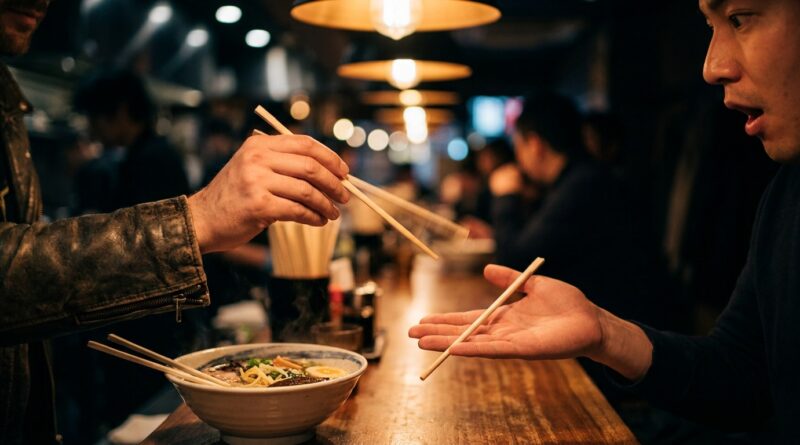
From Viral Chopsticks To Real-World Sleights: How To Build One Everyday Object Switch That Looks Like Pure Glitching Reality
You know the feeling. You watch a viral chopstick vanish, grab the nearest pen or straw, and five minutes later your fingers are tied in knots. The move flashes from one side. It dies under kitchen lighting. Then the first person you show says, “Do that again,” and the whole thing falls apart. That is the gap between social clip magic and real-world magic. A camera stunt can survive one perfect take. A good everyday object switch has to survive bad angles, curious friends, and the fact that people now watch everything like human slow-motion replay.
The good news is you do not need a knuckle-busting move or gimmicked props. If your goal is a practical chopstick sleight of hand object switch, the best place to start is not the flashiest vanish. It is a simple, repeatable one-in-the-hand switch using two normal, similar objects. Think chopstick to pen, straw to chopstick, or marker to pencil. Done well, it looks less like “I hid something” and more like reality glitched for a second. That is the sweet spot. Let’s build one that works off-camera, in person, and more than once.
⚡ In a Hurry? Key Takeaways
- Use a same-size object switch, not a pure vanish. It is more convincing live and much more repeatable.
- Keep both objects aligned in the same grip family, then use eye contact and a reason to rotate the hand during the swap.
- Practice under bright light and from both sides. If it only works for your phone camera, it is not ready for people.
Why the viral version feels impossible in real life
Most short-form clips are built around three hidden helpers. Camera angle, one-time timing, and a viewer who cannot reach in. Real people ruin all three.
That is why the cleanest route is not “make object A disappear forever.” It is “show object A, then casually show object B in the same place a beat later.” Your audience reads that as a vanish and reappearance, even though what you actually did was a switch.
This matters because a switch gives you structure. You get a before, a moment of cover, and an after that feels impossible. It also gives you an out. If someone asks to see the object, you can hand them the visible one while the hidden one rests naturally in finger palm or along the base of the fingers.
The best beginner-to-worker setup
If you want one move that can grow from hobby practice to paid walk-around, use two objects with these traits:
- Similar length
- Similar weight
- One visually bolder than the other
- Easy to justify carrying together
My favorite combinations are:
- Chopstick and pen
- Straw and coffee stirrer
- Marker and pencil
The chopstick and pen combo is especially strong because both are familiar, both are rigid, and people do not expect them to share handling. That mismatch helps the brain miss the switch.
The core move: the “display, dip, switch, show” sequence
What you need
Two ordinary objects. For this explanation, we will use a chopstick as the visible object and a pen as the hidden object.
Starting position
Hold the chopstick openly near its center between thumb and first two fingers. The pen is clipped or nested along the inside of the same hand, resting against the base of the fingers. Do not squeeze. Tension is what makes hands look guilty.
Your other hand stays empty and relaxed. That is important. If both hands look busy, spectators smell a move coming.
The action
Show the chopstick. Give it a tiny wag or tap. That movement sells fairness. Then bring the hand down slightly, as if adjusting your grip or preparing to demonstrate something silly with it. During that downward beat, let the chopstick roll into a loose finger palm while the pen comes forward into display position.
The hand should not clamp shut. Think of it as one object taking the parking spot of the other.
Then raise the hand and show the pen as if nothing happened.
That is it in plain English. Display. Dip. Switch. Show.
Why this works
The audience remembers the open display and the final display. The dip in the middle reads as a natural adjustment, not a secret action. Also, long objects are oddly forgiving. Because the eye tracks the ends, not just the fingers, a smooth change in what is centered between the fingertips can look impossible if the rhythm is right.
How to make it look like “glitching reality” instead of a fumble
1. Keep the silhouette consistent
This is the big one. The visible outline of your hand before and after the switch should stay close to the same. If your fingers suddenly curl into a fist, you are announcing the method.
2. Switch on the off-beat
Do not switch at the exact moment everyone is burning your hand. Ask a question. Smile. Tilt your head. Look at them for half a second. People follow faces more than fingers.
3. Use a reason for the hand motion
Good magic often hides in ordinary actions. Maybe you say, “Watch the tip,” and rotate the object. Maybe you tap it against your palm. Maybe you mime snapping it in half. Any tiny action gives the dip a job to do.
4. Do not rush the reveal
New performers rush because they are nervous. Ironically, speed makes the audience suspicious. A calm reveal feels cleaner. Let the impossible image land.
Angle safety, the part TikTok rarely teaches
If a trick only works head-on, it is not a worker. For live performance, you want a comfortable cone of vision, not a laser-thin camera lane.
With this switch, the danger zone is usually the side where the hidden object is riding. So turn that side slightly inward. Not dramatically. Just enough that spectators see mostly the front and top of the hand.
A simple rule helps. Keep your knuckles pointed toward the least friendly angle.
Also practice standing, not just sitting at a desk. A move that looks great from chest-level phone framing can flash badly when friends are shorter, taller, or seated around you.
How to practice without wasting a week
Stage 1. Learn the parking spots
Do not even do the full switch yet. Just place object A in display position and object B in hidden position. Trade them slowly. Back and forth. No script. No speed.
Stage 2. Add the dip
Now wrap the exchange inside one small hand movement downward and back up. Video this from front left, front right, and slightly below.
Stage 3. Add patter
Talking while switching changes your timing. It also makes the move more real. Say one simple line each time, such as “Keep your eye on the end.”
Stage 4. Stress test it
Use bright overhead light. Then warm lamp light. Then outdoors. If it breaks under honest lighting, fix it now, not in front of people.
Common mistakes and fast fixes
Your hand looks cramped
You are probably gripping too hard. Open the thumb web. Relax the ring finger. Long objects need less pressure than coins.
The hidden object flashes
Your side angle is too open, or the hidden object is sticking too far past the hand. Start with two items of very close length.
The switch only works once
You are ending too “dirty” for a repeat. Build in a reset. Put the visible object away, reach for another prop, or transfer the hidden item to a pocket during an off-beat.
People want to grab
That means they are engaged, which is good. Give them something. Hand out the now-visible object right away. People often stop reaching when they feel they have already checked the evidence.
Turning one move into a short routine
A switch by itself is nice. A switch with structure gets remembered.
Try this simple three-beat routine:
- Show the chopstick. Make it “jump” into a pen.
- Hand out the pen.
- Reach into your pocket and bring out the original chopstick as a callback.
Now the audience is not just seeing a move. They are seeing a tiny story. Something changed. The new object is real. The old one returns somewhere impossible or at least unexpected.
That is the difference between copying a trend and building a performance piece.
Best objects to start with, ranked by real-world usefulness
1. Pen and chopstick
Strong contrast, easy to justify, good length match. Best all-around choice.
2. Straw and coffee stirrer
Great for casual settings like cafés. Slightly more fragile, so handling needs a lighter touch.
3. Pencil and marker
Very practical and easy to carry. The size difference can help the effect, but it also raises the difficulty if the hidden item prints against the hand.
What working magicians know that hobby clips miss
The move is not the trick. The conditions are the trick.
If you frame the moment well, use normal objects, and end clean enough to survive scrutiny, people remember the impossibility, not the finger work. Working performers also know that “repeatable” beats “flashy” almost every time. A modest switch you can do for ten groups in a row is worth more than a miracle that only works once on your bedroom camera.
At a Glance: Comparison
| Feature/Aspect | Details | Verdict |
|---|---|---|
| Visual impact | A chopstick-to-pen change reads instantly and looks like an object blinked into another object. | Excellent for live reactions and short clips |
| Difficulty | Moderate. Easier than many pure vanishes because the audience gets a new visible object after the secret action. | Very learnable with focused practice |
| Real-world reliability | Works under normal lighting and can be repeated if you build in a reset and manage angles. | Much stronger than one-shot camera vanishes |
Conclusion
The smartest way to answer the current wave of chopstick, straw, and pen vanish clips is not to chase every viral move. It is to keep one solid, angle-safe switch ready with normal objects you can actually carry. Feeds in the last 24 hours are pushing fast, casual “trick of the day” clips with chopsticks, straws and everyday props, which means your audiences are being primed to expect visual glitches with normal objects. Giving the community a field-tested, angle-safe switch that uses those same objects helps working magicians turn a passing TikTok trend into a lasting, bookable routine, while hobbyists get a clear path from viral inspiration to real-world, repeatable sleight of hand they can actually perform for friends tonight. Start simple. Make the hand look natural. Practice in bad light, not perfect light. Then go show one person. That is where the real magic starts.