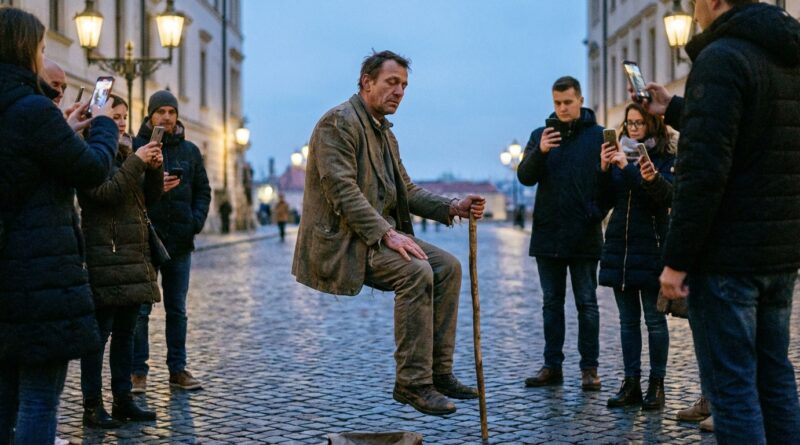
From Viral ‘Floating Staff’ Clips To Real Workers: How To Build Safer Levitation Illusions With Hidden Supports That Look Like Pure Sleight Of Hand
You can feel the problem the second you bring out a staff. Half the crowd already thinks they solved it. Social clips have trained people to mutter, “hidden pole, base, done,” before you even start. That is frustrating, because a good hidden support levitation illusion sleight of hand piece is not just “person on metal.” It lives or dies on shape, timing, posture, and what the audience thinks the effect is supposed to be. If your version looks like a shop mannequin on a bracket, you lose before the mystery begins. If it looks like impossible balance for one clean beat, people stop naming parts and start feeling the moment. So the goal is not to “fool the internet.” The goal is to build a safer, cleaner illusion for real workers, one that hides support logic inside normal movement and gives spectators a memory that feels human, not mechanical.
⚡ In a Hurry? Key Takeaways
- Most viral “staff levitations” fail because the audience reads the prop first. Your job is to sell impossible balance, not display a gadget.
- Use natural hand changes, body angle, clothing lines, and short viewing windows to hide support geometry instead of trying to prove the prop is clean.
- Safety comes first. Build for stability, controlled angles, and brief holds. If it feels sketchy in rehearsal, it is not ready for a live crowd.
The big mistake is trying to beat the comment section
When a method goes viral, performers often react the wrong way. They start adding “proof” moments. Too much empty-handed display. Too much turning. Too much showing the staff from every side. That usually makes things worse.
Why? Because the crowd is now hunting hardware. The more you say, “Look, nothing weird here,” the more they stare at the exact place you do not want them to stare.
A better frame is simpler. Treat the staff or cane like an ordinary tool for balance. Then let the impossible part arrive almost casually. One clear image. One impossible beat. Then you are out.
What laypeople are getting wrong, and why that helps you
The average viewer now expects a straight line from hand to floor. A visible rod. A heavy base. The classic “street statue” picture. Good. Let them expect that.
Your opening win is to avoid that silhouette.
Cut the “Amazon statue” look
If the prop is rigid, planted, and posed like a display stand, the audience instantly files it under “support system.” So change the picture.
- Keep the body line alive, not frozen.
- Use a slight asymmetry in shoulders or hips.
- Let the staff read as something you are using, not something presenting you.
- Avoid broad, static side views that outline the geometry too clearly.
The effect should feel like you found a point of impossible balance. Not like you climbed onto a bracket.
Build the illusion around safer choices
This is the part people skip when they are chasing a viral clip. Safety is not a boring extra. It is part of the method. A shaky illusion looks suspicious even before it looks dangerous.
Use shorter holds
You do not need a long suspension. In fact, a brief rise or lean often looks stronger than camping there for ten seconds. The longer you stay in position, the more time spectators have to reverse-engineer the shape.
Choose forgiving surfaces
Uneven pavement, soft grass, and slick tile all create problems. Rehearse on the actual kind of ground you will use. If your base or support system behaves differently on different surfaces, assume the audience will find the worst one.
Respect angle limits
No support-based levitation is “surrounded” in the way a trailer might imply. Worker thinking means knowing your safe arc, marking it, and structuring the crowd to stay there. The smartest method in the world still fails if one person drifts into the wrong lane.
Dress for line management
Wardrobe matters. Longer hems, cleaner drape, and less cling can soften outlines. But do not rely on fabric to do all the work. Clothing should blur edges, not carry the entire deception.
How to disguise support geometry with natural movement
This is where the trick starts to feel like sleight of hand instead of apparatus. You are not hiding metal with magic. You are hiding meaning with choreography.
Give every hand position a reason
If your grip changes only when it needs to hide a secret, it will look guilty. Build in hand shifts earlier. Adjust your grip while talking. Tap the ground once. Slide the hand naturally. Make support-covering actions part of a normal rhythm.
Use body turns, not prop displays
A slight torso turn can erase a bad line far better than waving the staff around. Big display motions scream challenge. Small body management feels innocent.
Move into the moment, then stop
The cleanest support illusions usually have a very clear structure.
- Ordinary handling.
- A believable reason to set the object.
- A short impossible image.
- An immediate exit.
That last part matters. Do not “prove” the illusion after the fact. End the image before analysis catches up.
Script it as balance, not levitation tech
Words steer eyes. If you call attention to floating, support, weight, or “nothing holding me,” you invite a puzzle mindset. If you frame it as concentration, center of gravity, breath, focus, or an old balancing stunt, the audience watches your body instead of your hardware.
What to say
Simple lines work best.
- “There’s a point where balance stops feeling normal.”
- “Most people quit leaning right before this.”
- “For just a second, the body forgets the rule.”
Those lines guide the crowd toward sensation, not method.
What not to say
- “No wires.”
- “Nothing supporting me.”
- “Watch the staff closely.”
That is like handing people a flashlight and telling them where to point it.
Street and stage need different handling
One reason viral clips confuse working magicians is that camera magic and live magic are cousins, not twins. A clip can cut away. A live audience cannot.
For street work
Keep the crowd in a horseshoe. Use environmental framing like a wall, planter, curb edge, or performance mat to suggest where people should stand. The effect should be fast. Hit it, let it breathe, move on.
For stage or platform work
You have better control of sightlines, but bigger risk of silhouette. Stage light can sharpen edges you thought were invisible. Rehearse under performance lighting, not just in a garage mirror.
Design choices that make the method feel less obvious
You do not need a revolutionary gimmick. You need smarter design choices.
Break the expected line
If the audience expects a straight, visible support path, any visual interruption helps. That can come from hand placement, prop contour, costume line, or body angle. The point is to stop the eye from tracing a simple route from object to performer.
Avoid “display prop” finishes
Many bad versions look overbuilt. Too polished. Too thick. Too decorative in the wrong way. Ironically, a prop that looks slightly worn and lived-in often gets less suspicion than one that looks like it was ordered yesterday from a costume catalog.
Think in snapshots
People remember a few key pictures, not every frame. So choose the image you want remembered. Usually it is the second where your weight seems plainly impossible. Build everything toward that image.
Rehearsal checklist for a weekend worker
If you want this in a real set soon, run through these questions before you ever perform it.
- Can I enter and exit smoothly without fiddling?
- Do my hand movements look normal before the effect begins?
- Does the audience read “balance” before they read “apparatus”?
- Is my safe viewing arc clear and manageable?
- Can I hold the image briefly without wobble or strain?
- Is there any part of the handling that feels risky, rushed, or hopeful?
If one answer is shaky, fix that first. The cleanest illusion is the one you can repeat safely and calmly.
What a strong version actually feels like
A strong hidden support levitation illusion sleight of hand routine does not feel like a challenge video. It feels like a strange human skill. The audience should come away arguing about balance, body control, maybe even discipline. Not shopping for brackets in their head.
That is the worker’s edge right now. Viral content has made spectators overconfident, but often in the wrong direction. They are looking for the obvious pole and platform. If your handling avoids that picture, you are already ahead.
At a Glance: Comparison
| Feature/Aspect | Details | Verdict |
|---|---|---|
| Visual framing | “Amazon statue” posture exposes the idea of a hidden base. A natural balance pose hides intent better. | Natural balance wins |
| Handling style | Over-proving the prop invites scrutiny. Brief, casual handling with motivated grip changes feels cleaner. | Less display, more conviction |
| Practical performance | Short holds, controlled angles, and surface testing make the effect safer and more deceptive in real gigs. | Worker-ready beats viral-looking |
Conclusion
The real value here is not just “how that clip works.” It is how to keep a whole class of magic alive when social feeds are teaching spectators to feel clever too early. Right now people think they know the answer the second a staff appears. That can quietly kill the effect for working magicians, unless you rebuild it from a worker’s point of view. Cut the obvious statue look. Hide support geometry inside normal movement. Script the moment as impossible balance, not a prop demonstration. Most of all, keep it safe, short, and honest to your venue. Do that, and you turn a tired viral idea back into something guardable and strong enough to use this weekend. That is the kind of practical reset the magic community needs, and it is exactly how a trend becomes usable material instead of just another clip everyone thinks they solved.