From Viral Side-Angle Exposures To Bulletproof Miracles: How To Build One ‘Camera-Proof’ Quick-Change For Live Crowds
That sinking feeling is real. You work on a visual change for months, hit it clean in rehearsal, then one person in the side seats lifts a phone and suddenly the method is all over social media by breakfast. That is exactly what happened after a university magic show clip spread online. From the front, it looked impossible. From the side, the whole secret was sitting there in plain view, and the internet did what it always does. It froze frames, circled the dirty work, and turned a strong moment into a joke. If you perform quick changes, costume switches, or bold visual prop transformations, this is not just someone else’s problem. It is your problem too. The good news is that “camera-proof” does not have to mean “boring.” It means building effects like a stage engineer instead of hoping the audience only sees what you want them to see.
⚡ In a Hurry? Key Takeaways
- To protect quick change magic from phone cameras, design for bad angles first, not ideal front-row viewing.
- Test every switch with side-angle phone footage, bright lighting, and slow-motion playback before you ever perform it live.
- A safer method that looks 10 percent less flashy is usually better than a viral exposure that kills the routine.
The hard truth: front-view deception is no longer enough
For years, many stage pieces were built around one assumption. The audience would mostly watch from the front. That assumption is dead.
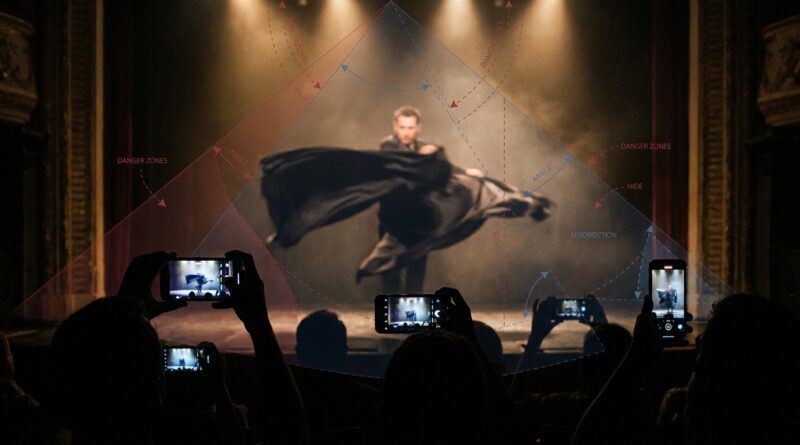
Now you have balcony seats, side aisles, raised phones, and instant replay. A method can be invisible to the live eye and still look painfully obvious on video. That is why the real question is not “does this fool from center?” It is “what does this look like from thirty degrees off, under ugly lighting, on a shaky phone camera?”
If you are serious about learning how to protect quick change magic from phone cameras, start there. Stop judging a switch by your best-case view. Judge it by the worst seat in the room.
What actually goes wrong in exposed quick changes
1. The cover only works from one line of sight
Many quick changes depend on a body turn, a fan, a cape, a flash of fabric, or a prop momentarily blocking the action. From the front, that cover looks complete. From the side, it can become transparent. The audience sees the load, the release, the steal, or the ditch.
2. The timing is built for applause, not scrutiny
A lot of performers fire the change at the exact moment they expect a reaction. That can work live. It fails on video because the reaction gives viewers a clue about where to pause.
3. The method is too “open” between beats
This is a big one. Sometimes the secret is not visible during the change itself. It is visible half a second before or after. A weird bulge. An unnatural hand position. A prop held too carefully. Phones catch those little giveaways.
4. Lighting helps the audience see too much
Strong side light, backlight, or a bright wash can outline hidden material and flatten your stage picture. Black art and shadow work also fail fast under the wrong rig.
The fix: build for a 180-degree world
You may not be able to make every effect safe from every possible angle. That is fine. The goal is not perfection. The goal is to create a practical “danger zone map” and then shrink it until no normal spectator angle exposes the core method.
Step 1: Define your safe zone and danger zone
Take your trick to rehearsal and mark positions on the floor. Center front. Front left. Far left. Side aisle. Elevated angle. Have someone film from all of them.
Do not trust memory. Use actual phone footage. Cheap phone footage is best because that is what will be used against you.
If the method flashes at one angle, note exactly when it happens. Not “somewhere in the turn.” Note the frame. During the arm raise. During the pivot. During the drop of the outer layer. Specific fixes come from specific notes.
Step 2: Remove single-point cover
If your entire secret depends on one scarf, one body turn, or one prop screen, it is fragile. Build layered cover instead.
That can mean:
- Body position plus fabric cover
- Fabric cover plus choreographed eye line
- Lighting cue plus body turn
- Assistant movement plus prop masking
One layer can fail. Three layers buy you breathing room.
Step 3: Make the dirty action smaller
The bigger the move, the easier it is to catch from the side. Good redesign often means shrinking the motion, not speeding it up. Speed can look suspicious. Smaller usually looks natural.
This same principle shows up in close-up visuals too. If you liked the thinking in From Viral Knife Clips To Real-World Workers: How To Build One Angle‑Proof ‘Flip Change’ For Everyday Objects, the lesson carries over perfectly here. The strongest changes are often the ones with less exposed travel and less “open air” around the secret moment.
Step 4: Choreograph the audience, not just yourself
Magicians sometimes talk as if staging is optional. It is not. A camera-proof quick change is partly a traffic-management job.
Use these tools:
- Play slightly upstage when needed, so side views are less direct
- Angle your body to protect the working side
- Use set pieces, stairs, assistants, or furniture to block extreme sight lines
- Control where volunteers stand
- Keep the hottest moment away from open wings or exposed aisles
This is not cheating. This is stagecraft. Theater has used sight-line control forever.
Your phone-camera stress test
Here is the field-tested process I would use before putting any quick change in front of a paying crowd.
Record under bad conditions on purpose
Set up three to five phones. Use bright house lights. Then use side light. Then use a lighting state that is flatter and uglier than your real show. Record from seated height and standing height.
Watch in slow motion
Yes, it is painful. Do it anyway. Most methods that die online die in slow motion first.
Watch with the sound off
Music and audience reaction can make a rehearsal feel stronger than it is. Silent playback forces you to judge visuals only.
Let a skeptical friend review it
Not a polite friend. Not your assistant who already knows the routine. Find somebody who is happy to say, “That part looks weird.” You need that person.
Fix one problem at a time
Do not rebuild the whole routine after one test. First fix the earliest flash. Then retest. Then move to the next issue.
The design rules that make a quick change tougher to expose
Rule 1: Separate the magical image from the method
If the secret action and the magical picture happen in the same visible space, you are asking for trouble. Better design puts the method in one beat and the impossible image in another beat that reads cleaner.
Rule 2: Avoid “hollow” moments
Some changes look strong because they are sudden, but they have a dead beat right after the switch where the performer cannot move naturally. That is a giveaway. Build your ending pose so it looks casual and complete from all sides you can reasonably control.
Rule 3: Hide in ordinary motion
The safest secret actions often happen during movement the audience expects anyway. Turning to present. Stepping through a mark. Tossing a cloth aside. Taking applause. If your body language screams “something important is happening right now,” cameras will punish you.
Rule 4: Build a second-out version
If the venue is too open, the stage too shallow, or the crowd too wild with phones, have a backup handling. Maybe it is less visual. Maybe it uses more cover. Fine. A backup method is not cowardice. It is professionalism.
What younger performers often get wrong
A lot of newer magicians build routines for the clip, not the room. That is backward. A trick designed only for a dead-center camera can look amazing online and collapse in a real theater.
You need the opposite approach now. Build for the room first. Then clip the version that survives the room.
That may mean giving up a super-open look in exchange for stronger angle safety. It may mean changing costume material, adjusting prop size, or dropping a favorite flourish. That is normal. Good workers make those trades all the time.
Practical ways to protect quick change magic from phone cameras
- Keep the working side consistently turned away from the widest audience exposure.
- Use costume textures and colors that do not outline hidden shapes under bright light.
- Avoid methods that rely on thin side concealment if spectators can sit beyond 45 degrees.
- Add blocking objects in a way that feels motivated, not defensive.
- Design applause cues after the effect is clean, not during the dirtiest second.
- Test with modern phones that sharpen edges aggressively.
- Assume someone will zoom in and freeze-frame the exact wrong beat.
When to retire a method
This part stings, but it matters. Sometimes the correct fix is not a tweak. It is retirement.
If a method only survives under perfect front angles, dim light, and a cooperative audience, it is not really stage-ready anymore. It is a demo piece. There is nothing wrong with retiring weak material and replacing it with something more durable.
That is how you build a career instead of a highlight reel.
At a Glance: Comparison
| Feature/Aspect | Details | Verdict |
|---|---|---|
| Front-only method | Looks great from center, but side seats and phone clips expose the working area. | Too risky for live crowds with open filming. |
| Layered cover design | Uses staging, body angle, costume handling, and timing together instead of one blind spot. | Best all-around choice for real-world performing. |
| Phone stress testing | Records rehearsals from side angles, bright light, and slow-motion playback to catch flashes early. | Essential before public performance. |
Conclusion
The university clip went viral because a modern truth collided with an old habit. The performer built for the audience in front, but the real audience now includes every side seat and every phone lens in the building. If you are wondering how to protect quick change magic from phone cameras, the answer is not panic and it is not pretending people will stop recording. The answer is better design. Test from ugly angles. Shrink the dirty work. Layer your cover. Choreograph sight lines. And be willing to drop any method that only survives in perfect conditions. That kind of thinking protects your material, keeps your strongest visuals performable, and teaches younger magicians a lesson the internet has made impossible to ignore. Build for surveillance, and your miracles have a much better chance of staying miracles.