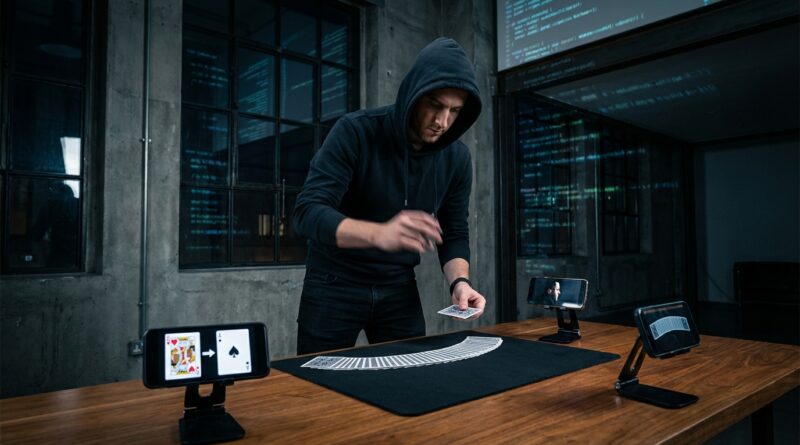
From Viral ‘AI Magic’ Clips To Real Workers: How To Build Human-Only Sleights That Fool Both Cameras And Crowds
Your frustration makes sense. You open your feed hoping to get inspired, and instead you get hit with impossible color changes, vanishes that look like software glitches, and “one take” miracles that probably were not one take at all. After a while, it messes with your head. You know AI magic vs real sleight of hand is not the same thing, but your hands still feel slow when compared with a clip that may have been filtered, cut, or cleaned up frame by frame. The good news is this. Real sleight of hand is still worth learning, and it can look strong on both live spectators and brutal 4K replay. The trick is to stop chasing “perfect” and start building methods that survive attention. That means better angles, cleaner rhythms, smarter structure, and moves that look innocent even when someone rewatches them. Human-only magic can still fool cameras and crowds. It just has to be designed for both.
⚡ In a Hurry? Key Takeaways
- Yes, real sleight still matters. The answer is to build routines that are clean enough for video and strong enough for live people.
- Start with effects that have natural actions, clear timing, and one weak angle at most. Then test them on your phone before posting or performing.
- If a trick only works with cuts, filters, or impossible camera placement, do not treat it as a benchmark for your actual skill.
Why this feels so discouraging right now
Short-form video changed the way magic is judged. It used to be enough for a move to fool the people standing in front of you. Now your audience might be a live crowd, a phone camera, and a comment section full of armchair detectives who pause every frame.
That is a very different test.
The problem is not just edited videos. It is also the way they reset your expectations. They make real timing look slow. They make natural handling look weak. They make practice feel pointless if you are comparing your honest work to something built with cuts, cleanup apps, AI tools, or off-camera help.
But there is also an upside. Once you accept that some clips are not honest comparisons, you can stop copying them and start building material that wins in the real world.
Start with a better goal than “fool slow motion”
Trying to beat frame-by-frame replay on every single move is a bad goal. You are not making forensic evidence. You are creating a convincing magical moment.
A better goal is this. Build handling that still looks fair when watched normally, still looks natural on replay, and does not expose an obvious secret when paused.
That is a big difference.
You do not need every frame to be perfect. You need the whole sequence to make sense. The hand goes where it should go. The eyes look where they should look. The object is in the right place at the right time. Nothing feels twitchy, guilty, or strangely hidden.
The five-part test for human-only sleight that survives video
1. The action must have a reason
The fastest way to get caught on camera is to do a secret move with no visible purpose. On replay, random actions scream, “Something happened here.”
Give every move a job. Square the deck because you need to. Adjust the grip because you are about to show the card. Reach for the coin because you are making space. The cover action should look useful even if there is no secret involved.
This is one reason everyday actions are so powerful. If you want more on that idea, From TikTok ‘Beauty Hacks’ To Real Slealth Magic: How To Turn Everyday Makeup Moves Into Invisible Sleight Of Hand is a smart reminder that ordinary gestures often hide method better than “magician hands.”
2. The dirty moment must be short
Long secret actions die on replay. Short ones survive.
This does not mean rushing. It means reducing the amount of time where the method is visible. A clean double lift setup done early is safer than a long get-ready done under pressure. A retention vanish with one crisp beat is stronger than three hesitant beats. Start before the audience thinks the move starts.
3. The effect must be stronger than the move
If the audience remembers your finger skill more than the impossibility, you have a problem. A flashy move may get likes. A clear effect gets reactions.
Ask yourself what a spectator would say happened. Not what you did. What happened.
“The signed card appeared in the wallet” is strong. “He did a really smooth color change” is weaker. One sounds impossible. The other sounds skill-based and invites analysis.
4. The angles must be planned, not hoped for
A lot of magicians post from one friendly camera angle and then wonder why the trick dies live. Others build only for live work and get burned when the phone catches a flash from the side.
Use a simple rule. Design for a front-facing live audience with slight side exposure, then check the same handling on a phone at chest height. That is the danger zone most often missed.
If your move has one bad side, know it. If it has two, replace it or rebuild it.
5. The rhythm must look calm
Video punishes tension. Small jerks look huge. Tight fingers look guilty. A pause in the wrong place looks like a confession.
Work on tempo, not just mechanics. The move should happen inside a steady flow, not inside a panic spike. This is why experienced pros look impossible with simple methods. They are not fighting the trick. They are carrying it.
How to build a routine that fools both cameras and crowds
Use the “clean sandwich” structure
This is one of the easiest ways to future-proof an effect. Put the secret moment between two very fair moments.
For example:
Show the coin clearly. Do a natural action that contains the method. Immediately show a convincer that proves the impossible result.
That structure helps live spectators follow the plot. It also helps on video because the replay includes open displays before and after the method. The brain reads the sequence as fair.
Choose effects with clear conditions
Confusing tricks invite rewatches. Clear tricks shut them down.
Good conditions for camera-safe magic include:
- One object is isolated.
- A card is signed.
- Hands are shown briefly empty before and after.
- The destination is known before the reveal.
Clarity does a lot of secret work for you.
Trim extra phases
Many routines are too long for modern attention spans and too repetitive for replay. If the first phase teaches the method shape, the second phase exposes the method logic, and the third phase confirms the suspicion, you have made your own heckler.
Keep the strongest phase. Cut the rest unless each phase looks meaningfully different.
A practical training method that works
Record at three speeds
Practice the move live. Then record it on your phone and watch it:
- At normal speed
- At half speed
- Frame by frame for the dirty beat only
You are looking for different problems each time. Normal speed reveals rhythm. Half speed reveals tension. Frame-by-frame reveals flashes and suspicious finger positions.
Use the “mute test”
Watch your own video with the sound off. If the trick suddenly becomes less deceptive, your patter may be carrying weak technique. That is useful to know.
Good sleight should still look motivated and fair without the script.
Use the “stranger hand” test
Ask a simple question while watching your clip. If I had never seen this trick before, which hand would I watch?
If the answer is always the secret hand, your body language is leaking. Your eyes, shoulders, and timing are telling on you.
Practice exits, not just entries
Many magicians practice getting into a move and forget to practice getting out cleanly. But replay often catches the cleanup, not the steal.
Spend as much time on the moment after the method as the moment during it. Relax the hand. Reset the grip. Let the body settle.
What kinds of sleights hold up best on modern video
Better bets
- Natural false transfers with strong empty-hand displays after the moment
- Controls and palms done off the “magic beat,” before heat lands
- Switches hidden inside ordinary tasks like handing out, pocketing, or squaring
- Simple top changes with good audience management and a reason to look up
- Loads revealed in impossible locations
Riskier bets
- Moves that depend on one exact angle
- Hyper-visual changes with long open finger positions
- Vanishes that look great only from a lens directly in front
- Any handling that gets “clean” only after a secret edit point
This does not mean you should never use visual moves. It means you should be honest about which ones are real workers and which ones are camera candy.
How working pros can future-proof material
If you perform for paying audiences, the current AI magic vs real sleight of hand debate is not just online drama. It changes trust. Spectators are more suspicious than they used to be. They know filters exist. They know videos can be altered. That means you need stronger proof conditions and smarter framing.
Build in authenticity signals
Use signed objects. Let spectators hold items. Show continuous action with no suspicious dead spots. If filming, use wider shots now and then. Not because you owe the internet proof, but because honest framing makes your magic feel more real.
Use effects that play in person first
If a trick kills live and also films well, great. If it only films well, be careful. Your reputation will be stronger if your best material works when there is no lens to hide behind.
Keep one “inspection-friendly” set
It helps to have a small group of effects that are brutally fair. Minimal props. Direct plot. Clean ending. These become your answer to skeptical crowds and cynical comment sections alike.
How to protect your motivation when the feed gets ridiculous
Do not compare your chapter one to someone else’s edited trailer.
That sounds obvious, but magicians forget it all the time. A hard sleight learned honestly gives you something clips cannot. Transferable skill. Timing. Nerve. Audience control. Recovery ability. Confidence under pressure. Those are the things that let you work tables, theaters, parties, and camera shoots without falling apart.
And here is the part younger magicians need to hear. Real skill still shows. Laypeople may not know the name of a pass or a shuttle transfer, but they can feel the difference between a clip and a performance. One looks processed. The other feels impossible in the room.
At a Glance: Comparison
| Feature/Aspect | Details | Verdict |
|---|---|---|
| Visual impact | AI or edited clips can look impossible instantly, but often depend on cuts, cleanup, or camera control. Real sleight may look less flashy, but it creates stronger trust live. | Short-term wow goes to edited clips. Lasting credibility goes to real sleight. |
| Replay resistance | Human-only handling works best when the action is motivated, the secret beat is short, and the routine is structured with clean moments before and after. | Build for naturalness, not perfection in every frame. |
| Real-world usefulness | A sleight that survives live audiences, phone footage, and repeat viewing is far more useful than a trick that only works for one lens angle. | Choose worker material over camera-only stunts. |
Conclusion
The argument around AI magic and edited clips is not going away soon, but that does not make real practice obsolete. If anything, it makes honest, durable technique more important. Younger magicians need a clear path, and the path is this. Pick effects with simple plots, build natural actions around the secret, trim weak phases, test on your phone, and keep refining until the handling looks calm and fair. That is how you make human-only sleight that can stand up to both a live crowd and a suspicious replay. Learning hard sleights is still worth it. It protects the craft, rebuilds your confidence, and gives working pros material that will still matter long after the latest fake miracle scrolls past.