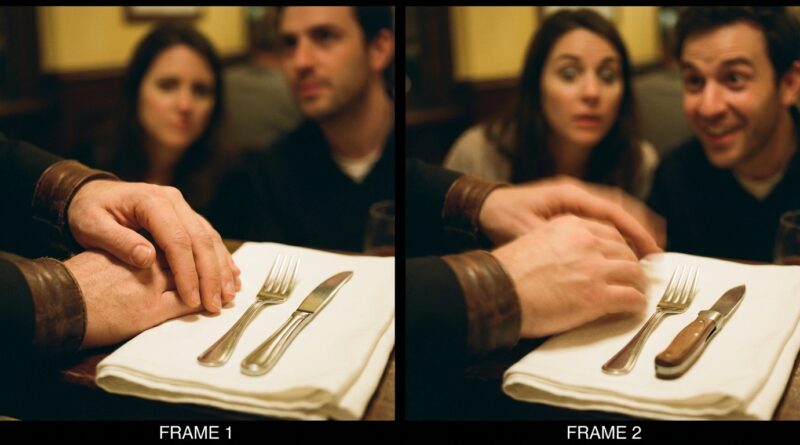
From Viral Knife Clips To Real Workers: How To Build A Safe ‘Everyday Object’ Switch You Can Use At The Dinner Table
You have probably felt this already. You see a viral knife clip online, replay it five times, and think, “That cannot be real.” Then you try to build something similar for live performance and run straight into the wall. The move is too fast. The grip is too picky. The angles are awful. Worst of all, it does not feel safe enough to try at a dinner table with actual people leaning in from every side. That is the gap worth fixing. If you want knife sleight of hand with everyday objects, the answer is not to copy stunt handling from short videos. It is to build a simple switch around normal table rhythm, soft movements, and objects that already belong in the scene. A dinner knife, a fork, a napkin, and a reason to touch them can create a clean visual change that feels impossible, but still works in the real world. That is the sweet spot. Safe, repeatable, and strong up close.
⚡ In a Hurry? Key Takeaways
- Build your cutlery switch around normal table actions, not flashy spins or viral moves.
- Start with a butter knife, a fork, and a napkin cover so the method feels natural and safe.
- The best routine is one you can do seated, surrounded, and without making anyone nervous.
Why the viral version usually fails in real life
Social clips reward speed, surprise, and camera framing. Live performance rewards control. Those are not the same thing.
A lot of online knife magic looks impossible because the conditions are doing half the work. Tight crop. One clean take out of twenty. A move that only works from one side. None of that helps when you are at a restaurant table and someone is watching from your left while another person is staring from above.
This is why many magicians either dismiss these clips as editing or waste time chasing methods that never settle down. If the handling makes you tense, your audience will feel it. And with cutlery, tension reads as danger.
A better path is to strip the idea down to something practical. No throwing. No spinning. No edge-first displays. Just an ordinary place setting and a switch hidden inside ordinary behavior.
If you want a broader way to think about this trend, From Viral Knife Juggling Clips to Safe Close‑Up Miracles: How To Steal Everyday Kitchen Moves For Sleight‑of‑Hand Practice does a nice job of showing how everyday kitchen actions can become useful practice material instead of risky stunts.
The safest goal for a dinner-table switch
Your goal is not “Look how skillful I am with a knife.” Your goal is “Something impossible just happened with objects that were already here.”
That single change in mindset fixes a lot.
For knife sleight of hand with everyday objects, the safest and strongest target is one of these:
Object-to-object change
A knife is shown, covered for a moment, then revealed as a fork. Or the reverse.
Position change
The knife and fork switch places under a napkin or while setting the table.
Property change
A normal dinner knife becomes “bent,” “magnetized,” or strangely stuck to another object, then returns to normal.
The first two are usually best for beginners because they read clearly and can be built around very normal actions.
A practical method structure that actually works
Here is the real secret. Build the effect in layers.
Layer 1. Use harmless-looking objects
Start with a butter knife or rounded dinner knife. Not a steak knife. Not anything pointed. The audience should never feel you are one slip away from a hospital visit.
Layer 2. Use a justified cover
A cloth napkin is ideal. It belongs at the table. It gives cover without looking like magician’s cover. A menu, placemat, or bread plate can also help, but the napkin is the easiest place to start.
Layer 3. Hide the switch inside a normal action
For example:
- straightening the place setting
- wrapping cutlery in a napkin
- wiping the knife
- setting one utensil aside and picking another up
If the move happens during a believable task, people remember the effect, not the handling.
Layer 4. End clean enough
You do not need laboratory-level cleanliness. You need the audience to feel there was no weird moment where “the trick stuff” happened. Often that means ending with the switched object openly on the table while your hands relax.
A beginner-friendly routine outline
Let’s build a simple example that stays on the safe side.
Effect
A dinner knife is wrapped in a napkin for a second. When the napkin is opened, it has changed into a fork.
What you need
- one rounded dinner knife
- one fork
- one cloth or thick paper napkin
- a seated table position
Why this works
The napkin gives natural cover. The table gives support. And the objects make sense together. Nothing feels introduced “for the trick.”
How to think about the handling
Do not think “secret move.” Think “temporary storage and reveal timing.” One object is in view. The other is where it can be quietly brought into play during the wrapping action. The audience’s attention is on the idea of isolating the knife, not on every finger position.
The key beat is this. As you wrap, your hands should do what anyone’s hands would do if they were simply bundling cutlery. Smooth in. Smooth out. No jerks. No flourish.
The script matters
Say something simple, like, “At a formal table, every object has a job. Sometimes they swap jobs.”
That line gives the action a frame. It also keeps the mood light, which matters with cutlery.
What makes a cutlery switch feel convincing
Live audiences do not need speed. They need consistency.
Show the object plainly
Let them register “knife” before anything happens. Not a flash. A beat.
Use one moment of cover, not five
If you keep folding, adjusting, and fussing, people sense that the method lives inside the mess. One clean wrap is stronger than a lot of business.
Reveal immediately after the magic moment
Do not hold the napkin and chat for ten seconds. Once the magic beat lands, open and show.
Let the table do the acting
A knife quietly placed on china has a sound. A fork does too. The audience knows these objects well. Use that. Familiarity makes the effect stronger because people trust what they are seeing.
Safety rules you should not skip
This is the part many performers rush past. Do not.
Use blunt cutlery only
If it can cut meat, it does not belong in your practice session for this kind of routine.
Practice seated first
Standing encourages extra motion. Seated work keeps everything compact and calm.
Never rehearse over your lap
Use a table with a soft towel on top during practice. That deadens sound and stops sliding.
Keep spectators out of the danger story
Do not frame it as risky. Do not joke about stabbing yourself. Do not mime sudden slashes or throws. The cleaner and calmer the performance, the more magical it feels.
Have an exit if the grip goes wrong
If something shifts, just set the item down and move on. A safe abort is part of a good routine.
Why everyday objects make the magic better
This is bigger than one trick.
When you start building magic from a place setting, you train an important habit. You stop waiting for special props to give you a special moment. Instead, you look around and ask, “What can I do with what is already here?”
That is healthy for close-up magic. It pushes you toward effects that travel well, feel real, and fit casual performance. It also helps with confidence. If you can create a strong mystery from a knife, fork, and napkin, you are learning audience management, timing, and object handling all at once.
Common mistakes that kill the illusion
Trying to copy the viral clip beat for beat
Online clips are often built for replay value, not for a live room. Borrow the effect idea, not the exact rhythm.
Using too much flourish
Flourishes scream skill challenge. A dinner-table switch should feel almost boring until the reveal.
Choosing the wrong audience distance
Too close and people burn your hands. Too far and the cutlery reads poorly. About arm’s length across a table is often ideal.
Forgetting sound
Metal talks. During practice, listen as much as you watch. The wrong clink at the wrong time can expose more than a bad angle.
How to rehearse without making it weird
Set a place setting exactly as it would appear in real life. Sit down. Run the routine at half speed.
Then ask three boring questions:
- Would a normal person move their hands this way?
- Does the cover object arrive too early?
- Can I stop safely at any point?
If the answer to any of those is no, simplify.
A good rule is this. If you cannot do the switch while holding a casual conversation, the handling is probably still too fussy for live use.
At a Glance: Comparison
| Feature/Aspect | Details | Verdict |
|---|---|---|
| Viral-style handling | Fast, angle-sensitive, often built for one camera view and lots of retries | Looks great online, weak choice for real dinner-table work |
| Napkin-based switch | Uses normal table actions, natural cover, and blunt cutlery | Best starting point for safe, repeatable close-up performance |
| Everyday object framing | Turns common items into props and makes the trick feel spontaneous | High audience trust and strong long-term value for working magicians |
Conclusion
The smart play here is not chasing the wildest clip in your feed. It is building a version you would actually perform in front of real people, at a real table, without your pulse going through the roof. Knife and cutlery magic is spiking hard on Reddit and short-form video right now, which means your audiences are already primed to think this stuff is either dangerous or “just editing.” A structured, safe method changes that. It turns an ordinary place setting into a repeatable, close-up miracle. That gives working magicians and serious hobbyists a way to ride the trend without betting on fragile gimmicks or one-angle stunts. Even better, it trains the kind of thinking that matters long after the algorithm moves on. You start seeing the world around you as a prop case. A napkin becomes cover. A fork becomes a reveal. A plain dinner knife becomes the start of a mystery. That is how good sleight of hand stays alive.