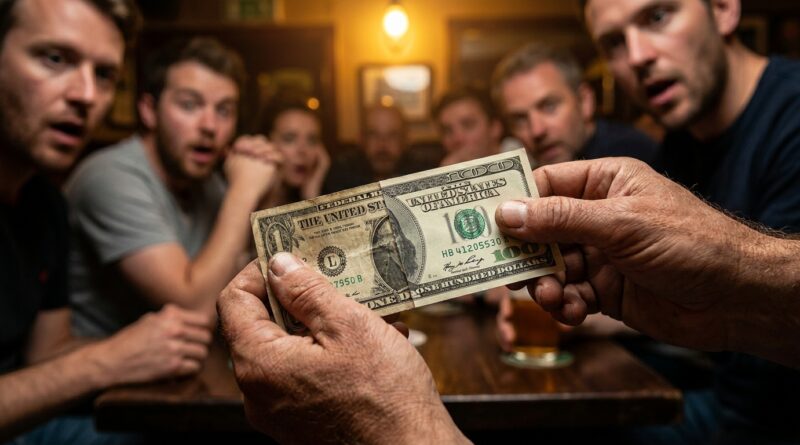
From Viral ‘Impossible Folds’ To Real-World Deception: How To Build One Hyper‑Clean Bill Switch With Zero Sleeves Or Gimmicks
You try a viral bill change once and instantly see the problem. It looks beautiful on your phone, then turns into a wrinkled mess the second you stand in front of an actual human being. Your fingers feel loud. The fold feels suspicious. And the angles that looked “fine” on camera suddenly feel like a full confession from three feet away. If that sounds familiar, good. You are not bad at sleight of hand. You are just learning from clips built for lenses, not eyes. What working performers need is an angle proof bill switch sleight of hand that survives side views, casual heat, bad lighting, and spectators who think grabbing the note is part of the show. The good news is you do not need sleeves, tape, magnets, or a custom gimmick. You need one clean switch structure, one believable reason to fold, and one rhythm that makes the dirty moment feel like the fairest moment in the trick.
⚡ In a Hurry? Key Takeaways
- Yes, you can build an angle proof bill switch sleight of hand with a real bill, no sleeves, and no gimmicks if the fold, grip, and timing all serve a believable reason.
- The best fix is to treat the fold as a fairness beat, not a secret move. Narrate why you are squaring the bill before the switch happens.
- Practice with people at your sides, not just in a mirror. A move that only works for a camera is not ready for walk-around.
Why most viral bill changes fall apart in real life
Phone magic cheats in ways live magic cannot. The frame hides low hand positions. Cropping protects weak edges. Fast edits cover ugly moments. Even when there is no cut, the camera still acts like a very obedient spectator. It stays where you put it.
Real people do not.
They drift left. They lean in. They look early. They interrupt your pacing. That is why so many flashy changes feel dead on arrival in walk-around conditions.
If you want this to work for actual spectators, start by dropping one goal. Stop chasing the tiniest visual twitch. That kind of hyper-fast change often creates more heat than astonishment. Instead, build a switch that is clear, motivated, and durable.
What “angle proof” really means here
Let us be honest. Nothing is perfectly angle proof. If someone stands behind your shoulder and stares at your fingertips, almost any switch can get ugly.
What you want is practical angle proofing. That means:
- Safe from the front and both front-side angles.
- Natural enough to survive casual suspicion.
- Clean enough to repeat later for another group.
- Structured so the audience remembers fairness, not finger movement.
That is the target. Not perfection. Reliability.
The core idea: one hyper-clean switch built around a fairness fold
The strongest non-gimmicked handling is usually not the one with the fewest movements. It is the one where every movement has a reason.
For a real-world bill switch, the reason is simple. You fold the note to make the conditions look fair. You are “locking in” what they saw. That line matters because it changes the meaning of the action. The fold stops looking secretive and starts looking careful.
The fairness script
Use language like this:
“I do not want to cover the bill too much. Let me fold it so you can track one object the whole time.”
Or:
“If I leave it loose, people say I switched it while waving it around. So I’ll square it up first.”
That is a small line, but it does a lot of work. It explains the fold before the fold happens. It also quietly tells spectators what to watch. One bill. One object. One fair sequence.
The handling structure that survives the real world
I am not going to expose a secret beat-by-beat method in a way that rips off creators, but I can give you the performance structure that makes this kind of switch deceptive.
1. Start wider than you think
Do not begin with the bill pinched in tiny, nervous fingers. Hold it openly and casually. A loose display reads more honest than a cramped one. Keep your shoulders relaxed and your elbows away from your ribs. Tension attracts heat.
2. Show, then pause
Most people rush the display because they are eager to get to the change. Bad idea. Show the bill clearly, then stop for a beat. That pause lets the image register. It also lowers suspicion because people feel they had time to see the starting condition.
3. Fold with symmetry
Uneven folding looks like hiding. Clean, centered folding looks like care. This is huge. A symmetrical fold telegraphs fairness. It also gives your fingers repeatable landmarks, which makes the sleight smoother under pressure.
4. Keep the dirty action inside a larger innocent action
This is the real secret of strong live handling. The switch should happen while you are already doing something the audience has accepted, such as squaring edges, turning the folded note, or letting them see both sides of the packet shape.
Do not make the move the event. Hide it inside the event.
5. Trigger the change on attention, not on movement
Many learners think misdirection means making people look away. Usually it means making them care about the right thing at the right time. Ask a question. Get a nod. Deliver a line that lands. Then complete the switch as their brain processes meaning rather than mechanics.
This is why some performers can do a simple move under direct gaze and fry people with it. The audience is looking, but not analyzing.
6. Unfold slowly
The reveal should feel cleaner than the switch. If the change happens too fast, spectators often backtrack and decide the fold was suspicious. If the unfolded display is unhurried, it rewrites the memory. They remember an impossible transformation, not a cramped puzzle.
What your hands should communicate
Good sleight of hand is body language as much as mechanics.
Relaxed fingers win
If your thumb clamps down like it is protecting state secrets, spectators feel it. Use only enough pressure to control the paper. Nothing more.
Stillness beats flourish
Fancy finger flicks look cool on social media. In person, they often scream “method.” The cleaner choice is often the quieter one.
Chest-high is the sweet spot
Too low and side angles get dangerous. Too high and your motions look staged. Mid-chest keeps the action visible while letting your body help frame the safe zone.
How to practice without fooling yourself
Mirror practice is useful, but it lies. Your mirror knows the secret and stays in one spot. Real audiences do neither.
Try this instead:
Use three-angle video
Set one camera in front and two off to each side. You will learn more in ten minutes than in a week of mirror work. Watch for flashing edges, tense finger freezes, and moments where your eyes dart to the method.
Practice the script and the fold together
If the words and hands are learned separately, the performance will feel stitched together. Rehearse the line on the same beat every time. That creates a reliable rhythm.
Stress test with bad conditions
Try it standing up. Try it after walking around. Try it while talking. Try it when your hands are slightly dry. A method that only works in perfect conditions is not finished.
If you want a broader framework for getting off the “camera-only” treadmill, From TikTok Angles To Real-World Eyes: How To Build One Bulletproof ‘Crowd Circle’ Handling For Your Sleights is worth your time. It gets at the same core problem from a wider performance angle.
Common mistakes that burn the switch
Folding too small
Tiny packets often look suspicious and are harder to control. Keep enough surface area that the object still reads as a bill, not a mystery wad.
Changing your grip right before the method
Spectators may not know what they saw, but they notice when your hands suddenly “get careful.” Build toward the working grip through normal handling.
Looking at the move
Your gaze is a spotlight. If you stare at the dirty beat, they will too. Look where an honest person would look, usually at the spectator or the visible face of the bill.
Using speed as a substitute for timing
Speed can hide bad mechanics for a while. Timing hides them for good. Slow down and place the move under a moment of meaning.
How to deal with grabby spectators
This is where a real-world bill switch earns its keep.
Set the frame early
Hand them the bill before the effect if that fits your routine, or promise they can inspect it right after. People grab less when they feel their chance is coming.
Use motion with purpose
When you finish the reveal, either move directly into the next beat or cleanly offer the bill. Dead air invites snatching.
Stand at a slight angle, not square-on
A tiny body turn helps protect the working area without looking defensive. It also makes the reveal feel more theatrical.
Why the script matters as much as the switch
A lot of magicians treat patter like wallpaper. For a bill switch, it is structural.
The fold needs a reason. The pause needs a reason. Even the reveal benefits from one.
Try this simple arc:
- Premise: “People think money magic is all fast hands.”
- Fairness beat: “So I’ll make this harder, not easier. One bill, folded, nothing added.”
- Change: “If value is just paper and ink, watch what changes first.”
- Afterbeat: “That is why I folded it. So there was nowhere for it to go.”
Now the fold is not suspicious. It is evidence.
When to use this, and when not to
This style of switch is great for walk-around, casual close-up, restaurant work, and social clips that you want to be honest about.
It is weaker when:
- People are behind you.
- You are surrounded by kids at elbow height.
- You cannot control when the reveal happens.
- The paper itself is too soft and battered to hold shape cleanly.
Be picky about conditions. Smart performers do not force a move into the wrong room.
At a Glance: Comparison
| Feature/Aspect | Details | Verdict |
|---|---|---|
| Viral camera-first bill changes | Often depend on cropping, perfect framing, speed, or weak side angles that fail in person. | Great for clips. Risky for live work. |
| Gimmicked switches | Can look stunning, but may need setup, replacements, pocket management, or careful handling after the reveal. | Useful in controlled sets. Less flexible for repeat walk-around. |
| Non-gimmicked fairness-fold handling | Uses choreography, timing, and motivated folding to protect the method while keeping the bill ordinary. | Best balance for practical, angle-aware live performance. |
Conclusion
The big shift is this. Stop building a bill change for a lens and start building it for a person. Creators are chasing flashy money changes for social clips, but working magicians need something tougher. They need a switch that survives walk-around, noise, grabby spectators, and the second table after the first one already burned your hands. A solid angle proof bill switch sleight of hand does not come from gadgets. It comes from clean folding, believable choreography, and scripting that turns the fold into a fairness beat instead of a suspicious moment. Close that gap, and you stop doing “internet magic” in the real world. You start doing real magic that still looks good on camera, because it was honest enough to fool people standing right in front of you.